Learn About Agarwood
Understand what agarwood is, how oud develops its character, and why natural material matters.
Explore Agarwood Basics →
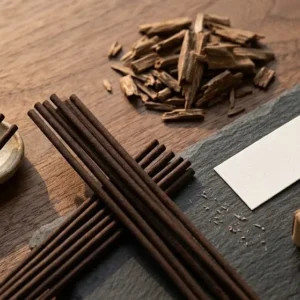
To compare agarwood incense samples, test one product at a time, keep the setting reasonably consistent and record what matters to your next purchase. The useful result is not a claim that one sample is universally better. It is a clear answer about which fragrance you prefer, which format fits your setup and which details still need confirmation. This guide is for samples you already have. It focuses on the practical comparison, not origin rankings, authenticity experiments or a long history of oud. Personal users, tea-space operators, hotels and wholesale buyers can use the same basic record, then add the

Quick answer: Coreless incense has no bamboo support running through its center; bamboo-cored incense has an incense coating around a bamboo support. This describes construction—not a guaranteed difference in purity, quality, smoke, or aroma. Compare the product details, scent notes, dimensions, and holder fit before choosing. When comparing agarwood incense, the stick’s construction is one useful detail—but not the whole buying decision. The format affects what to check on the product page and how the stick fits your holder. Your scent preference, product information, and intended use matter too. What Is the Difference Between Coreless and Bamboo-Cored Incense? The basic
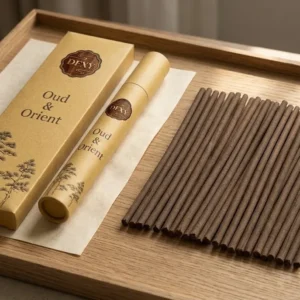
The basic difference is structural. A coreless incense stick has a continuous incense body with no bamboo support inside it. The shaped incense material forms the entire stick. DFXY describes selected agarwood products as bamboo-free and coreless, meaning there is no separate bamboo or wooden support running through the aromatic body. A bamboo-cored incense stick is built around a thin bamboo support. The aromatic mixture forms a coating around that central stick, and a portion of bamboo may be left exposed at the base so the incense can be held or placed in a suitable burner. Neither description tells you

You cannot verify a finished agarwood incense stick from colour, scent, smoke or ash alone. Start with the seller’s exact claim, then check item-specific material information and supporting records. Keep preference, authenticity and safe use separate: a pleasant smell is not proof, and discomfort is a reason to stop rather than keep testing. Start with the exact product claim and identify what remains unconfirmed. In this guide Define What the Seller Is Claiming Keep Construction Separate from Composition Treat Photographs as Identification, Not Proof Do Not Turn Aroma, Smoke or Ash into a Test Match Supporting Information to the Item
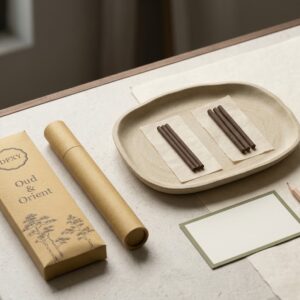
When you see “natural agarwood” or “cultivated agarwood” on an incense listing, do not treat those words as a simple ranking of good versus bad, real versus fake, or expensive versus affordable. For an incense buyer, the more useful questions are: what exactly is the product format, what information does the seller provide, how is the aroma described, and will the stick suit your room and intended use? Natural and cultivated material can both appear in agarwood products, but the label alone does not tell you everything about the finished incense. Aroma, formulation, stick format, processing, quantity, and product transparency
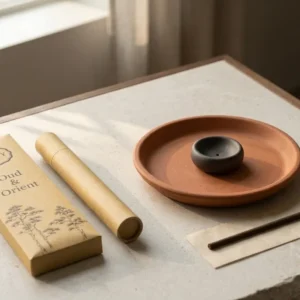
Most problems with agarwood incense are not caused by the incense alone. A burnt smell, uneven burning, an aroma that feels too heavy, or a session that ends too quickly can come from the lighting method, the holder, airflow, how many sticks are burning, or how the sticks were stored. Before deciding that an incense product is not right for you, check the setup. Burn one stick at a time, use a stable holder on a heat-safe surface, and give the aroma time to develop. This guide explains the most common mistakes and the practical checks to make before your