
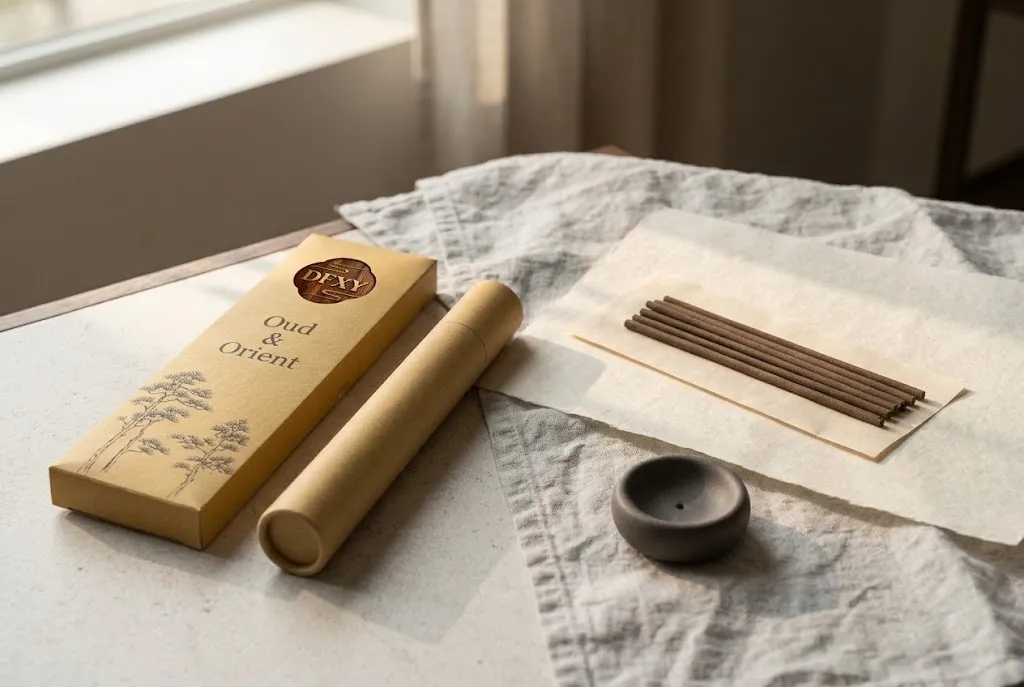
Incense can smell woody because its ingredients burn as it releases fragrance. A harsh or smoke-dominated result does not identify one cause: check the lighting method, air conditions, holder, storage and product information. If use causes discomfort, stop first. Smell, smoke and ash cannot prove authenticity or safety.
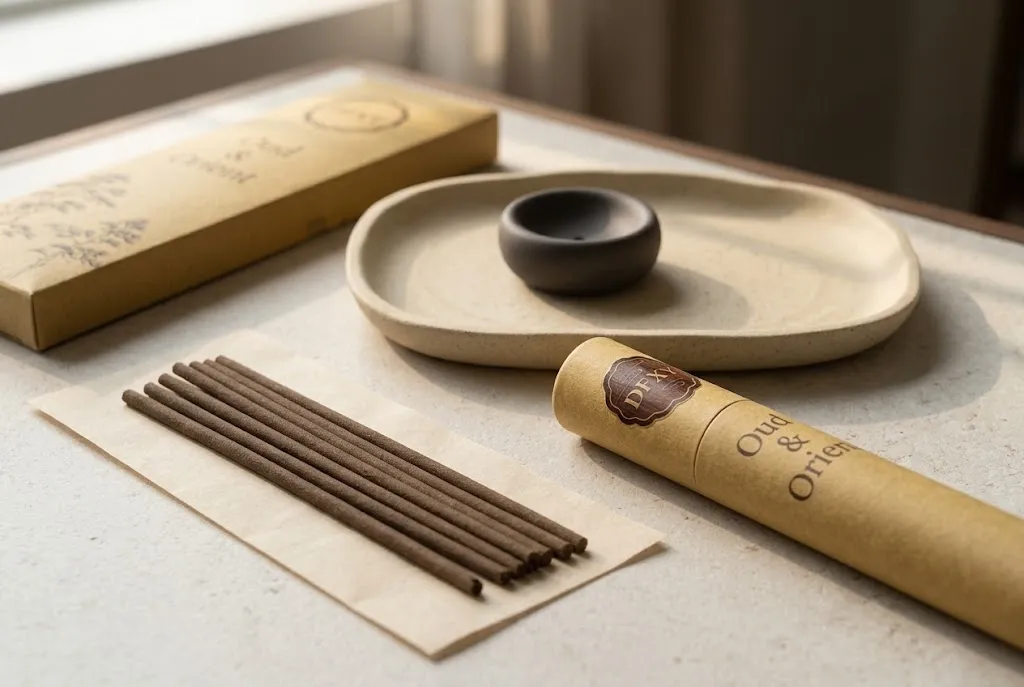
Separate a Woody Note from a Problem
If you are asking why your incense smells like burning wood, first describe what you actually notice. Dry wood, a lightly charred impression and an aroma dominated by smoke are different observations. A burning stick is not a perfume sprayed into the air: its combustible ingredients are part of the experience. That does not mean every unpleasant result is normal or something you should tolerate.
A harsh smell cannot identify a single cause. The product, its condition and the way it is used may all need review. Equally, a soft aroma does not prove authenticity or harmless emissions. This guide is a troubleshooting sequence for finished incense sticks, not a laboratory assessment, an agarwood grading method or instructions for heating loose wood and resin.
Stop First if the Session Feels Uncomfortable
If the smoke irritates your eyes or throat, or you otherwise feel unwell, stop using the incense. Follow its extinguishing instructions, avoid further exposure and do not continue the session to see whether the fragrance improves. Do not hold the burning tip near your face to identify an ingredient. If symptoms are severe or persist, seek medical advice rather than troubleshoot through further exposure.
The US EPA explains that combustion produces particulate matter and advises proper ventilation when burning incense indoors. Visible smoke and pleasant fragrance do not measure exposure. Review whether the setting is appropriate before considering any future use; opening a window is not a guarantee that an incense session suits everyone.
| Observation | Next step | Do not conclude |
|---|---|---|
| Discomfort during use | Stop and avoid further exposure. | That more time will make the session suitable. |
| An unexpected open flame | End use and check the product instructions. | That more flame means better fragrance. |
| A musty smell or visible damage before lighting | Do not use the affected product; ask the supplier. | That burning will restore or certify it. |
| Smoke dominates without a clear explanation | Review the setup, condition and listing information. | That the material is automatically fake. |
Check Whether the Stick Is Smouldering as Intended
For a stick intended to smoulder, a continuing open flame is a reason to stop and consult the product instructions, not a stronger way to release the fragrance. Follow the stated lighting method and distinguish extinguishing the initial flame from fully extinguishing the ember at the end of use. Do not assume that an unlit-looking tip has cooled completely.
Do not add oil, spray water as an improvised fragrance treatment or repeatedly relight a poorly behaving stick to force a result. If the flame returns or the burn behaves unexpectedly, end use and ask the supplier about that product. For the full sequence of preparation, supervision and shutdown, read our agarwood incense safety guide. This page focuses on identifying what needs checking rather than repeating the operating manual.
Review the Air Around the Holder
Consider two separate questions: whether smoke is accumulating in the space, and whether a fan, vent or direct draft is disturbing the setup. Do not try to solve a heavy smell by directing a strong stream of air at the ember. Stop first, let the equipment cool and review the location before making adjustments. Moving a hot or burning holder creates a different problem.
Do not treat an apartment, bedroom or living room label as a usage allowance. Room dimensions alone cannot determine a suitable number of sticks or a session duration. Several simultaneous fragrance sources also make the experience harder to interpret. If the room already smells of cooking, cleaning products, candles or another fragrance, postpone the comparison rather than add incense to cover it.
Check Support and Ash Collection
Inspect the holder only after the incense is extinguished and the equipment has cooled. Confirm that it supports the specific stick format securely, catches falling ash and keeps the burning material clear of surrounding objects. A decorative dish or a holder designed for a bare bamboo end may not support a solid coreless stick in the same way.
A holder check is primarily about compatibility and safe placement; it does not diagnose an incense formula. Do not claim that changing a holder removes chemicals, proves quality or guarantees a sweeter aroma. Clean accumulated residue according to the holder instructions, and do not restart with cracked, unstable or unsuitable equipment. If you cannot establish the required support, ask before using that combination again.
Compare the Stick with Its Stored Condition
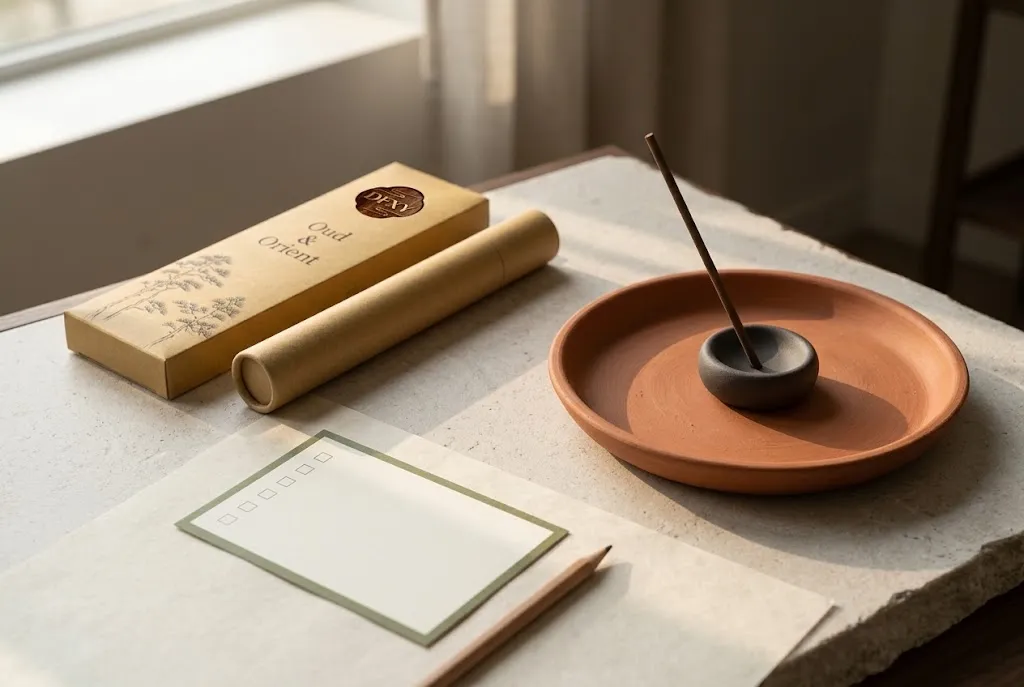
Think back to when you opened the package. Did the unfamiliar smell appear before lighting, after storage in a scented drawer, or only during use? Keep the packaging and product identification so those observations refer to a specific item. An external odour is a possibility to investigate, not proof that storage caused the whole problem.
If there is obvious moisture damage, suspicious growth or a persistent musty smell, stop using the affected product and contact the supplier. Do not burn it to test whether it is harmless, and do not attempt restoration with an oven, microwave or added fragrance. Our incense storage guide explains protected packaging, suitable locations and separation of scents without prescribing a universal humidity target or shelf life.
Read Product Information without Diagnosing by Smell
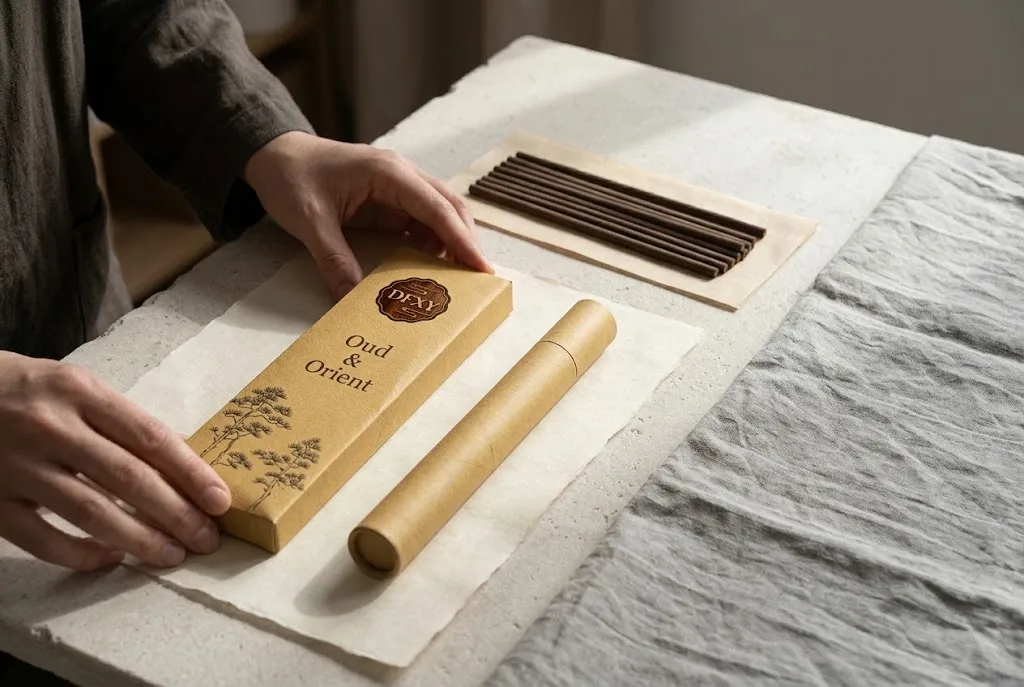
If the setup and condition checks do not explain the experience, return to the listing. Identify the product format, stated materials, fragrance description and use guidance. Words such as oud, natural, premium and coreless do not give a complete composition. Nor does a disappointing smell prove that the seller substituted a material or added an undeclared ingredient.
Avoid using dark colour, pale ash, thick smoke or a strong unlit scent as a pass-or-fail authenticity test. Those observations cannot establish the formula by themselves. Use our agarwood label-reading guide to separate material statements from fragrance language. If information remains unclear, ask for clarification about that specific product rather than trying more expensive incense as a diagnostic shortcut.
Send a Useful Enquiry before Buying a Replacement
A useful message names the product, order or batch reference if available, holder type, storage history and the point at which the unexpected smell appeared. Explain whether an open flame remained and whether other fragrance sources were present. Describe the observation plainly: an unfamiliar musty smell before lighting is a different enquiry from smoke dominating only during burning.
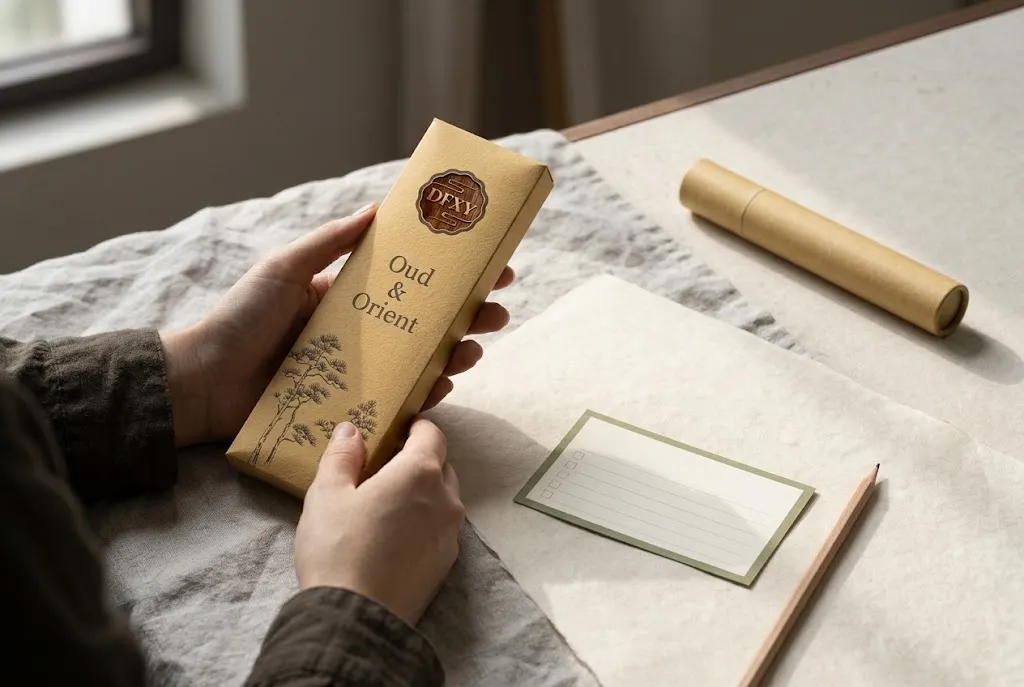
For DFXY product questions, contact the team with those details. Photographs of packaging or an unlit setup may help identify the item, but they cannot certify air quality or determine every ingredient. Do not stage another burning session to obtain a photograph. A replacement purchase should follow clarification, not substitute for it. If the product or setting still feels unsuitable, you do not need to continue using incense.
If the supplier asks for more information, distinguish what you observed from what you suspect. Keep dates and product references consistent, and retain the original packaging until the enquiry is resolved. Do not present a home observation as a test result or compare separate products under undisclosed conditions. Clear notes are more useful than dramatic claims about purity.
Frequently Asked Questions
Is a woody smell always a defect in incense?
No. A woody or lightly charred impression can occur during burning, but it does not establish composition, authenticity or safety. Harshness or discomfort is a reason to stop, not something to accept as proof of natural ingredients.
Why does my incense smell more like smoke than fragrance?
There is no single diagnosis from smell alone. Review the lighting instructions, air conditions, holder, product condition and listing information. Stop use if the session is uncomfortable rather than continuing to identify a cause.
Does an acrid smell prove that incense is fake?
No. It is an observation to report, not an ingredient test. Do not use smoke, colour, ash or discomfort to make a definite authenticity claim.
Should I burn it longer to let the aroma settle?
Do not continue an uncomfortable session in the hope that it improves. Stop, follow shutdown instructions and review the product and setting before considering future use.
Can I fix a damp or musty stick by drying and relighting it?
Do not improvise restoration or burn a suspect product to test it. Keep the packaging and ask the supplier for product-specific guidance.
What should I send DFXY about an unexpected smell?
Send the product reference, relevant order or batch information, holder type, storage history and when the smell appeared. Do not restart burning merely to produce a demonstration or photograph.