
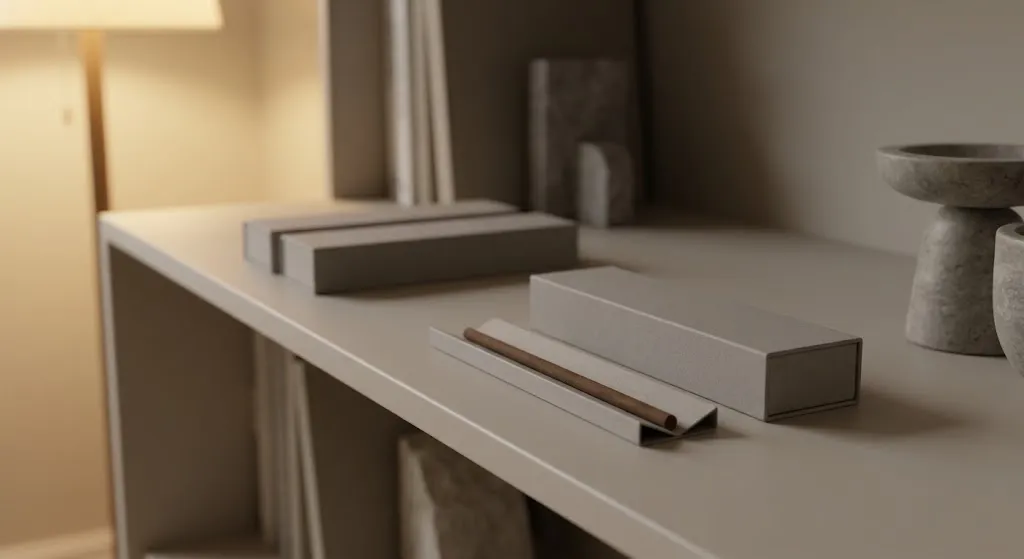
To store incense well, keep it in its original protective packaging in a cool, dry place away from direct sunlight and strong external smells. For coreless agarwood incense, add one more priority: protect the entire stick from bending and crushing. There is no bamboo support inside, so a storage system needs to protect the incense body rather than leave loose sticks rolling around a drawer.
You do not need an elaborate display cabinet or a collection of expensive jars. Start with the box you received, choose a suitable location, and separate fragrances. This guide explains how to store incense at home, when an additional container is useful, and what to do if sticks arrive broken or develop an unfamiliar smell.
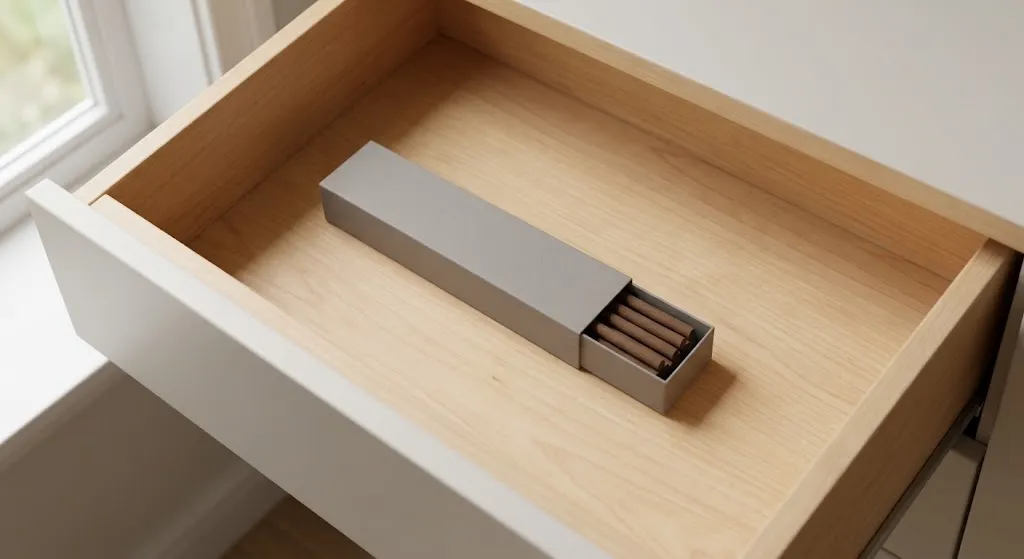
Keep the sticks in the packaging supplied with the product unless the manufacturer gives different instructions. Original sleeves, trays, and boxes help keep a bundle together and protect it from light, handling, and accidental pressure. They also preserve the product name and any care information you may need later.
Before placing a box in storage, check that its closure does not press against the stick ends. A box that is slightly too short can damage incense each time you close it. Do not squeeze a loose bundle into a narrow jar simply because the container looks attractive.
Keep any material-description card or use instructions with the product. If you transfer the box into a secondary container, retain the original identification. Knowing which scent you are using is more useful than a drawer full of anonymous brown sticks.
A beautiful container cannot compensate for a damp bathroom shelf or a windowsill heated by afternoon sun. Choose a stable indoor location with limited exposure to heat, light, moisture, and household odours.
A clean bedroom drawer or an enclosed cabinet away from a kitchen is a practical starting point. First inspect the space itself: a drawer containing perfume, scented sachets, mothballs, or aromatic wood inserts is not neutral storage. Move the incense somewhere else rather than trying to disguise those smells.
| Location | Main issue | Better arrangement |
|---|---|---|
| Bathroom shelf | Repeated exposure to shower moisture | A dry cabinet in another room |
| Kitchen cabinet | Cooking smells, steam, or nearby spices | A separate drawer away from food preparation |
| Sunny windowsill | Direct light and changing temperature | A shaded indoor shelf or drawer |
| Perfumed clothing drawer | Fragrance transfer from sachets or toiletries | A clean, unscented compartment |
| Open desk tray | Repeated handling, dust, and accidental spills | Original packaging closed between sessions |
There is no single temperature or humidity number that this guide can responsibly prescribe for every incense formula. Follow product-specific care instructions when available. Otherwise, favour a stable indoor environment rather than extreme drying, refrigeration, or frequent movement between rooms.
Keep different incense varieties in their own original sleeves or boxes. If you own several agarwood profiles, retain that separation too; sharing a broad wood category does not mean the products smell identical.
For a small collection, individual boxes in one clean drawer may be enough. For a stronger fragrance stored beside a more delicate product, separate compartments or secondary containers offer an additional physical barrier. The aim is to reduce unwanted mixing, not to claim that every container creates a perfect odour-proof seal.
Do not place loose sticks together in one decorative bowl. That arrangement makes products harder to identify and exposes them to handling, dust, and scent transfer. Display one closed package if you enjoy its appearance; keep the remaining collection protected.
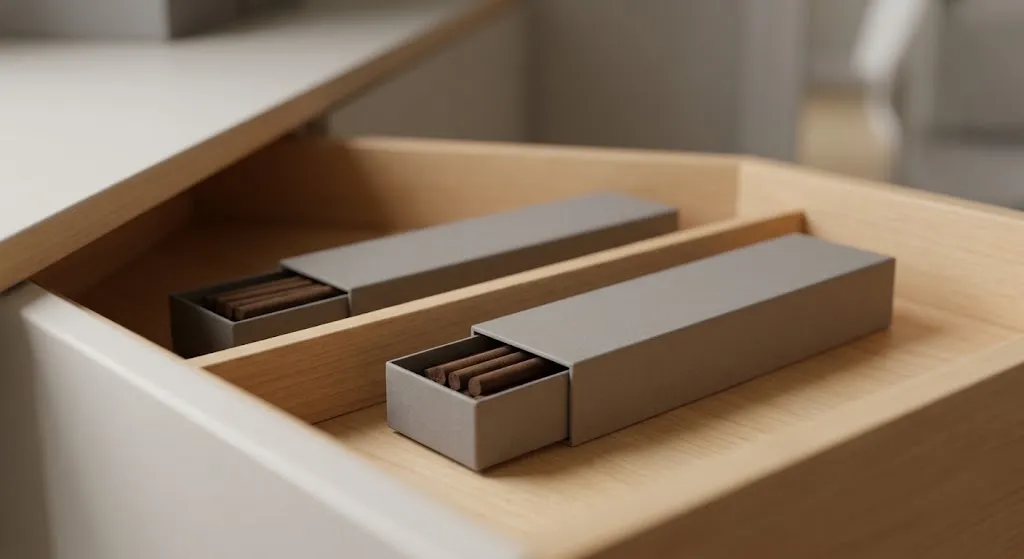
Consider a secondary container when the original box is damaged, when you transport incense, or when your available storage space has unavoidable odour exposure. Choose something clean, dry, unscented, and long enough to protect the sticks without pressure.
An airtight container is an option, not a universal requirement. It should not be used to seal visibly damp incense and then treat the problem as solved. Check the product condition and ask the supplier for advice when moisture or an unfamiliar musty smell is present.
| Storage option | Appropriate use | Check before using |
|---|---|---|
| Original sleeve or box | Routine home storage | Closure, length, and condition |
| Rigid outer box | Extra protection during handling or travel | Enough space without crushing the inner package |
| Clean lidded container | Additional protection from nearby odours | Dry interior and no residual food or perfume smell |
| Dedicated drawer compartment | Organising several individually packed varieties | No scented lining, clutter, or heavy objects |
Avoid treating desiccants as a standard upgrade for every product. Storage advice differs across suppliers, and there is no basis here for prescribing a sachet quantity, drying duration, or target moisture level. Ask the maker before adding drying agents to a delicate incense collection.
A coreless stick has no separate bamboo splint holding the incense mixture together. Handle it as the product itself, not as a coating on a flexible support. Keep the bundle supported and avoid grabbing several sticks tightly in the middle.
Use a simple routine whenever you open the package:
Do not assume every broken stick is unusable, but do not force a short fragment into an unsuitable holder either. Whether it can be used depends on its condition and whether a purpose-built holder supports it securely and catches ash. If breakage is extensive on delivery, photograph the package and ask the seller for instructions before discarding the original packaging.
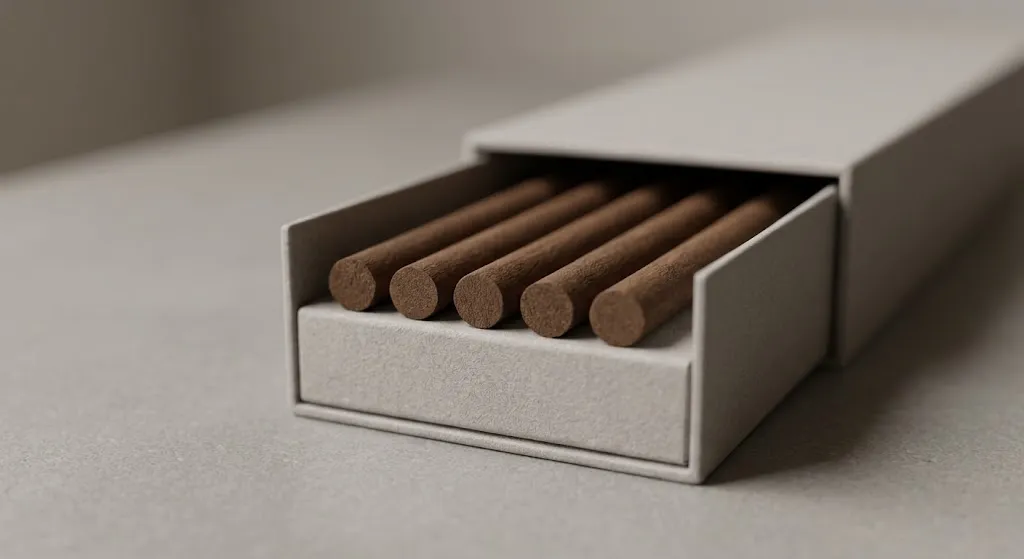
First compare the unlit stick and its packaging with the storage environment. A new smell resembling perfume, cooking, or a scented drawer may suggest external odour exposure. An unfamiliar smell alone is not a reliable diagnosis of mould, ingredient quality, or authenticity.
If you see suspicious growth, find obvious moisture damage, or notice a persistent musty smell, stop using the affected product and contact the supplier. Do not burn a stick as a way to test whether contamination is harmless. Avoid trying to restore damaged incense with an oven, microwave, direct sunlight, or added fragrance oil.
Also distinguish a storage concern from a burning concern. A stick that seems unchanged before lighting but smells harsh while burning may need a separate review of airflow, holder placement, and use technique. Storage is one possible variable, not an explanation for every disappointing session.
Choose one package for your current routine and leave the rest protected. You can keep that active package near a tea or reading area without leaving the sticks uncovered all day. Store the closed package away from the burner so falling ash or heat cannot reach it.
For your next purchase, compare verified product descriptions rather than buying more incense to replace an unresolved storage problem. Confirm the coreless format, aroma description, and any care guidance for the specific item. If the details are unclear, ask DFXY before ordering.
The simplest reliable system is often the best: original packaging, a suitable location, separated scents, gentle handling, and a quick condition check before use. Good storage preserves your ability to enjoy and compare the incense you already own without turning everyday care into an elaborate ritual.
Usually, yes. Keep the original protective packaging unless the product instructions say otherwise. A rigid outer container can add protection if the original box is damaged or you need to transport it.
Not always. Original packaging in a suitable dry, odour-free location may be sufficient. A clean secondary container can help in some situations, but it should not trap obviously damp sticks.
They can share a clean drawer while remaining individually packaged. Keep strongly scented products separate from delicate varieties, and avoid leaving loose sticks together.
Refrigeration is not the default storage method recommended here. Use a stable indoor location and follow manufacturer instructions rather than introducing additional temperature changes or moisture concerns.
Do not improvise with an oven, microwave, or direct sunlight. Stop using visibly damaged or suspicious incense and ask the supplier for product-specific guidance.
There is no universal shelf-life promise for all formulas and packaging. Follow any dated guidance provided with the product and assess its condition instead of assuming every older stick is either better or spoiled.