
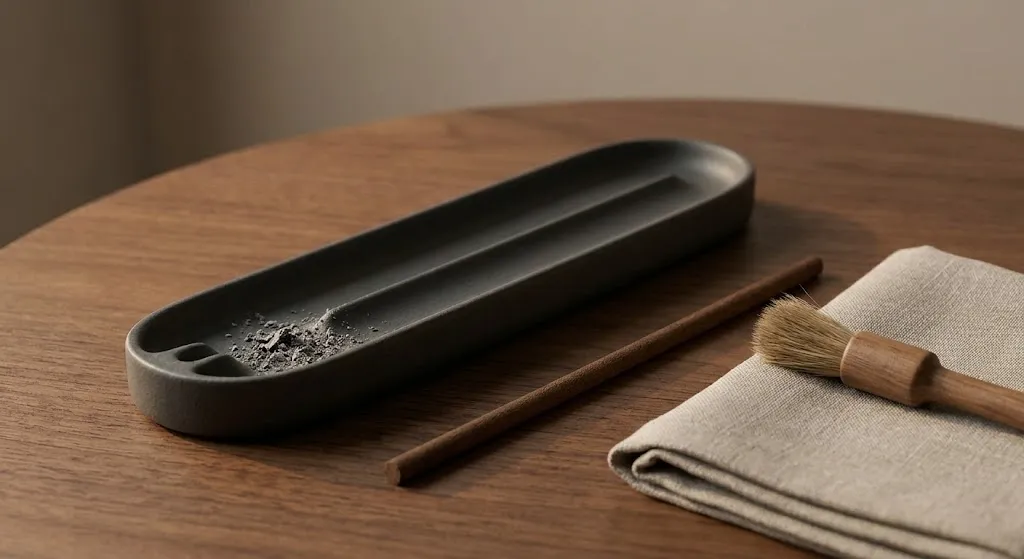
A coreless agarwood incense stick has no bamboo support inside. That gives the whole stick a continuous incense body, but it also changes what a good holder needs to do. A holder designed around a thin bamboo-core stick may leave a solid coreless stick loose, tilted, or unable to burn over an ash-catching surface. The right incense holder should secure the stick, catch the entire ash fall, keep the ember away from combustible materials, and sit steadily on a heat-safe surface.
This guide explains how to choose an incense holder for coreless sticks without relying on decoration alone. It compares fit, angle, ash control, holder material, placement, and everyday care. The goal is not to make one holder look more luxurious than another. It is to help you use one bamboo-free agarwood stick safely and appreciate its aroma without worrying about falling ash or an unstable burn.
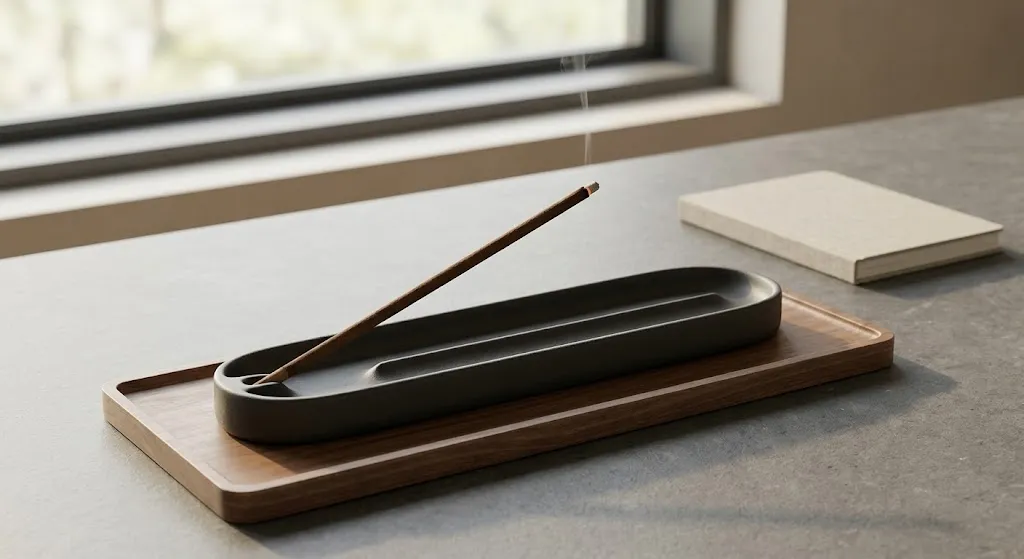
Many conventional stick holders use a small drilled hole intended for the bare bamboo end of coated incense. A coreless stick has no bare wooden end. Its incense material may be wider, more delicate, and less tolerant of being forced into a hole that is too narrow or too deep. If the holder grips the stick too loosely, it can lean. If the hole is too tight, inserting the stick may crack or crush the incense material.
Start with the physical fit—not the colour or style of the holder. Before burning, test the stick while it is unlit. It should stand or rest securely without pressure, wobbling, or contact between the future ember and the holder’s combustible parts. The holder also needs enough ash-catching area for the entire length of the stick, not merely a small dish below the base. Guides for stick-incense holders consistently prioritise secure support, an ash-catching surface, stability, and heat resistance.
| Fit question | What a good result looks like | What to avoid |
|---|---|---|
| Holder opening | The stick enters without force and remains stable | A hole that needs twisting, pushing or widening with the stick |
| Stick angle | The burning end remains over the ash catcher | A steep angle that sends ash beyond the tray |
| Ash-catching area | The full projected ash path lands on heat-safe material | A tiny holder under a long stick |
| Base | Flat, weighted and stable on the surface | A light holder that shifts when touched |
| Ember clearance | The ember remains away from wood, fabric and clutter | Any setup where the burning tip approaches a combustible edge |
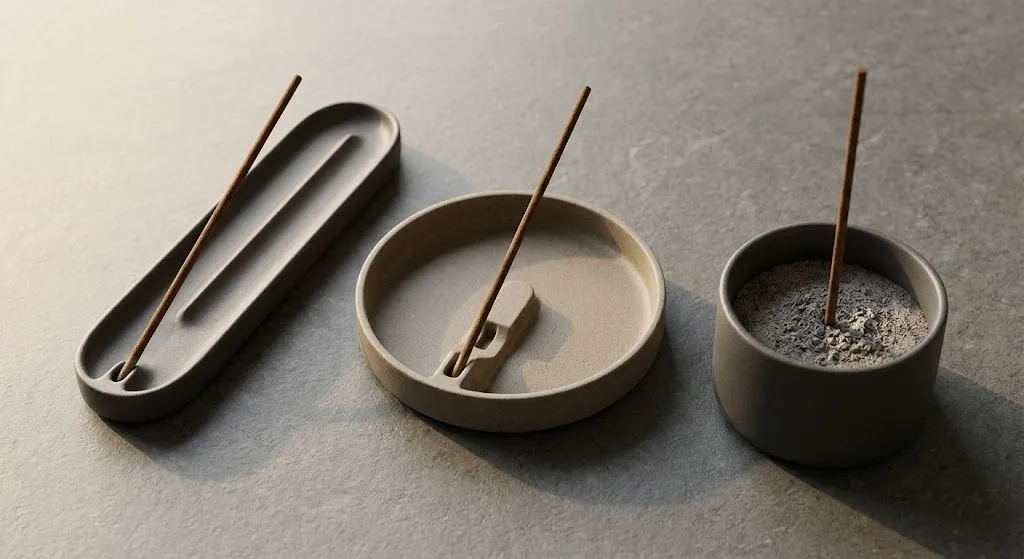
Holder style determines how the incense is supported. For coreless agarwood sticks, three formats are especially practical.
A long tray holder supports a stick at one end while its extended body burns over a shallow ash-catching channel. It is a simple choice when the opening fits the incense thickness and the tray is long enough for the entire ash fall. This style works well on a clear table or tea setting because it makes ash placement easy to see.
The limitation is fit. If the drilled hole was made only for a narrow bamboo core, a thicker solid stick may not sit safely. Do not modify an incense stick to force it into place.
A wide dish gives you more ash-catching space. It can work well with a small non-flammable support insert designed for the stick, as long as the insert holds the coreless incense securely and the dish is stable. This is useful for shorter or slightly thicker sticks because the ash has room to fall without reaching the table.
Avoid filling a shallow decorative plate with random combustible materials. If you use ash or sand as a support medium, use a heat-safe burner designed for that purpose and keep the entire setup stable.
An ash-filled burner supports a stick by embedding its unlit end into fine, heat-safe incense ash. This format can be flexible for solid coreless sticks because it does not depend on one fixed hole diameter. It also catches ash within the bowl. However, it requires appropriate ash, a stable heat-safe vessel, and a deliberate setup. It is not a reason to burn several sticks at once.
For any holder style, use only one incense stick per session. More burning material creates more smoke and more opportunities for ash, heat, and scent to overwhelm a small room.
The material of a holder affects weight, heat resistance, cleaning, and how well it suits your room. It does not automatically improve the fragrance of the incense.
| Holder material | Useful qualities | Watch for |
|---|---|---|
| Ceramic | Heat-tolerant, easy to clean, available in trays and bowls | Chips or cracks; confirm it sits flat |
| Stone | Heavy and stable; good for a permanent setup | Can be porous; keep it clean and dry |
| Metal | Durable and often weighted | May become hot; allow it to cool before handling |
| Wood | Warm visual character and light weight | Only use when the burning path and ash catcher are clearly separated from the wood |
| Glass | Visually light but less forgiving with direct heat | Avoid using ordinary decorative glass directly under an ember |
A ceramic, stone, or metal holder is usually the simplest starting point for a coreless stick because it combines a non-flammable surface with useful weight. If you choose a wooden holder, it must have a design that keeps the ember and hot ash away from wood itself. Never place any holder directly on paper, fabric, a book, a bed, or a plastic surface.
A safe holder can still be used badly if the surrounding setup is wrong. Choose a flat, heat-resistant surface with open space around the holder. Keep it away from curtains, paper, dried plants, packaging, shelves above the ember, children, and pets. Provide gentle ventilation, but do not put the holder directly beneath a fan or air-conditioning vent; strong air can move ash and affect the burn.
A simple placement test takes less than a minute:
DFXY’s own product guidance for coreless agarwood sticks emphasises a stable, heat-resistant holder, ventilation, and keeping the burning incense away from children, pets, fabrics and flammable materials.
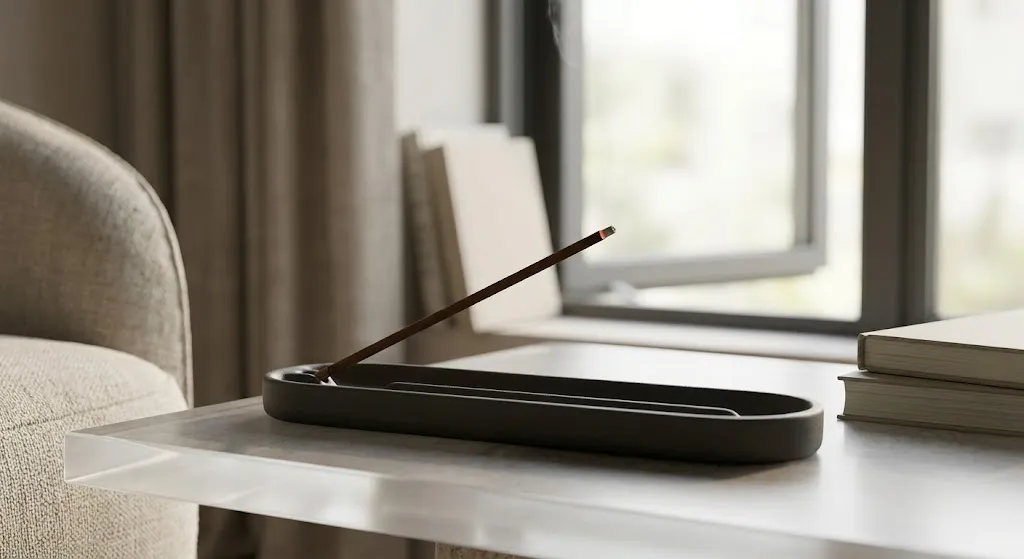
Do not assume one accessory fits every incense stick. Before recommending or buying a holder, confirm the width, length, and coreless construction of the specific product you plan to burn. DFXY’s Hainan Chong Lou Agarwood Incense Sticks page identifies that product as bamboo-free and coreless, made without added fragrance oils, essential oils, synthetic perfume, dyes, charcoal powder, or artificial scent enhancers. This information is product-specific; it should not be copied onto other DFXY products without verifying their own live descriptions.
If you are selecting incense first, browse the real DFXY Agarwood Incense category. Then use the individual product page to check whether it is coreless and whether any format or use details are provided. If you already have a DFXY stick but are unsure whether a holder will fit it, use the DFXY contact page to ask before forcing the stick into an unsuitable accessory.
For readers experiencing a harsh smell, dense smoke, or an unstable burn after setup, the related guide Common Mistakes When Using Agarwood Stick Incense is relevant because it specifically discusses the way coreless sticks may not sit securely in holes made for thicker bamboo-core incense. 271
After the holder is completely cool, empty loose ash and wipe the surface with a dry soft cloth. Residue can build up around openings, grooves, or support points and make the next stick sit unevenly. Avoid washing porous stone or unfinished wood aggressively; follow the maker’s care guidance when available.
Do not reuse a holder immediately if it is still hot, cracked, unstable, or holding glowing ash. Let it cool fully, check its condition, and reset the area before the next use. A quiet incense ritual starts with a clean holder and ends with a complete extinguishing check.
Sometimes, but only if the holder supports the solid stick securely without force and catches the full ash fall. Many holders are made for thin bamboo-core sticks, so test the fit while the incense is unlit before burning.
A stable ceramic, stone, or metal holder with sufficient ash-catching area is often the simplest option. The best choice depends on the stick’s thickness, length, and whether it can sit securely without being forced into a narrow hole.
An ash-filled burner can support a solid coreless stick when it uses a stable heat-safe vessel and appropriate fine incense ash. It should be arranged securely and used with one stick at a time, under supervision.
The holder opening may be too large, too shallow, or designed for a different stick format. Stop burning it, let everything cool, and choose a holder or support method that keeps the stick stable and positions the ember over an ash catcher.
You need an ash-catching surface large enough for the full projected ash path. Long sticks can drop ash far from their base, so a very small dish may not be adequate.
No. A holder reduces risk but does not remove it. Burn one stick on a stable heat-safe surface, use gentle ventilation, and extinguish it completely before leaving the room or going to sleep.