
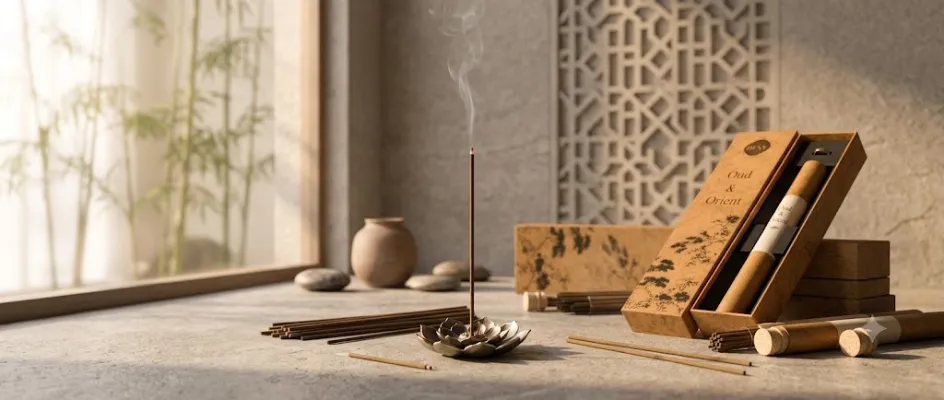
Agarwood stick incense—often known as oud incense—is valued for a fragrance that can feel woody, resinous, warm, earthy, or quietly sweet. Unlike a room spray designed to make an instant impression, a well-made agarwood incense stick usually develops slowly. Its character depends not only on the material itself, but also on how it is lit, placed, stored, and experienced.
Even experienced incense users can unintentionally make small mistakes that flatten the aroma, cause an uneven burn, or make a refined stick feel heavier than it should. This is especially true with pure agarwood stick incense and slim no-core oud sticks, where the material and construction deserve a more considered approach.
This guide explains six common pure oud stick mistakes and shows you how to burn agarwood incense correctly for a cleaner, more balanced, and more enjoyable ritual.
Agarwood is not appreciated simply because it is strong. Its value lies in nuance: the way dry wood, resin, soft sweetness, forest-like depth, or mineral warmth may appear at different moments during a burn.
When incense is exposed to excessive flame, strong airflow, poor storage, or repeated use in an unventilated space, those details become harder to notice. The goal is not to fill a room with as much smoke as possible. It is to create enough space for the fragrance to unfold naturally.
A low price or an immediately powerful scent does not necessarily indicate a better incense experience. Some products may rely on heavy perfume, masking oils, filler materials, or an overpowering fragrance profile that leaves little room for the natural character associated with oud.
Agarwood is often appreciated for gradual development rather than a single loud note. When a stick smells intensely sweet, sharp, or perfume-like before it is even lit, the burning experience may feel flat or artificial rather than layered.
This does not mean every subtle incense is automatically premium. It means buyers should look beyond intensity and ask better questions about the product.
Choose a brand that clearly describes the incense material, construction, scent profile, and care instructions. If you prefer coreless incense, confirm that the product is genuinely made without a bamboo centre. If a product is described as natural or additive-free, ensure that the brand can support that statement with accurate product information.
A well-chosen agarwood stick incense should feel balanced in the room. It should invite attention without demanding it.
One of the most common mistakes is treating incense like a candle. An agarwood stick should smoulder from a small ember after lighting; it should not continue burning with a visible flame.
An open flame consumes incense too quickly and can produce a hotter, heavier burn. This may obscure the quieter woody and resinous notes that make agarwood distinctive. It can also shorten the burn unnecessarily and create more smoke than the setting requires.
A properly lit stick will release a light stream of smoke rather than a sustained flame. Never leave burning incense unattended, and extinguish it before leaving the room or going to sleep.fireprevention.utexas+1
If you want to end the session before the stick finishes, carefully smother the ember in clean sand or ash, use a ceramic or metal snuffer, or carefully extinguish the glowing end with water. Confirm that the ember is fully out and cool before disposing of it.
A beautiful incense stick can still become frustrating if the holder does not fit it properly. This is particularly relevant for slim, coreless agarwood sticks, which may not sit securely in a wide hole designed for thicker bamboo-core incense.
An unstable stick can tilt, burn unevenly, drop ash outside the holder, or extinguish prematurely. More importantly, hot ash and embers should never be allowed to fall onto timber, textiles, paper, or decorative materials.
Use a stable, heat-resistant holder with a narrow opening or appropriate support for your specific incense format. It should catch ash throughout the full length of the burn and sit on a non-flammable, level surface.
Ceramic, stone, brass, or a dedicated ash-bed holder can work well when used correctly. Keep the setup away from curtains, books, dried flowers, bedding, paper, pets, and children. A proper holder is not merely decorative—it is part of responsible incense use.aromawarehouse+1
Airflow has a direct effect on both burn behaviour and fragrance perception. Two opposite conditions can cause problems: a completely sealed room or a location exposed to strong wind.
Burning incense in a closed space can allow smoke and airborne particles to build up. A heavy atmosphere can make even a delicate agarwood profile feel dense, dull, or uncomfortable. Research into incense-related indoor air quality supports using adequate ventilation during and after burning.pmc.ncbi.nlm.nih+1
A fan, air-conditioning vent, or open window directly beside the holder can make a stick burn too quickly, unevenly, or go out. It can also disperse the fragrance before it has a chance to settle into the room.
Place the incense holder in a calm area with mild air exchange. A slightly open window or door is often enough. Keep the stick away from direct air-conditioning flow, powerful fans, and strong cross-breezes.
The aim is gentle ventilation—not a wind tunnel, and not a sealed room.
With agarwood, more is rarely better. Burning several sticks at once or repeatedly lighting new sticks in a small room can overwhelm the senses and make it difficult to appreciate the material’s finer details.
Your sense of smell adapts quickly to a persistent fragrance. After prolonged exposure, the top, middle, and base characteristics of the incense may become difficult to distinguish. Fabrics, curtains, and soft furnishings may also retain residual smoke more easily in poorly ventilated spaces.
Begin with one stick in a small or medium room. Allow time for the room to air between sessions and for your sense of smell to reset.
If the smoke feels uncomfortable to you or another person in the room, extinguish the stick and improve ventilation. Be especially thoughtful when using incense around children, pets, or people with respiratory sensitivities.
A short incense session before tea, reading, reflection, or the close of a workday can often feel more meaningful than continuous burning.
Proper storage protects the fragrance character of natural incense. Agarwood sticks can be affected by excess moisture, heat, direct sunlight, and nearby strong odours.
Avoid storing natural oud sticks in bathrooms, near kitchen steam, beside windows, or in direct sunlight. Do not place them next to perfume, cleaning products, spices, scented candles, or strongly fragranced incense if you want to preserve their individual aroma.
Uncontrolled humidity may affect how incense burns, while excessive heat and light can gradually alter aromatic materials.
Keep incense in its original packaging or in a clean, dry, closed container. A dark cupboard or drawer away from heat, moisture, and direct light is usually suitable.
For long-term storage, use a well-sealed, odour-free container and keep different scent families separate. The most important principles are simple: cool, dry, dark, and protected from strong surrounding smells.
Agarwood incense is best enjoyed as part of an intentional pause rather than as a tool for masking stale air, cooking odours, or dampness. Before lighting a stick, take a moment to prepare the room: clear the immediate surface, ensure the holder is stable, and allow for gentle ventilation.
Then let the incense become part of a daily rhythm—before tea, during reading, after work, while welcoming a guest, or during a quiet moment of reflection.
The most memorable oud incense experience is often not the strongest one. It is the one that feels balanced, safe, and naturally at home in the space.
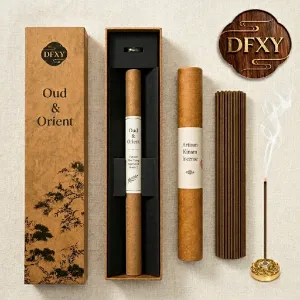
DFXY Classic Black Agarwood Incense Sticks offer a steady, richly layered aroma designed for everyday use. The scent opens with the slightly medicinal depth typical of black agarwood, then softens into mellow sweetness with a gently roasted finish. Balanced, reliable, and easy to live with, it suits reading, work, quiet evenings, and daily home fragrance.
100 in stock
Yes. Light the tip, allow a small flame to form briefly, then gently blow it out. The incense should continue with a small glowing ember and a light stream of smoke, not an open flame.
You can use incense in a bedroom while you are awake and present to monitor it. Use a stable heat-resistant holder, maintain gentle ventilation, and extinguish the incense before sleeping or leaving the room.fireprevention.
Direct airflow, a flame left burning too long, or an unsuitable holder can all contribute to an overly fast or uneven burn. Move the incense away from fans and air-conditioning vents, and make sure only the ember remains after lighting.
Store them in a cool, dry, dark place in their original box or a clean closed container. Keep them away from humidity, heat, direct sunlight, and strongly scented household products.
For most small and medium rooms, start with one stick. This gives the aroma space to develop while helping you avoid unnecessary smoke build-up indoors.
Pure agarwood stick incense is a material to experience slowly. By choosing transparent product information, lighting the stick gently, using a stable holder, allowing mild ventilation, avoiding overuse, and storing it carefully, you can preserve more of the quiet depth that makes oud so distinctive.
Explore DFXY’s collection of agarwood incense sticks for considered daily rituals, tea moments, reflective spaces, and homes that value a more restrained approach to fragrance.