
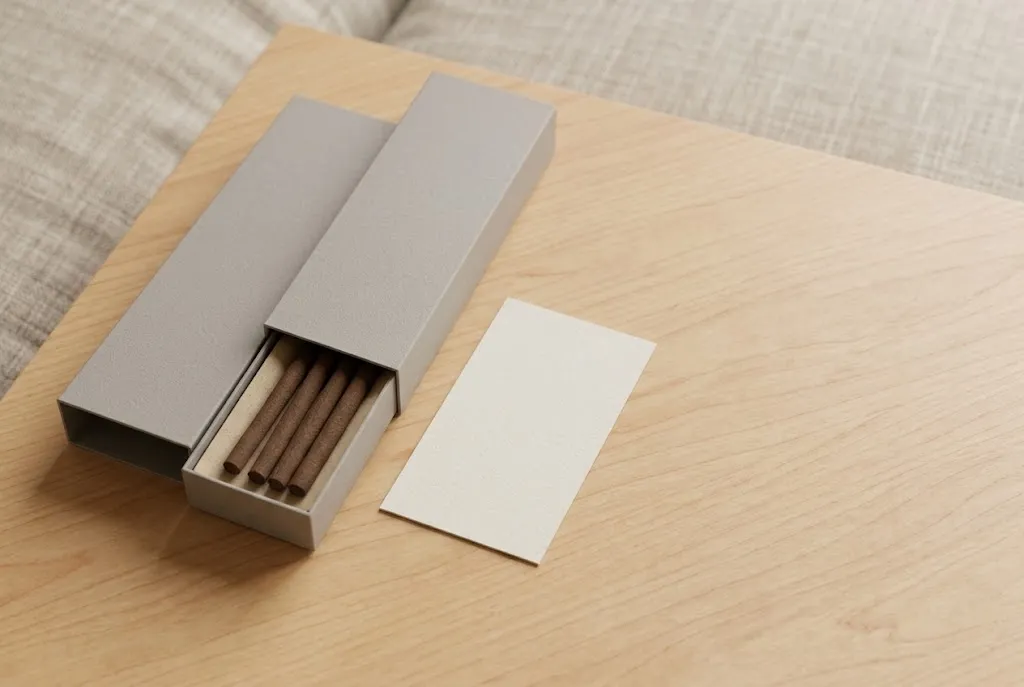
“Natural incense” can be a useful starting point, but it is not a complete product description. When you are choosing natural agarwood incense, look beyond the word natural and check what the product says about its aromatic material, added fragrance, binders, format, and use instructions. A claim is easier to evaluate when it is specific, traceable, and matched by clear product information.
This guide is for buyers comparing agarwood incense sticks, especially coreless sticks without a separate bamboo support inside. It explains what “natural” can and cannot tell you, how to read a product page, and how to compare two options without assuming that a natural label guarantees quality, safety, or a particular burning experience.
The word natural may refer to the aromatic material, the fragrance source, the binders, or the overall direction of a formula. Which meaning applies depends on the product description. Read the wording as a prompt to check details, not as a standalone guarantee.
A product described as natural is not automatically wild-harvested, certified organic, smoke-free, non-toxic, or suitable for every person. Likewise, “coreless” describes construction: it means the stick does not contain a separate bamboo support. It does not, by itself, prove that the incense contains no fragrance oils, binders, or other additives.
| Claim | Reasonable reading | What it does not prove |
|---|---|---|
| Natural | The brand is describing a natural material or formula direction | Certification, wild origin, safety, or zero smoke |
| Coreless / bamboo-free | No separate bamboo splint supports the stick | No added fragrance, binder, or other additive |
| Low smoke | The brand claims a lower-smoke experience | Zero smoke, harmlessness, or suitability for sensitive users |
| Handmade | Human work is involved in production | Every material is natural or the product is superior |
| Organic | Requires a clear scope and, where claimed, certification | The entire product is organic |
Ask for the specific product information rather than relying on a category label. If a page does not explain an important point, treat that as a question for the seller—not a reason to invent an answer.
A useful product page gives you enough information to understand what you are buying and how to use it. Before ordering, check five areas: material, fragrance disclosure, format, specifications, and care instructions.
Look for a clear description of the aromatic material. For agarwood incense, the page should identify the product as agarwood or oud and explain whether it uses a particular material description, blend, or preparation. Do not assume that every stick labelled “agarwood” contains the same material in the same proportion.
Check whether the description explains added fragrance oils, essential oils, synthetic perfume, dyes, charcoal powder, or scent enhancers. If a product is intended to be fragrance-free or free of a particular additive, that should be stated clearly for that product.
DFXY publicly describes its coreless incense as made without added fragrance oils, essential oils, synthetic perfume, dyes, charcoal powder, or artificial scent enhancers. This is a product-specific claim to verify on the page for the item you are buying, not an assumption to apply to every incense product on the market.
Confirm whether the product is a stick, cone, powder, chip, or bakhoor. A coreless stick is a solid incense body without a bamboo core, so it may require a different holder from a conventional stick with a bare bamboo end.
Compare the quantity or net amount, stick length where stated, packaging contents, and any burning information supplied by the seller. Specifications help you compare like with like. They do not replace the need to check the fragrance description.
Look for guidance on a suitable holder, ventilation, supervision, storage, and extinguishing the flame. Clear instructions are especially helpful for someone trying incense for the first time.
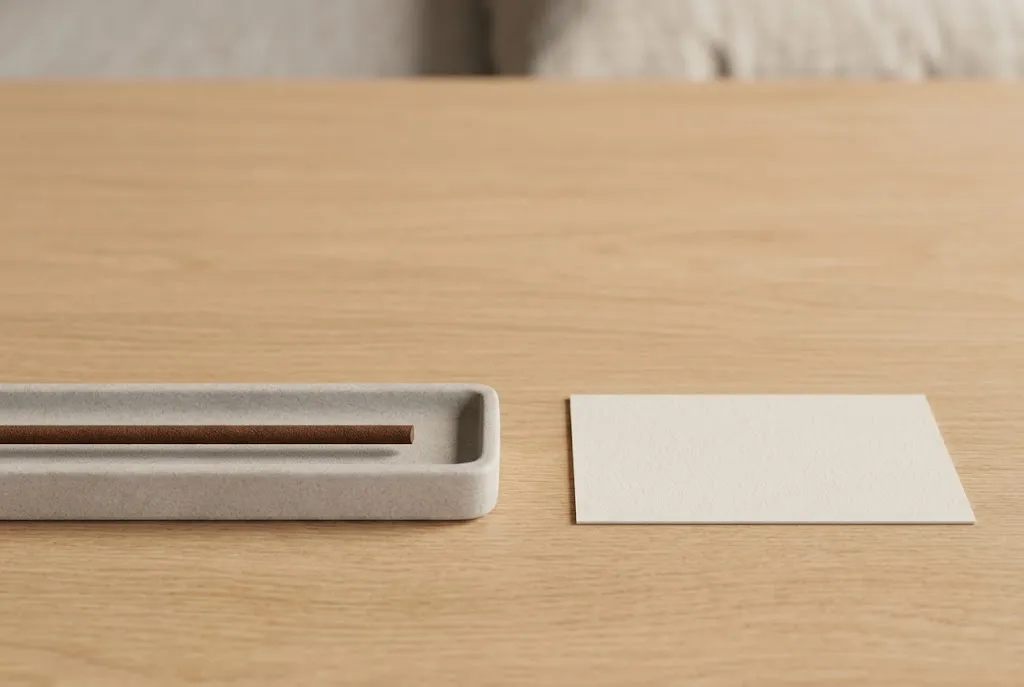
“Natural” and “low smoke” can appear in the same product description, but they answer different questions. Natural relates to materials or formulation; low smoke relates to the amount or visibility of smoke during use. Neither term, by itself, establishes that a product is safe for every user or every room.
Do not treat a natural label as a health claim. If you have fragrance sensitivity, asthma, another respiratory condition, or concerns about indoor air, review the product information and consult an appropriate professional rather than relying on marketing language. If smoke or scent feels uncomfortable, stop using the product.
Likewise, do not assume that a product called smokeless produces no smoke. Some sellers use “less smoke” or “low smoke” to describe a relative experience. Ask what the claim means for the specific item, and follow the product’s own ventilation and supervision guidance.
When comparing two products, use the same criteria for both. A useful comparison looks at the fragrance description, construction, quantity, disclosed additives, and required setup—not just price or packaging.
| Comparison point | Product A | Product B | What to confirm |
|---|---|---|---|
| Aroma description | Use the seller’s exact wording | Use the seller’s exact wording | Whether the profiles are comparable |
| Coreless structure | Confirm on the product page | Confirm on the product page | Holder compatibility and handling |
| Quantity or net amount | Use the stated specification | Use the stated specification | Whether you can compare per stick or per gram |
| Additive disclosure | Use the product-specific statement | Use the product-specific statement | Do not infer “no additives” from silence |
| Holder requirement | Check the use guidance | Check the use guidance | Whether an accessory is included |
For example, DFXY’s public product information describes a pure agarwood incense format as coreless compression, with no added oils and no synthetic glue or starch paste. That information is useful because it is specific to the product; it should not be copied onto unrelated incense products without verification.
If one product has more complete information than another, that does not automatically make it better. It does mean you can make a more informed decision.
If a product page leaves an important question unanswered, ask the seller before checkout. Clear questions are more useful than assumptions.
These questions do not require a seller to provide confidential formulas or laboratory reports. They ask for information that helps you use and evaluate the product responsibly.
Before buying from DFXY, review the actual product page and confirm the details for the item you select. Check the fragrance description, coreless construction, quantity, packaging contents, and use guidance. If a detail is unclear, ask DFXY before ordering.
DFXY’s public pages describe coreless, bamboo-free agarwood incense and identify its products for tea, meditation, reading, and welcoming guests. Those descriptions can help you understand the intended use, but you should still verify the exact product, variant, and included contents before purchase.
A practical buying rule is simple: prefer the product whose information answers your questions, not the one with the strongest-sounding label. “Natural” is most useful when it is specific, traceable, and supported by clear use information.
Not necessarily. “Natural” may describe the aromatic material or overall formula, while fragrance-free is a separate statement. Check the product page for whether it contains added fragrance oils or other scenting materials.
No. Coreless means there is no separate bamboo support inside the stick. It does not establish that the aromatic material, fragrance, or binders are natural.
No. Burning incense produces smoke. “Natural” does not mean smoke-free, and a low-smoke claim should be checked against the specific product description.
No. Natural describes a material or formulation claim, while wild versus cultivated describes sourcing. A product can be natural without being wild-harvested, and sourcing claims should be verified separately.
Compare the same details for both: aroma description, format, quantity, disclosed additives, holder requirements, and use instructions. Avoid comparing a boxed product with a loose product without checking what each package includes.
No. “Natural” is not a safety certification. Follow the product’s use instructions, ventilate the space, and stop using it if smoke or fragrance feels uncomfortable.
Ask whether the specific product contains added fragrance oils, synthetic perfume, dyes, charcoal powder, or artificial scent enhancers. Also ask about the format, included contents, and recommended holder.
Use a holder that securely supports the solid incense body and catches ash. Some holders designed for a bare bamboo end may not fit a coreless stick, so check compatibility before use.