
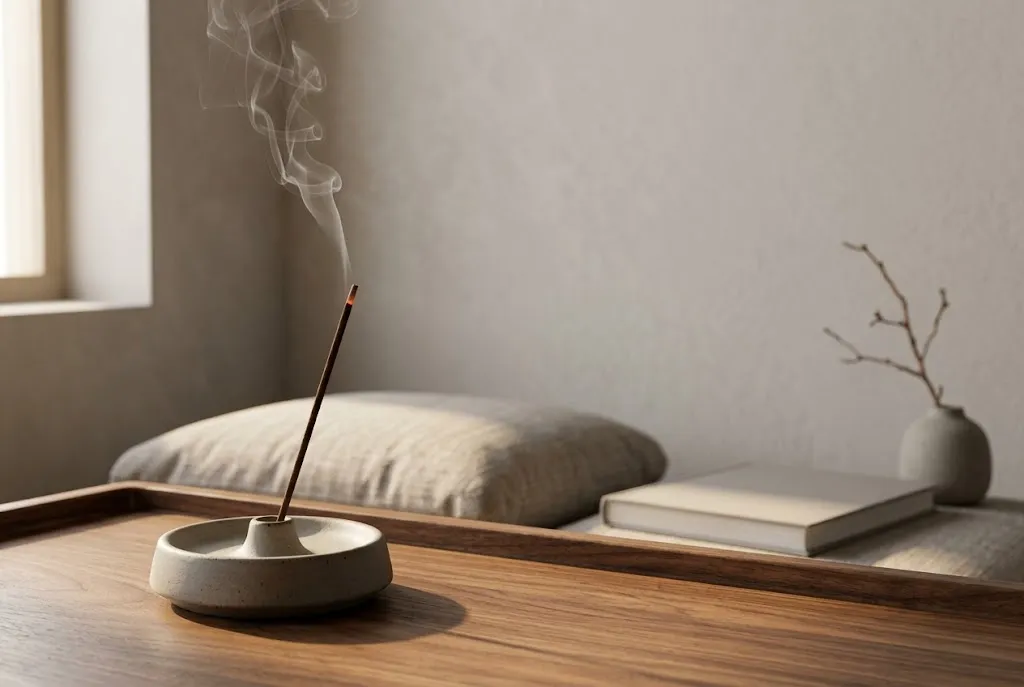
Meditation does not require incense, but a well-chosen agarwood incense can help create a clear beginning to a practice. The right stick should support attention without dominating the room: its aroma should unfold gradually, its smoke should be manageable for the space, and its burn time should fit the way you actually sit.
This guide is for people who want to buy agarwood incense for meditation rather than simply choose the strongest scent on a shelf. You will learn how to match aroma character, ingredient transparency, smoke level, burn time, and format to your routine—then make a more confident decision before ordering.
[Image 1 placeholder — Featured image. See independent brief below.]
Agarwood (also called oud, aloeswood, or gaharu) has been used in meditation and spiritual practices for centuries across Asia and the Middle East. The material is valued because natural agarwood can smell layered rather than one-dimensional: woody, resinous, warm, sweet, earthy, or gently cooling depending on the material and blend.
Unlike synthetic fragrance sticks, which often smell flat and overly sweet, quality agarwood incense evolves as it burns. This subtle change can support mindfulness by giving your attention a gentle, non-distracting anchor. The scent is present but not demanding—enough to mark the transition into your practice without pulling your focus away from your breath.
Many buyers assume premium incense must smell powerful. For meditation, that is rarely the best standard. A more useful standard is whether the aroma remains comfortable and interesting over time.
Choose a warmer, resinous agarwood profile if your goal is to slow down, read, journal, or meditate in the evening. These profiles often feel grounding because they stay close to wood, balsam, and subtle sweetness rather than projecting like perfume. They can work especially well in a living room or a larger meditation corner where the scent has room to diffuse.
Best for: Evening meditation, relaxation, journaling, restorative yoga
A drier wood-forward incense is usually easier for beginners. It offers a quieter, cleaner impression and is less likely to overwhelm a short 10- to 20-minute sitting. If you are not yet sure what kind of oud you enjoy, start here rather than choosing a heavily perfumed “oud” product.
Best for: Morning meditation, focus work, beginners, small rooms
Some high-grade agarwood profiles can reveal a light, fresh, or cooling nuance. These are useful when you meditate in the morning or want a more awake, spacious mood. They should still feel natural and restrained, not sharp or artificially minty.
Best for: Morning practice, breathwork, yoga, clarity-focused sessions
When buying online, look for specific sensory language rather than vague claims such as “luxury scent.” A detailed product page should explain whether the incense is woody, resinous, sweet, dry, smoky, soft, or cooling—and ideally describe how its aroma develops after lighting.
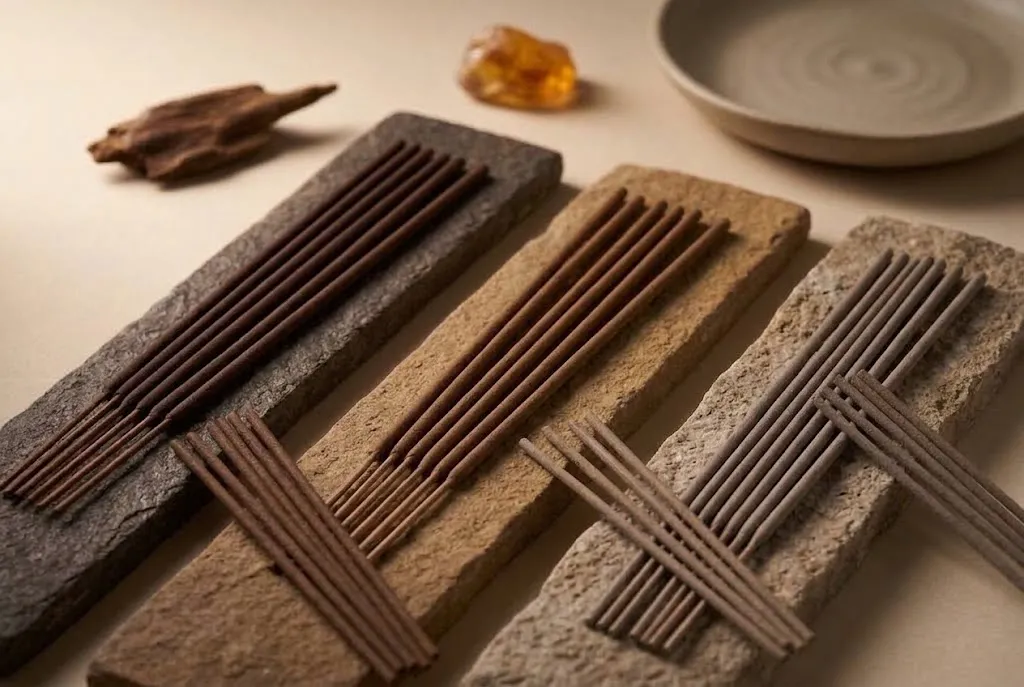
Ingredient transparency is one of the best filters for choosing incense you will burn near your breathing space. A product description should make clear whether it uses named aromatic woods, botanical binders, resins, or essential oils, rather than relying only on a generic “fragrance” claim.
Natural does not automatically mean smoke-free, and no incense is right for everyone. However, you can make a better decision when the seller explains the raw materials, fragrance approach, and intended use. If a product is advertised as agarwood incense but gives no meaningful information beyond a perfume-like scent name, treat that as a reason to ask questions before buying.
Use this checklist before ordering:
For DFXY shoppers, the best next step is to explore the full Collection to compare product descriptions, scent notes, and burn guidance across different agarwood incense options.
Meditation incense should fit the physical conditions of the room. A beautiful scent can become distracting if it is burned in a closed bedroom, beside a fan, or during an extended practice with little ventilation.
| Room Size | Recommended Smoke Level | Ventilation |
|---|---|---|
| Small bedroom (under 10 m2) | Low-smoke, thin burn | Slightly open window or door |
| Medium room (10-20 m2) | Low to moderate smoke | Natural air flow |
| Large living room (over 20 m2) | Moderate smoke acceptable | Standard ventilation |
| Shared studio or yoga space | Low-smoke, minimal projection | Active air exchange |
For a compact room, choose a low-smoke or gently burning stick and keep a window slightly open if conditions allow. For a larger room, you may have more flexibility, but start with one stick—not several. Adding more incense does not make the fragrance more refined; it usually reduces your ability to notice its subtler notes.
Burn behavior matters as much as aroma. A quality stick should smoulder steadily after the initial flame is extinguished. If it burns with a large flame, creates dense smoke, or becomes harsh very quickly, extinguish it and reassess the setup. The goal is a thin, controlled stream of smoke and a scent that develops progressively.
For more foundational context on agarwood and its sensory character, see The Ultimate Oriental Agarwood Guide. Use that page to understand the material; use this guide to choose a meditation-friendly format and profile.
Do not buy incense around an ideal routine you may never maintain. Choose it around the meditation practice you already have.
If you usually sit for 10 minutes, a full-length stick may be more than you need. You can light it, let it catch, extinguish the flame, and carefully put it out after your session using a fire-safe method. If you sit for 20 to 40 minutes, a slow, even-burning stick may create a more continuous ritual without requiring any adjustment.
| Your Routine | Recommended Approach |
|---|---|
| 5-10 minutes | Light one stick shortly before sitting; extinguish safely afterward if needed |
| 10-20 minutes | Choose a subtle, low-smoke stick that does not peak too quickly |
| 20-40 minutes | Prioritize even burn behavior and moderate diffusion |
| Shared practice | Use one stick in a larger, ventilated space; avoid strong fragrance blends |
Safety note: Never leave burning incense unattended, and do not meditate while falling asleep with incense still lit. Place the stick in a stable, heat-safe holder on a clear surface, away from fabrics, papers, pets, and children.
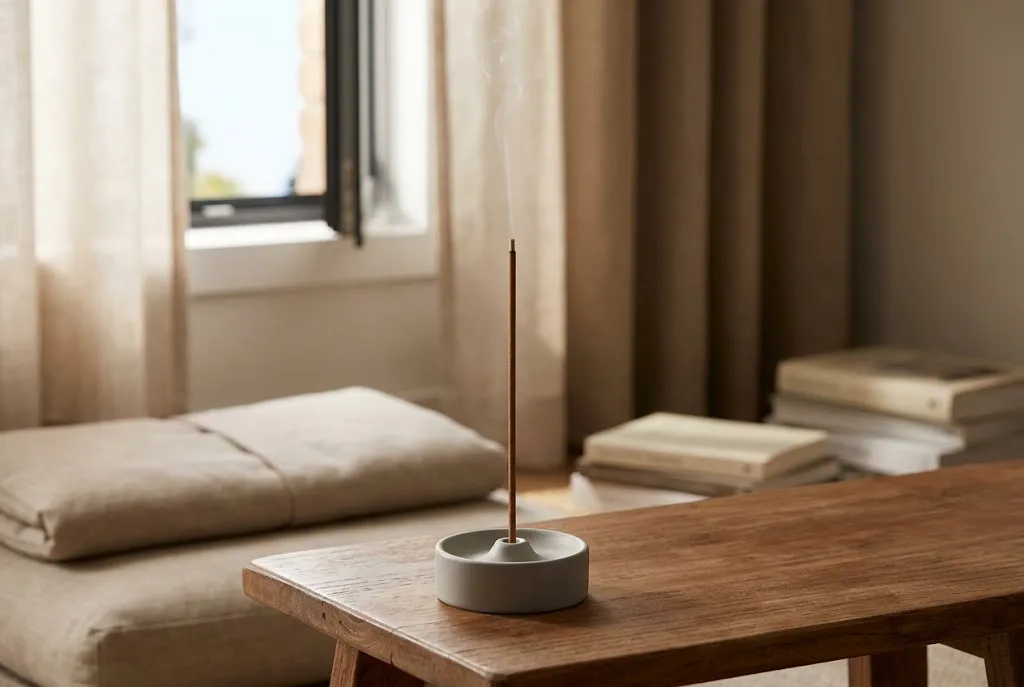
The best agarwood incense for meditation is personal. One person may love a deep, resin-rich profile; another may prefer a quieter, drier wood note. That is why a small trial pack or a single scent family is often a wiser first purchase than a large assortment.
During the first few sessions, notice these five things:
Keep a short note after each use. In a few sessions, patterns emerge: perhaps you prefer woodier incense in the morning and warmer profiles in the evening. That observation is more useful than a generic “best incense” recommendation.
When you are ready to choose, begin by browsing the Collection and use each product page to check scent notes, ingredients or material description, burn guidance, and the intended atmosphere. If you are new to the category, read the Knowledge Center first, then select one incense that matches a single use case—morning focus, evening unwinding, or quiet reflection.
A good meditation incense does not need to make grand promises. It should burn predictably, smell coherent, and give you a gentle signal that it is time to pause. Start with one thoughtful choice, use it in a well-ventilated space, and let your own practice decide whether it belongs in your routine.
If you have questions about DFXY’s approach to sourcing, quality, or the stories behind specific products, you can also learn more on the About page before making your decision.
Agarwood incense can suit meditation if you enjoy its woody and resinous character and choose a subtle, low-smoke product for a ventilated space. It should support your attention rather than create a strong sensory distraction.
Begin with a dry, softly woody profile rather than a very sweet, smoky, or heavily perfumed oud scent. Buy a small amount first so you can test how it feels in your own room and practice.
Start with one stick only. The appropriate amount depends on room size, ventilation, product strength, and personal sensitivity; more incense is not automatically better.
Look for clear information about the aromatic materials, binder, fragrance approach, and use guidance. If the listing only says “fragrance” or offers no useful material information, ask the seller for clarification before purchasing.
You can burn it in a bedroom only with appropriate ventilation, a stable heat-safe holder, and active supervision. Do not leave it burning unattended or use it while sleeping.
Agarwood refers to the resinous wood used in incense sticks, while oud often refers to distilled oud oil used in perfumes. In incense, “agarwood incense sticks” is the more accurate term for sticks made with agarwood material.