
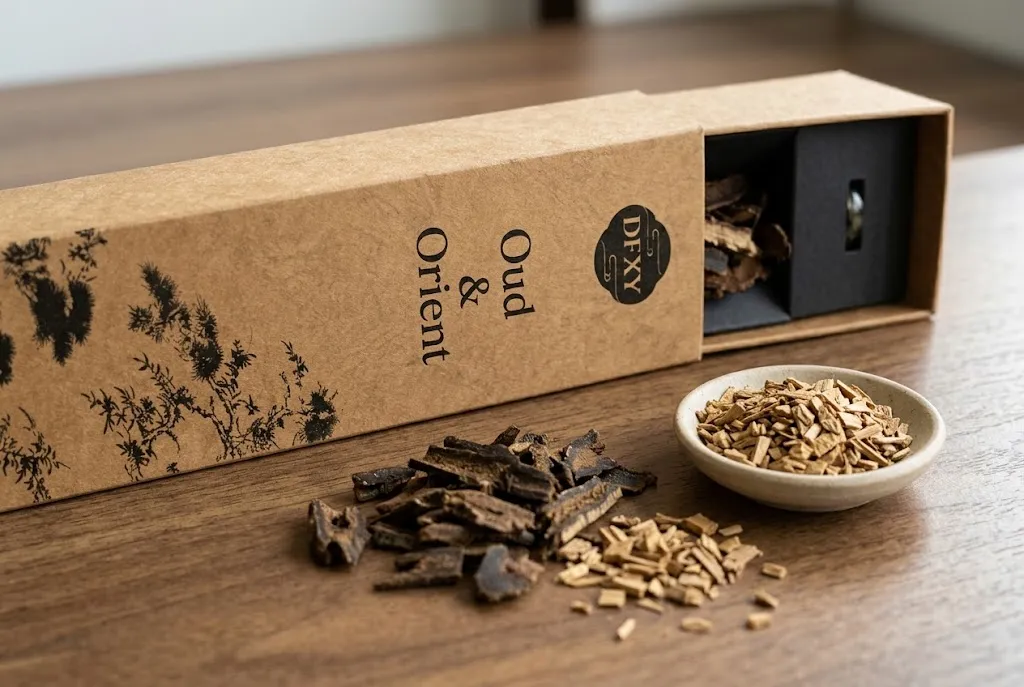
Agarwood and sandalwood chips are different aromatic materials, and neither is universally better. Choose between clearly described products by your fragrance preference, compatible heating equipment and actual pack details. This guide concerns loose wood pieces, not finished incense sticks, and does not recommend either wood as a health treatment.
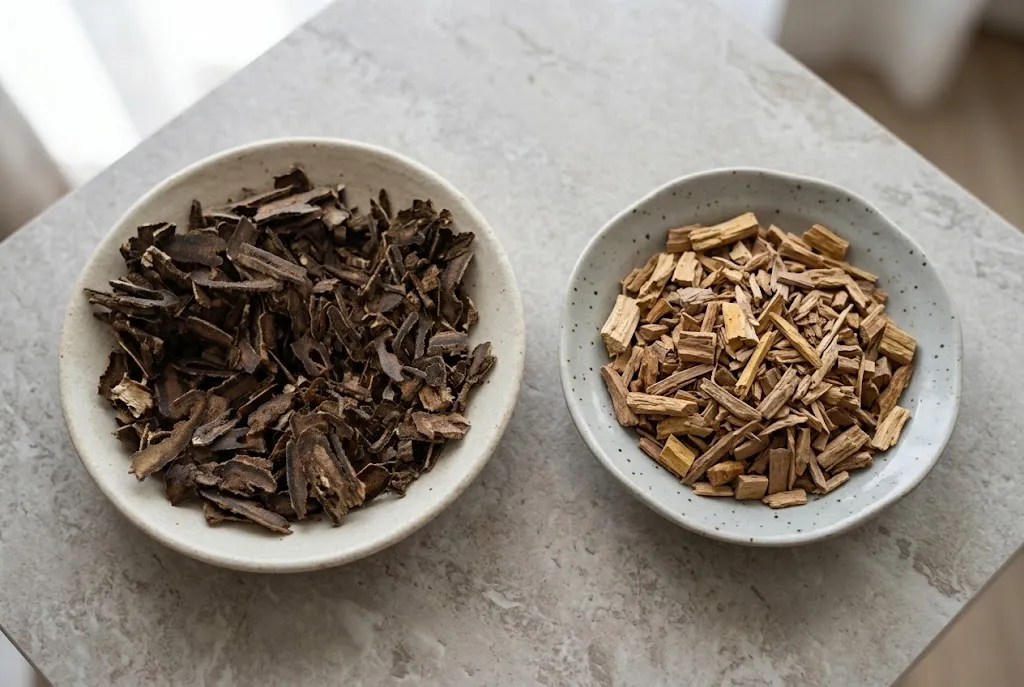
Start with the Material, Not the Mood
Agarwood and sandalwood are different aromatic woods, not two grades of the same product. Agarwood is resin-bearing fragrant wood associated with Aquilaria trees; a scientific review of agarwood explains the relationship between the tree, stress responses and resin formation. Sandalwood is a separate material: Kew’s account of Santalum album describes its valued fragrant wood and heartwood-derived essence.
Those definitions help you understand a listing, but they do not verify the contents of a particular pack. A product called oud chips may be wood, a scented preparation or a blend. Ask whether anything has been added and whether the supplier is describing the material itself or a fragrance style. Do not assume that a familiar name gives you the complete composition.
Keep Chips Separate from Incense Sticks
This comparison concerns loose wood pieces intended for use with suitable heating equipment. It does not compare finished incense sticks, which have their own composition, dimensions, support requirements and lighting instructions. Advice for one format should not be copied automatically to another. A chip does not become suitable for your holder simply because both products share the word incense.
If you are deciding between ready-made sticks rather than loose material, use our separate agarwood versus sandalwood incense comparison. Staying with one format makes the choice more useful. First establish what you plan to use, then compare the details that matter within that format. Otherwise, you may be comparing the convenience of a stick with the material story of a chip rather than two realistic options.
Use Aroma Descriptions to Narrow the Choice
A seller may describe an agarwood sample with resinous, dry, sweet or earthy notes, and a sandalwood sample as creamy, rounded or softly woody. Treat those words as descriptions of the particular offering, not a rule that every sample must follow. A description can help you form a preference; it cannot promise how a material will feel in your room.
Ask a more specific question than which wood is stronger. You might want a dry woody direction without pronounced sweetness, or a softer impression rather than a dense aroma. Tell the supplier that. Do not buy a material only because a description calls it complex, rare or powerful. The useful comparison is between two clearly described items and your own preference, not between a modest pack and an impressive story.
Check the Heater before Ordering the Wood
Identify the device you already own and confirm that its manufacturer permits the material you are considering. An attractive burner photograph is not enough. Ask about the required container or accessory, the loading instructions and how the equipment should be shut down. If you cannot establish compatibility, do not improvise a setup merely to use the purchase.
This guide gives no universal temperature, loading weight or session duration. Those details depend on the specific device and material instructions. An electric heater avoids the need to manage a separate charcoal ember, but it is not automatically emissions-free or suitable for unattended use. Do not add oils, water or another material unless the relevant instructions permit it. Keep the decision tied to a setup you actually understand.

Compare What You Receive, Not Just the Price
Before comparing prices, record the actual product name, pack quantity or net weight, material description and intended use. Check whether the photograph represents the contents you will receive and whether the heater or decorative accessories are included. A beautifully styled image can show several objects without making all of them part of the purchase.
Ask what any grade or quality term means for that seller. Do not use fragment size, darkness, a price premium or a claim of rarity as a substitute for product information. For help separating material statements from aroma wording, see our guide to reading agarwood product labels; its main subject is sticks, but the distinction between an ingredient claim and a scent description is also useful when asking about chips.
Make a Comparison You Can Explain Later
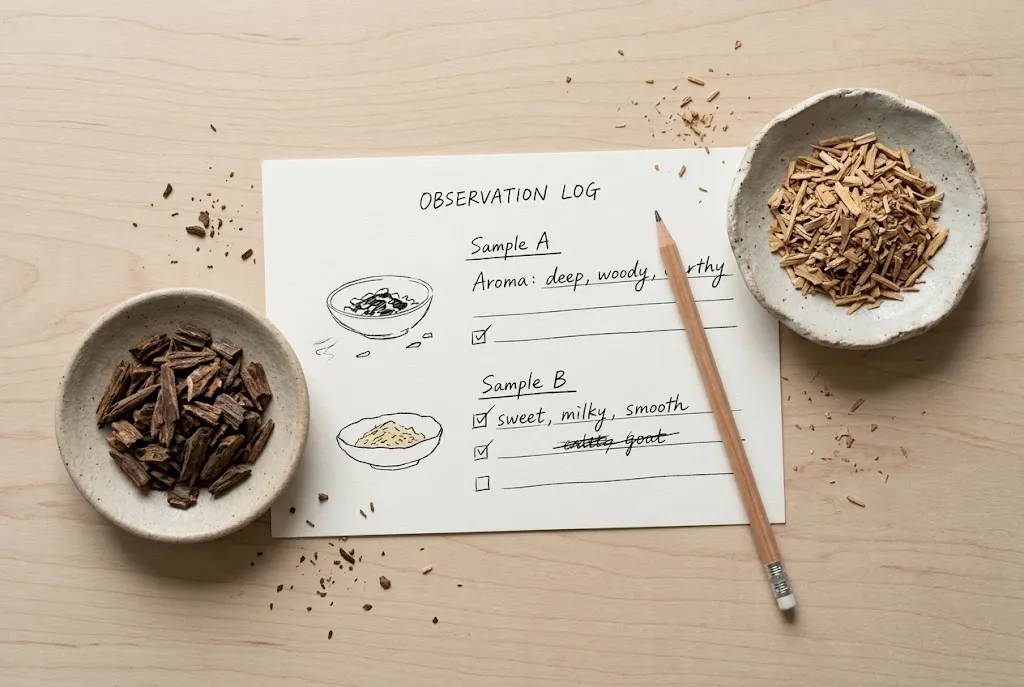
If you choose to evaluate both materials, follow the instructions for each and record the conditions rather than trying to force an identical setting onto different products. Note the reference, device and your impression. Do not mix the materials if your purpose