
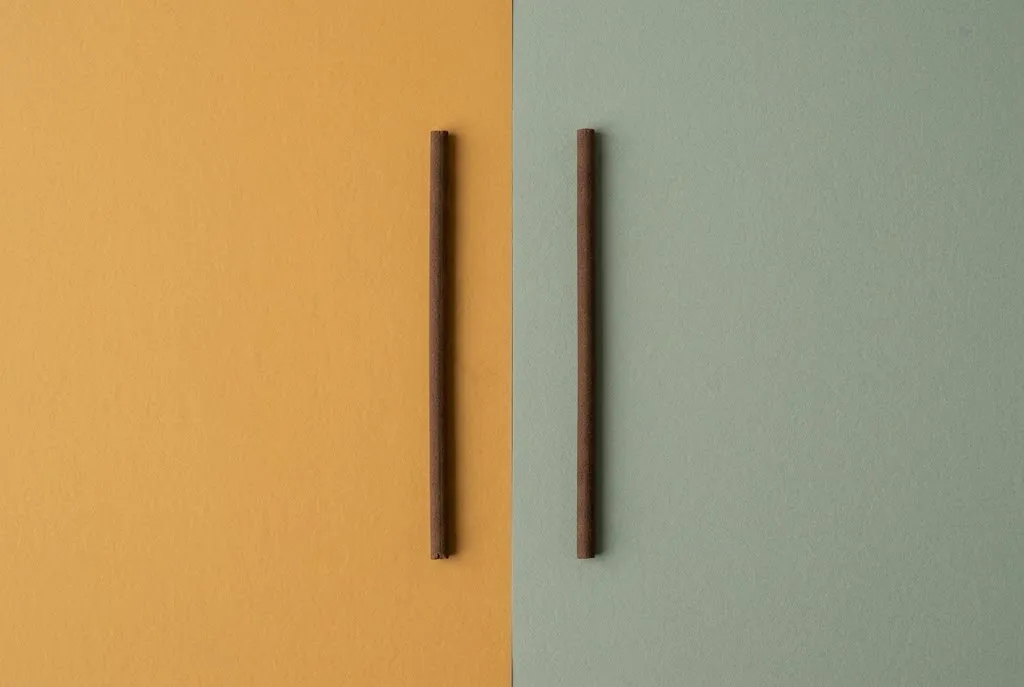
Agarwood and sandalwood are two of the most valued aromatic woods in incense, but they create very different experiences. Agarwood tends to feel deeper, more resinous, and more complex, while sandalwood usually feels warmer, smoother, and more approachable. Neither is objectively better; the right choice depends on your room, the time of day, and the mood you want to create.
This guide compares agarwood and sandalwood incense across four practical dimensions: aroma direction, room presence, best use case, and product format. It does not claim that one wood is superior, and it does not make health or wellness claims.
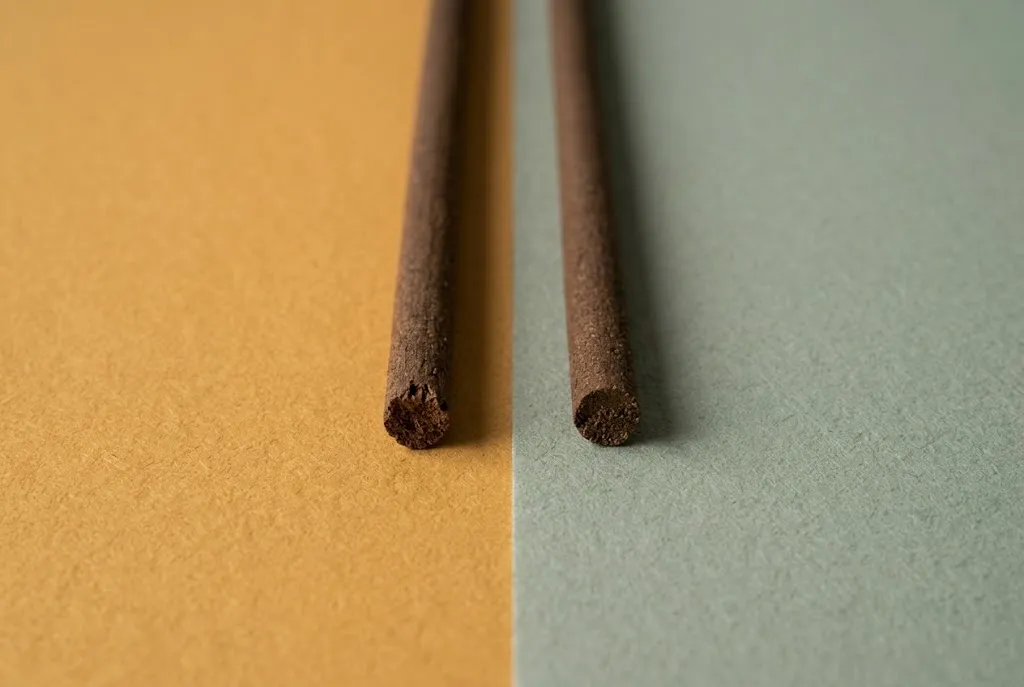
The most noticeable difference is the aroma itself. Agarwood is often described as deep, woody, resinous, and slightly sweet, with smoky, earthy, or leathery nuances depending on the material and how it is burned. Sandalwood is usually described as warm, creamy, milky, and softly woody, with a gentle sweetness that feels smooth and long-lasting.
Think of agarwood as the deeper, more layered profile, and sandalwood as the softer, more rounded one. Agarwood may open with one character and settle into another as it burns, while sandalwood tends to maintain a more consistent, comforting warmth throughout the session. [web:225][web:701]
Neither profile is “stronger” by default. A well-made sandalwood stick can fill a room with a gentle, persistent warmth, while a subtle agarwood stick may stay close to the holder and reveal its character slowly. Judge each product by its own description and your own experience, not by the wood name alone.
Room presence describes how much space an aroma seems to fill. This is separate from strength: a light profile can still travel, and a deep profile can stay close to the source.
Agarwood often feels denser and more enveloping, which some people enjoy in the evening or in a larger room. Sandalwood often feels lighter and more even, which can make it easier to live with during the day or in a smaller space.
For a small bedroom or study, sandalwood may feel more natural as a starting point. For a living room, a quiet evening, or a space where you want a more pronounced aromatic character, agarwood may feel more fitting. These are tendencies, not rules; the actual product description and your own observation matter more.
The best choice depends on when and where you plan to use the incense. A deep, resinous agarwood profile may suit a quiet evening, a reading session, or a moment when you want a more pronounced aromatic character. A warm, creamy sandalwood profile may suit a daytime reset, a study session, or a space where you want a softer background scent.
There is no need to choose one “best” wood. Many people keep both profiles for different moods or rooms. What matters is that the aroma matches the moment you want to create.
If you are choosing your first stick, sandalwood is often described as more approachable because of its smoother, more consistent character. Agarwood may feel more complex and layered, which can be rewarding once you know what to expect.
Agarwood and sandalwood are both sold as sticks, chips, cones, and blends. The wood name tells you the aromatic direction, but not the full product specification. Always check whether the listing identifies the format, quantity, dimensions, and any additional ingredients.
A pure agarwood stick and a pure sandalwood stick are different products. A blended stick may combine both woods, along with other aromatic materials. Do not assume that a product labeled “agarwood and sandalwood” contains equal parts of each, or that it will smell like either wood on its own.
For incense buyers, the practical questions are the same regardless of wood: Is the stick coreless? What holds the aromatic body together? How many sticks are included? What holder and surface does the seller recommend? These questions help you compare products on the same basis.
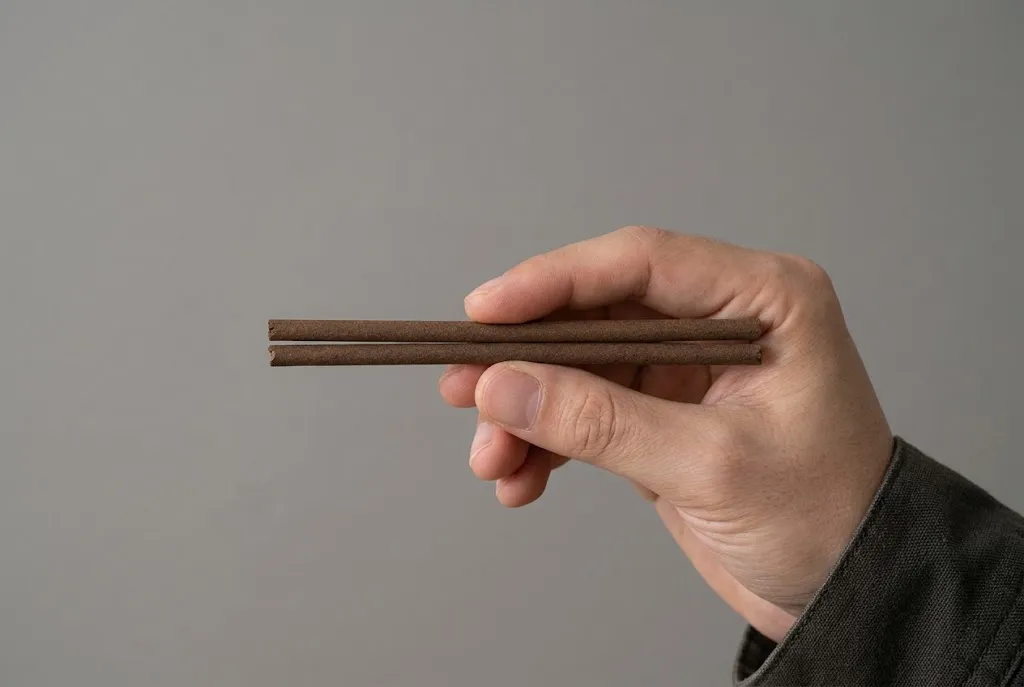
| Dimension | Agarwood Incense | Sandalwood Incense |
|---|---|---|
| Aroma direction | Deep, woody, resinous, slightly sweet | Warm, creamy, milky, softly woody |
| Room presence | Often denser and more enveloping | Often lighter and more even |
| Best use case | Quiet evening, reading, pronounced aromatic character | Daytime reset, study, softer background scent |
| First-time buyer | May feel more complex and layered | Often feels more approachable and consistent |
| Product formats | Sticks, chips, cones, blends | Sticks, chips, cones, blends |
This table describes general tendencies, not guarantees. Individual products vary widely based on the material, formulation, and maker. Use it as a starting point, then confirm with the product description and your own experience.
If you want to compare agarwood and sandalwood before committing to a larger order, use a simple routine:
This routine does not turn you into a perfumer. It simply helps you move from vague labels to a clear, personal understanding of what you enjoy.
No. Agarwood is often deeper and more complex, but strength depends on the specific product, formulation, and room conditions. A subtle agarwood stick can feel lighter than a bold sandalwood stick.
Sandalwood is often described as more approachable because of its smoother, more consistent character. But the best first choice depends on your own preferences and the product description.
Yes, but not at the same time. Burn one stick at a time so you can understand how each aroma behaves in your space.
Agarwood is generally rarer and more expensive due to the complex process required for its formation. But price varies widely by product, format, and seller, so judge the specific listing rather than the wood name alone.
Sandalwood may feel more natural as a starting point because of its lighter, more even character. But any incense in a small room needs careful setup: one stick, a secure holder, and gentle ventilation.