
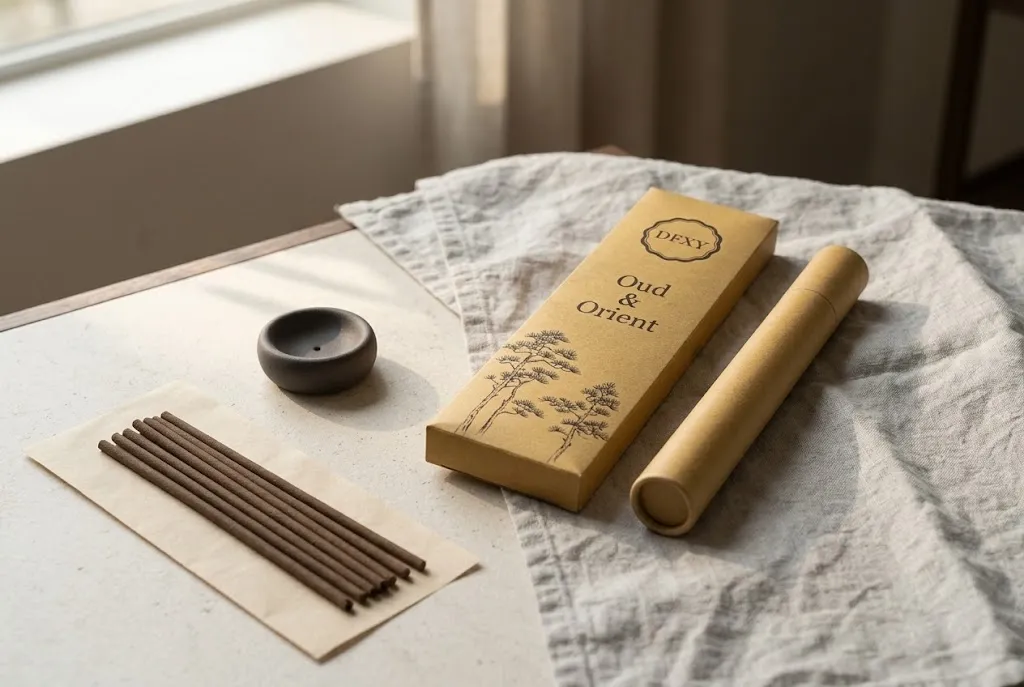
Choose agarwood incense by starting with four practical questions: how large is your room, do you prefer a lighter or deeper scent direction, what format fits your holder, and when will you use it? These questions are more useful than choosing from a dramatic product name or assuming that a higher price will automatically suit your space.
For a first purchase, choose one clearly described incense-stick format, use one stick at a time, and test it in the room where you expect to use it. This guide helps you compare options before you buy. It does not rank one origin, aroma, or price level as universally better.
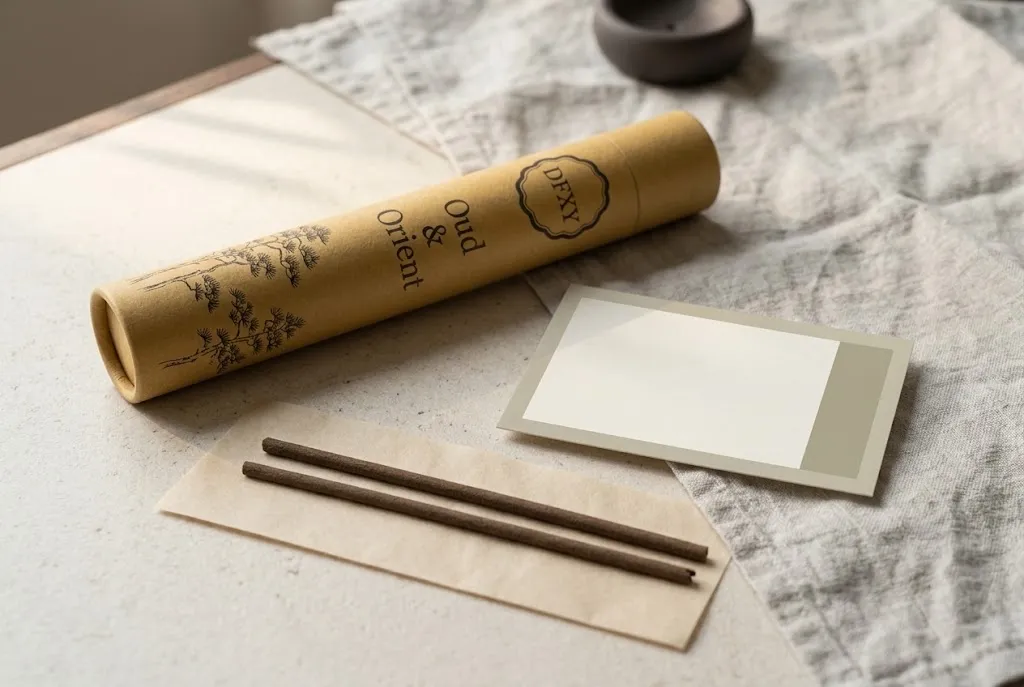
The room is the first part of the decision because the same incense can feel different in a compact study, an open living room, or a bedroom with limited airflow. Start by deciding whether you want an aroma that stays close to the holder or one that feels more present in the space.
For a smaller room, begin with one stick and a description that sounds balanced, soft woody, lightly sweet, or gently resinous. This gives you room to understand the aroma without making the space feel crowded. For a larger room or a quiet evening in a shared living area, you may prefer a more pronounced woody or balsamic profile, provided you still test one stick first.
Room size is not a guarantee of how strong an incense will feel. Holder position, airflow, open windows, furnishings, and the stick itself all affect the experience. The point is to use the room as your starting condition, rather than expecting every stick to perform the same way everywhere.
If your main concern is a compact room, read Using Agarwood Incense in Small Spaces before selecting a stronger aroma direction.
Agarwood descriptions often contain broad words such as woody, sweet, resinous, smoky, earthy, leathery, floral, or balsamic. These are useful only when you read them as a combination rather than as a quality ranking.
Use this simple starting table:
| If you tend to prefer | Look for descriptions such as | What to expect |
|---|---|---|
| A softer background scent | soft woody, gently sweet, light floral | A quieter aromatic presence that may be easier to test first |
| A warm, rounded character | resinous, balsamic, honeyed, smooth wood | A fuller but not necessarily louder scent direction |
| A drier wood impression | woody, dry, forest-like, earthy | A less sweet, more grounded character |
| A darker style | smoky, leathery, deep resin | A more pronounced profile that may suit those who already know they enjoy it |
Do not treat these words as a promise. One maker’s “smoky” may be another maker’s “deep woody.” Product descriptions should help you narrow a direction, then your own test in your own room should decide whether it fits.
A useful product page should say more than “luxury” or “rare.” It should tell you which aroma family leads, whether there are secondary notes, and whether the scent is intended to feel light, balanced, or dense. For a fuller explanation of these terms, see What Does Agarwood Incense Smell Like?.
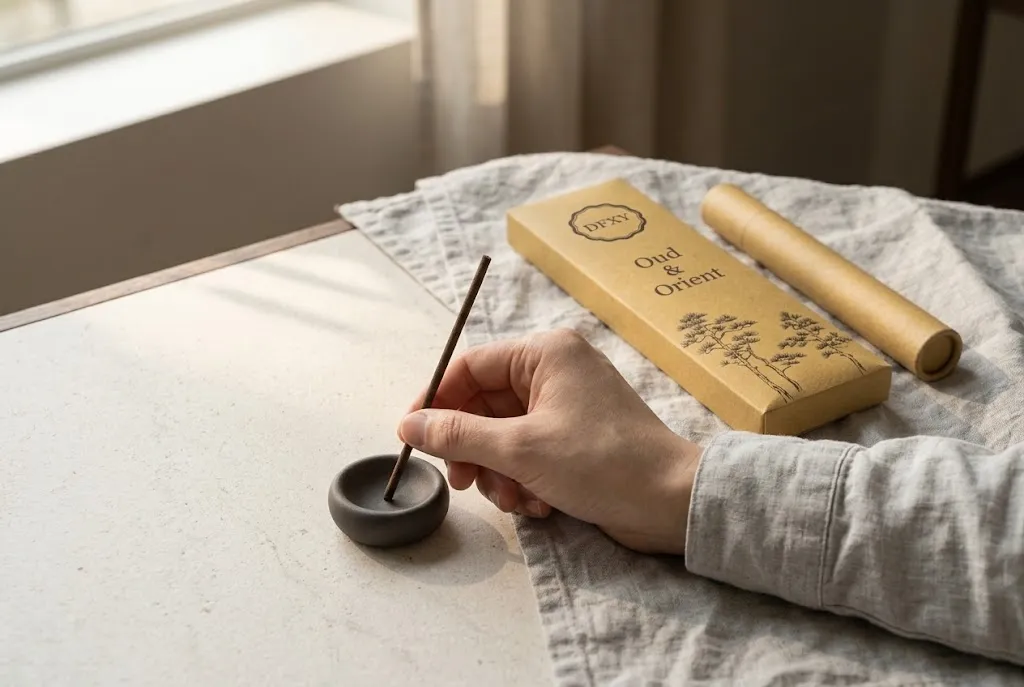
Before comparing prices, confirm that you are comparing like with like. Coreless incense sticks, bamboo-core sticks, chips, cones, and oils are different products with different holders, burn behavior, quantities, and uses.
If you are buying sticks, check the number of sticks, stated length, whether there is a core, and whether the listing explains the incense body. If you are buying chips, check net weight and the intended heating or burning method. A finished stick should not be judged as if it were loose wood sold by weight.
For most first-time home use, a clearly described stick format is the easiest place to start because it gives you a repeatable session: one holder, one stick, and one room. That makes your comparison more consistent.
For a format-by-format comparison, see Agarwood Chips, Bakhoor, or Incense Sticks?.
A good purchase decision is based on specific information, not on a single impressive word. Before adding an incense product to your cart, look for the following:
These details cannot certify every claim about a product. They do make listings easier to compare and help you avoid choosing a format that does not match your home or your expectations.
For a more detailed pre-order checklist, read How to Read Agarwood Incense Labels.
When you compare two products, use the same routine for each. This stops one room condition or one rushed first impression from deciding the result.
This is not a grading system. It is a way to move from general words to a personal preference. It also gives you a useful record for your next purchase: perhaps you learned that you prefer a quieter woody profile during the day, or a deeper resinous profile in a larger room.
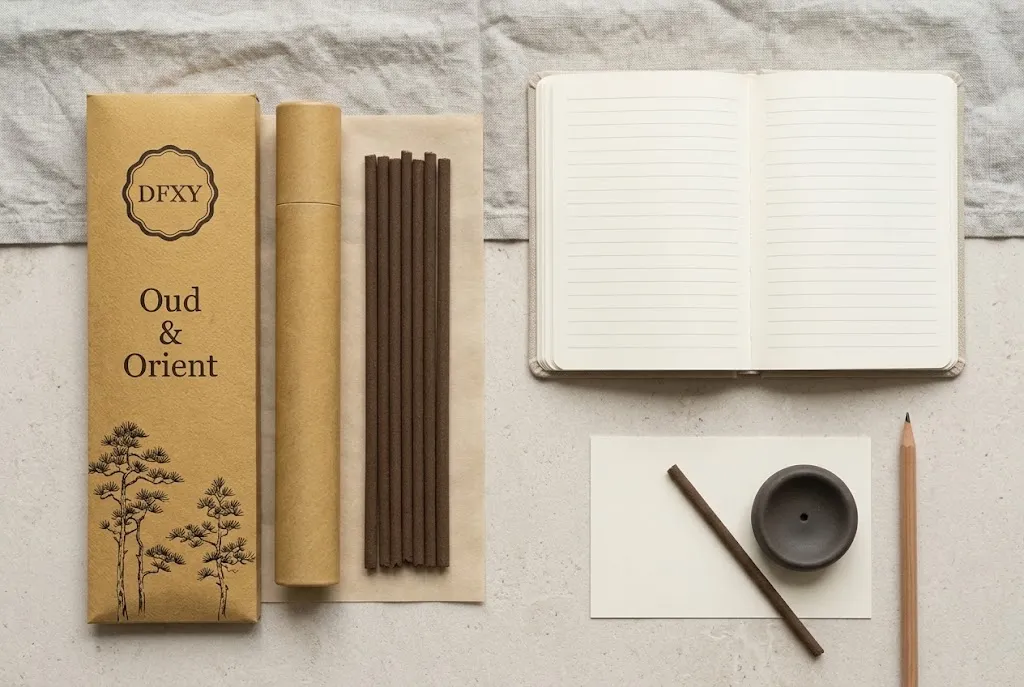
The same person may prefer different incense at different times. A balanced, softly woody profile may work well when you want a light background aroma while reading or working. A deeper resinous profile may feel more fitting for an unhurried evening when you want the scent to be a more noticeable part of the room.
Think in terms of the moment you want to create, not a universal “best” incense. Ask whether you want the room to feel warmer, quieter, brighter, or more grounded. Then choose a description that moves in that direction.
If you are deciding between a deeper agarwood profile and a warmer, creamier wood style, see Agarwood vs Sandalwood Incense. The purpose is not to declare a winner, but to help you identify which character is more likely to suit the occasion.
For a first order, keep the decision small and clear:
This approach helps you learn more from one purchase than from buying several unfamiliar products at once. Once you know the direction and format you prefer, you can compare other options with more confidence.
Start with one stick described as balanced, soft woody, lightly sweet, or gently resinous. Test it in the room first and adjust based on your own comfort and the room’s airflow.
Choose a woody profile if you prefer a drier, forest-like character. Choose a gently sweet profile if you prefer a softer, warmer impression. A balanced woody-and-sweet description can be a useful first starting point.
No. Price can reflect materials, production, packaging, and seller services, but it does not guarantee that the aroma or format will suit your room and taste. Compare clear product details within the same format.
An unlit stick can give you an initial impression, but it cannot show how the aroma changes with heat. Test one stick in a suitable holder to understand the full experience.
Check the format, quantity, aroma direction, material description, use instructions, product photographs, and seller information. Then choose one product that fits the room and moment you have in mind.
When you know the scent direction and stick format you want, explore the DFXY agarwood collection and compare product descriptions before choosing a first stick.