
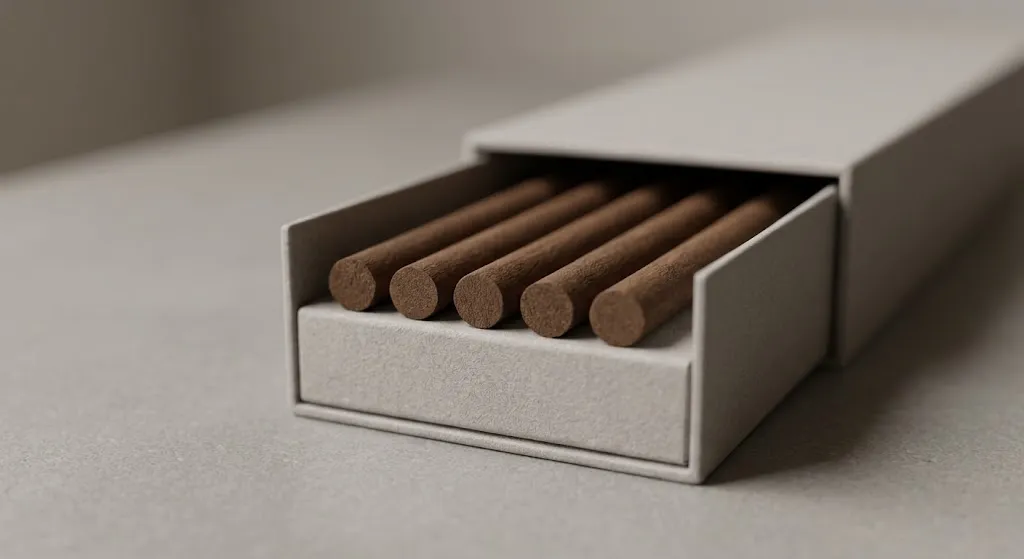
Agarwood incense can be part of a considered home routine, but choosing responsibly means looking beyond a single claim such as “natural,” “premium,” or “sustainable.” A useful product page should explain what the incense is, how it is intended to be used, what information the seller can verify, and what remains uncertain. This guide helps you evaluate agarwood incense claims in context, so you can choose a product that fits your needs without treating marketing language as proof.
This is not a guide to identifying fake agarwood, ranking grades, or explaining every stage of agarwood formation. Instead, it focuses on a practical question: when a product makes a claim about its material, sourcing, construction, or experience, what should you expect the listing to clarify?
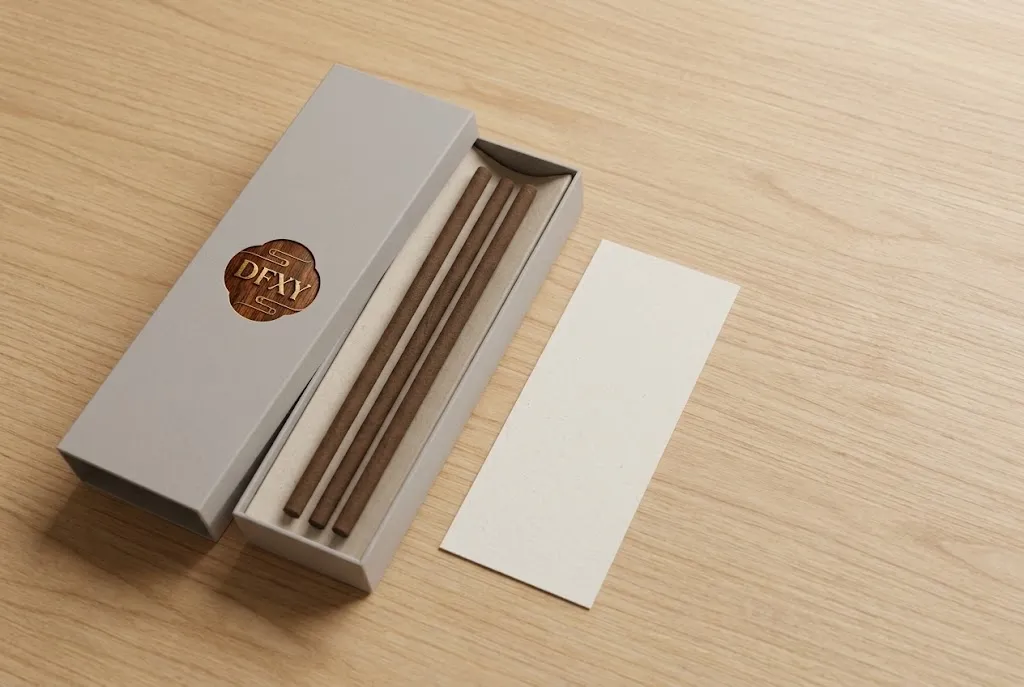
Before evaluating any claim, identify the product format. Agarwood may appear in incense sticks, chips, powder, bakhoor, oils, or finished fragrances. These formats have different uses, preparation methods, and information needs.
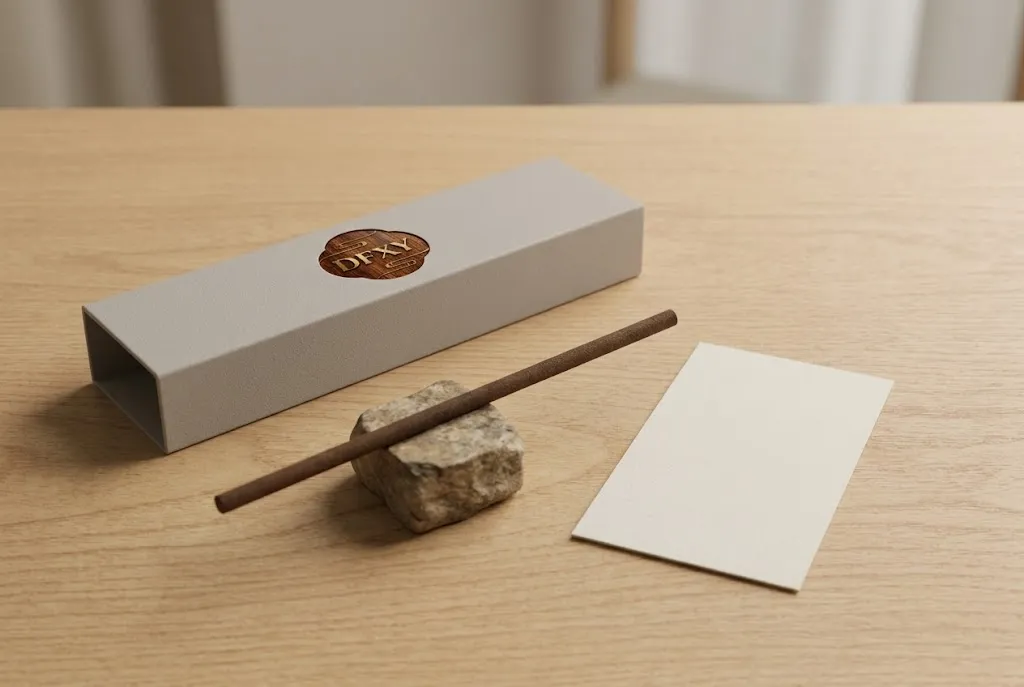
For agarwood incense sticks, check whether the product is coreless or has a bamboo core. Coreless means there is no separate bamboo support inside the stick. It is a construction detail that can affect holder compatibility, but it does not by itself establish the material composition, fragrance disclosure, or quality of the incense.
A clear listing should make the format obvious. If a page describes an incense stick but does not clarify whether it is coreless, ask before ordering—especially if you already own a holder designed for a bare bamboo end.
Words such as natural, pure, handcrafted, sustainable, premium, and low smoke can be meaningful, but only when they are specific. A claim should tell you what it applies to: the aromatic material, the fragrance, the binder, the packaging, the sourcing process, or the finished product.
| Claim | Useful question to ask | What it does not prove |
|---|---|---|
| Natural | Natural compared with what, and for which component? | Safety, zero smoke, medical benefit, or certification |
| Pure | Pure agarwood, pure oil, or a pure fragrance profile? | No additives, no binders, or a particular grade |
| Handcrafted | Which part of the process is handmade? | Every material is natural or the product is superior |
| Sustainable | What practices, documentation, or scope support the claim? | A product is automatically environmentally certified |
| Premium | What criteria define the premium positioning? | Higher agarwood content, better burning, or personal preference |
| Low smoke | Lower than what, and under what conditions? | Zero smoke, harmlessness, or suitability for every room |
A claim becomes more useful when the product page connects it to a specific product, variant, or batch. If the information is missing, treat it as a question for the seller rather than a conclusion you need to invent.
Agarwood incense descriptions often combine material information, fragrance direction, and expected experience. These are related, but they are not the same thing.
The material description may refer to agarwood, resin, wood powder, or another aromatic input. The fragrance description may use words such as woody, resinous, warm, sweet, smoky, or earthy. The expected experience may refer to how the aroma develops during use, but it cannot guarantee how a particular person will respond.
| Type of information | Example | How to use it |
|---|---|---|
| Material claim | “Agarwood incense” or “agarwood-based incense” | Check whether the listing explains the material further |
| Fragrance direction | “Woody,” “resinous,” “warm,” or “gently sweet” | Compare with your preferences, not as proof of quality |
| Experience claim | “A calm atmosphere” or “suitable for quiet moments” | Treat as intended use, not a guaranteed outcome |
| Construction claim | “Coreless” or “bamboo-free” | Check holder compatibility and product-specific details |
| Sourcing claim | “Sustainably sourced” | Ask what practices or documentation support it |
DFXY publicly describes its coreless incense as bamboo-free and made without added fragrance oils, essential oils, synthetic perfume, dyes, charcoal powder, or artificial scent enhancers. That is a product-specific claim to verify on the page for the item you are considering; it should not be assumed to apply to every agarwood incense product.
If a product page leaves an important question unanswered, ask the seller. Clear questions are more useful than assumptions.
These questions do not require a seller to disclose confidential formulas or provide laboratory reports. They ask for information that helps you use and evaluate the product responsibly.
Sustainability is an important subject, but it is also a broad term. A responsible claim should be specific enough to understand: Does it refer to planting, harvesting, sourcing, packaging, community programs, or the entire supply chain?
Public discussions of sustainable agarwood production often distinguish between simply growing Aquilaria trees and a documented production system that includes legally sourced planting material, site management, and measurable practices. That distinction is useful for buyers: a sustainability claim should be specific enough to understand, not just a general label.
Do not assume that a product is certified, traceable, or environmentally preferable unless the seller explains the basis for the claim. If certification is mentioned, check which certification applies, what it covers, and whether it applies to the specific product you are buying.
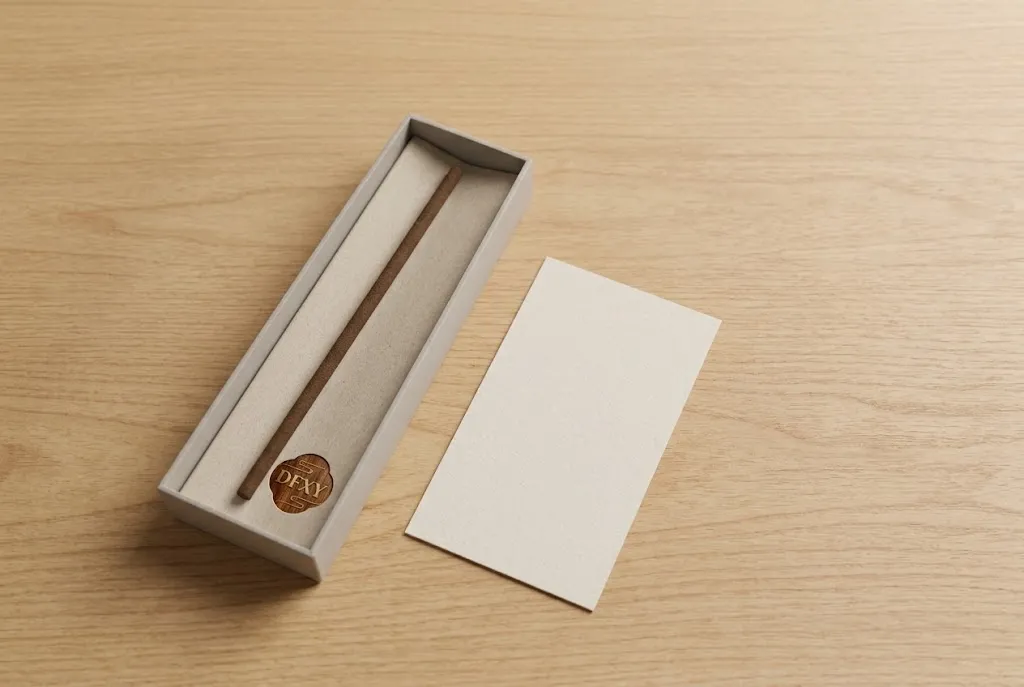
When comparing two agarwood incense products, use the same criteria for both. Start with format, aroma description, specifications, and disclosed information. Price becomes meaningful only after those details are clear.
| Comparison point | Product A | Product B | What to confirm |
|---|---|---|---|
| Format | Incense stick, chips, bakhoor, or oil | Incense stick, chips, bakhoor, or oil | Are you comparing the same type of product? |
| Aroma description | Use the seller’s exact wording | Use the seller’s exact wording | Does the profile match your preference? |
| Quantity or net amount | Stated specification | Stated specification | Can you compare per stick or per gram? |
| Additive disclosure | Product-specific statement | Product-specific statement | Do not infer “no additives” from silence |
| Holder requirement | Stated compatibility | Stated compatibility | Do you already have a suitable holder? |
| Claim basis | What the seller explains | What the seller explains | Is the claim specific and verifiable? |
A product with more complete information is not automatically better, but it is easier to evaluate. Clear information reduces guesswork and helps you choose based on what matters to you.
A strong product page does not need to make every possible claim. It needs to make the important details clear. If a listing says a product is natural, sustainable, premium, or low smoke, ask what that means for the item in front of you.
This approach also helps you avoid disappointment. A product may be well made and still not suit your preferred aroma, room, or routine. A clear description helps you understand those differences before you buy.
For agarwood incense specifically, browse DFXY’s agarwood incense sticks collection after confirming the format, fragrance description, and use information for the item you select.
No. Natural describes a material or formulation claim, not a safety guarantee. Follow the product instructions, ventilate the space, and stop using the incense if the scent or smoke feels uncomfortable.
No. Coreless means there is no separate bamboo support inside the stick. It does not establish the material composition, fragrance disclosure, or presence of additives.
Not necessarily. A sustainability claim should explain its scope and basis. If certification is mentioned, check which certification applies and what it covers.
Not necessarily. Premium can describe positioning, packaging, materials, or another product characteristic. Look for specific information rather than relying on the word alone.
Compare the same details for both: format, aroma description, quantity, additive disclosure, holder requirements, and claim basis. Avoid comparing products with unclear or mismatched specifications.
Ask the seller before ordering. Ask about the format, material or fragrance disclosure, quantity, included items, holder compatibility, and the basis for any sourcing or sustainability claim.