
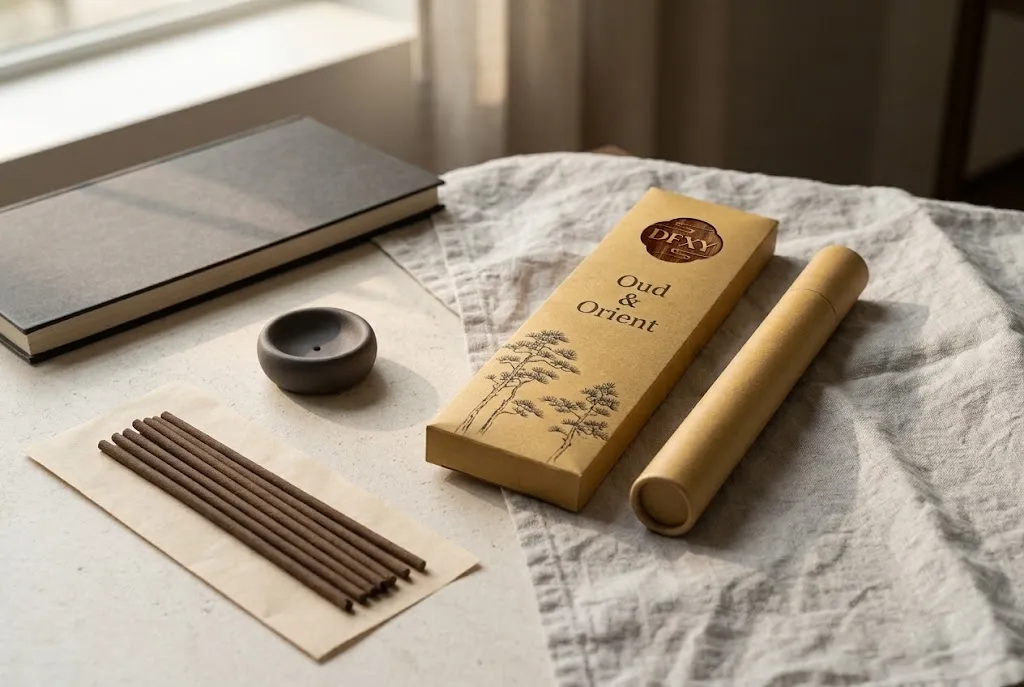
Read an agarwood incense label by separating material statements, construction, fragrance notes and pack details. Coreless describes structure; honeyed describes an aroma impression; net weight describes quantity. None replaces the others. Match the wording to the exact product and ask about missing information before ordering.
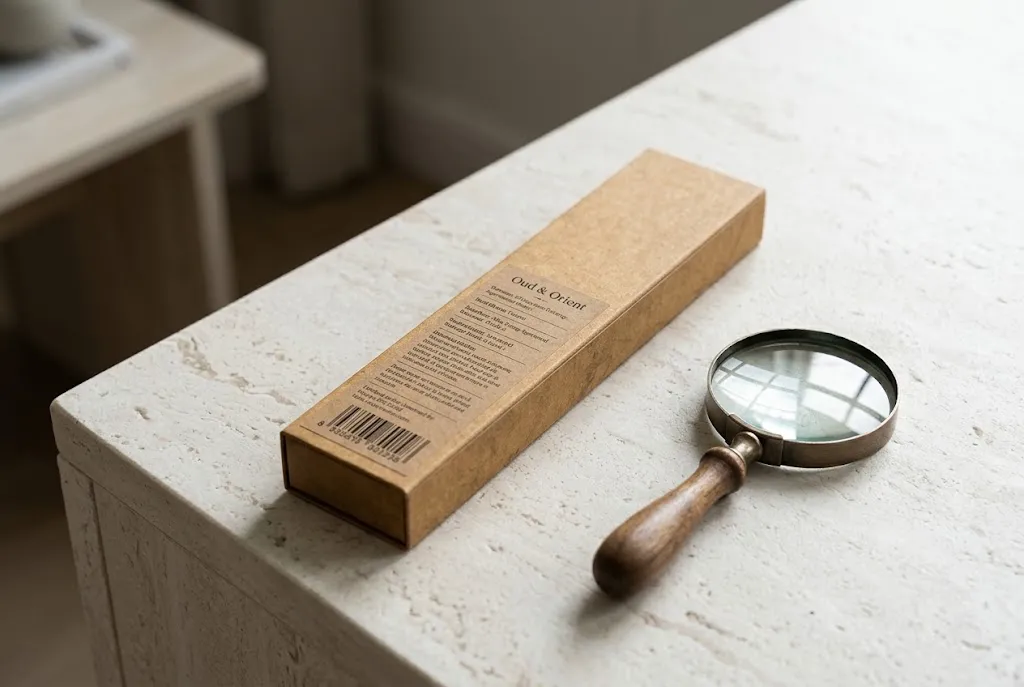
Read the Label in Five Separate Categories
An agarwood incense label is easier to read when you separate five kinds of information: product identity, material statements, construction, fragrance notes and pack details. These categories answer different questions. A phrase that describes one category should not silently become a promise about another. Start by sorting the wording before deciding whether a listing gives you enough information.
For example, coreless describes construction, while honeyed describes an aroma impression. Neither tells you the quantity in the box. This guide explains how to interpret those statements on a finished incense listing. It is not a laboratory authentication method, a complete legal labelling checklist or a substitute for the instructions supplied with the actual product. Keep a note of what is stated and what you still need to ask.
| Wording | Category | Still check |
|---|---|---|
| Made with agarwood powder | Material statement | The rest of the disclosed composition |
| Coreless | Construction | Dimensions and support requirements |
| Honeyed woody notes | Fragrance impression | Ingredient information separately |
| Net weight per box | Pack quantity | The selected pack and included items |
| Handcrafted | Production description | Which process the statement describes |
Separate Material Names from Fragrance Names
Agarwood, oud, oudh, aloeswood and gaharu may appear around the same fragrance tradition, but their presence on a package does not explain the complete finished product. Read the sentence around the name. Made with agarwood powder is a material statement; an oud fragrance direction describes the intended aromatic impression unless the seller provides more specific composition information.
Do not infer that an incense contains distilled oud oil just because oud appears in its name. Equally, do not assume that a product is a single ingredient because the front label highlights one wood. Look for a separate materials or composition section, including any information the supplier gives about binding materials and added fragrance. If that section is absent, record the information as missing rather than inventing a recipe from the product name.
Read Coreless as a Construction Description
Coreless or bamboo-free wording identifies a stick without an internal bamboo support. A bamboo-cored stick has a separate support through its centre. That distinction helps you identify the format you intend to buy, but neither term provides a complete ingredient list. Do not turn a construction statement into an assumption about origin, agarwood content or fragrance additives.
The word also does not tell you the length, diameter or holder requirements of every stick carrying that description. Check the dimensions and the individual use instructions separately. This article does not compare the two formats or recommend a holder. Its purpose is to stop unrelated conclusions being attached to one useful label term. If the photograph and written format description appear inconsistent, ask which applies to the item currently offered.
Keep Scent Notes out of the Ingredient List
Honeyed, milky, fruity, roasted, dry and resinous are useful fragrance descriptions when they are presented as impressions. They are not automatically declarations that honey, milk, fruit or another named substance was added. Read whether the seller is describing what the fragrance suggests or what the product contains. If the distinction matters to your purchase, ask it directly.
Likewise, a scent description is not a standardized strength measurement. A listing that calls an aroma soft has not established how everyone will perceive it or how it will behave in every setting. Use fragrance language to express a preference, not to certify composition. A clear enquiry might say that you enjoy dry woods but dislike pronounced sweetness, then ask which currently described option follows that direction.
Look for the Scope of Natural and Free-From Wording
When a label says natural agarwood incense or pure oud incense, ask what the wording covers. Does it refer to a named material, the aromatic portion of a blend or the finished stick? A broad adjective is not a substitute for explaining the composition. Do not assume it establishes an ingredient percentage or the absence of every other material.
A statement such as no added synthetic fragrance is narrower than a general promise that nothing has been added. Read the exact words and the product to which they apply. For broader discussion of clean or similar marketing language, use our guide to incense product claims. Here, keep the task simple: identify the scope of the statement without treating natural, premium or handcrafted as a medical assurance or a universal quality grade.
Distinguish Net Weight, Stick Count and Dimensions
Check what each number measures. Net weight, approximate stick count, stick length and package dimensions are different details. Do not convert one into another without information from the supplier. A product title, specification table and selected purchase option should refer to the same pack. If they disagree, ask which information is current before ordering.
Also separate the incense from the objects used to photograph it. A holder, tray or gift accessory is not included simply because it appears beside the box. Look for an explicit contents statement. Shipping weight is not automatically the net weight of incense, and outer-box measurements do not establish stick length. Once the pack information is clear, the incense sticks buying guide explains the wider purchase comparison without repeating this terminology check.
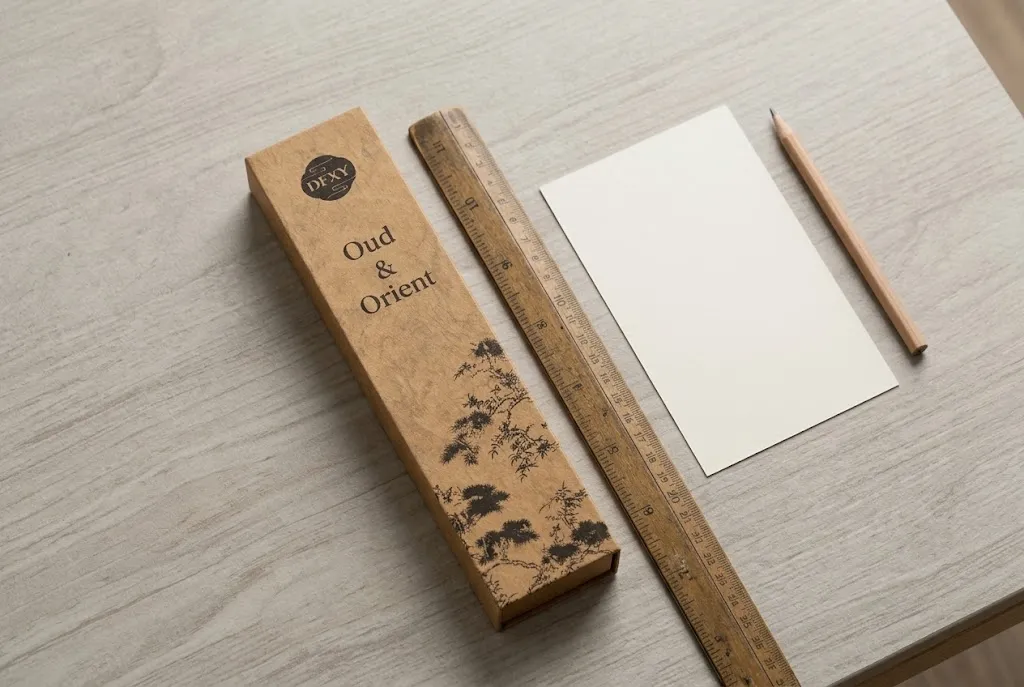
Match the Reference across the Listing and Packaging
Record the product name, item or SKU reference and selected pack option together. A reference is useful only when the seller can connect it to the item being discussed. If a listing shows one code and the package or written reply shows another, ask whether it represents a different version, a packaging change or an error. Do not assume the explanation.
An origin name or craftsmanship description should also apply to the specific item rather than only to the brand’s general story. This page explains how to identify those statements, not how to certify them. If you need to assess the supporting information for an authenticity claim, use our guide to verifying agarwood incense claims. Keep terminology, product identification and evidence assessment as separate steps.
Turn Missing Information into One Clear Question
Before contacting the seller, copy the exact phrase that needs clarification. Include the product reference and selected pack rather than asking whether all of the brand’s incense is natural or pure. A question such as whether honeyed is a fragrance note or an added ingredient is easier to answer than a request to explain everything about the product.
For DFXY enquiries, send the item reference and the wording you want explained. Ask the team to confirm the information available for that item, without assuming a particular formula, sample service or documentation package. Keep the reply with your purchase record. If an essential detail remains unclear, pause the decision. A clearer description is more useful than another reassuring adjective, and there is no need to buy a larger pack to resolve an information gap.
Frequently Asked Questions
Does oud on a label mean the incense contains oud oil?
Not necessarily. Read whether the name is being used as a material statement or a fragrance description. Ask for product-specific composition information if the presence of oil matters to your decision.
Does coreless mean the stick contains only agarwood?
No. Coreless describes the absence of an internal bamboo support. It does not identify every ingredient or establish the amount of agarwood.
Do honeyed or milky notes mean honey or milk was added?
Not by themselves. These words may describe fragrance impressions. Read the composition statement separately and ask the seller when the wording is ambiguous.
Is net weight the same as the number of sticks?
No. They measure different things. Use the pack details supplied for the selected item rather than estimating count from weight or a photograph.
What if the product name and specification table disagree?
Quote both statements and ask which applies to the current pack. Keep the product reference and selected purchase option in the same enquiry.
Does a clear label prove authenticity or safe use?
No. Clear wording helps you understand what is being claimed. Supporting evidence and the product’s use instructions remain separate questions.