
If your incense smells more like burning wood than the aroma you expected, first separate a normal woody note from a harsh or acrid burn. Natural incense contains combustible plant materials, so a gentle wood-and-smoke character can be part of the experience. But when smoke becomes thick, bitter, stale, or overwhelms the fragrance, the cause is often a correctable incense burning mistake: the flame was not extinguished, the room has poor airflow, the stick is stored badly, or the product is not a good match for the space.
This guide explains seven practical checks for improving the way incense burns at home. It is written for people using agarwood incense sticks, but the setup principles also apply to other natural stick incense. Start with one stick, work through the checks in order, and change only one variable at a time so you can identify what actually improves the scent.
Incense is made to smoulder. During that slow combustion, aromatic materials, wood powder, binders, and any included resins release both fragrance and smoke. That means a soft woody, earthy, or lightly charred background note is not automatically a defect—especially in incense made with real woods or natural binders.
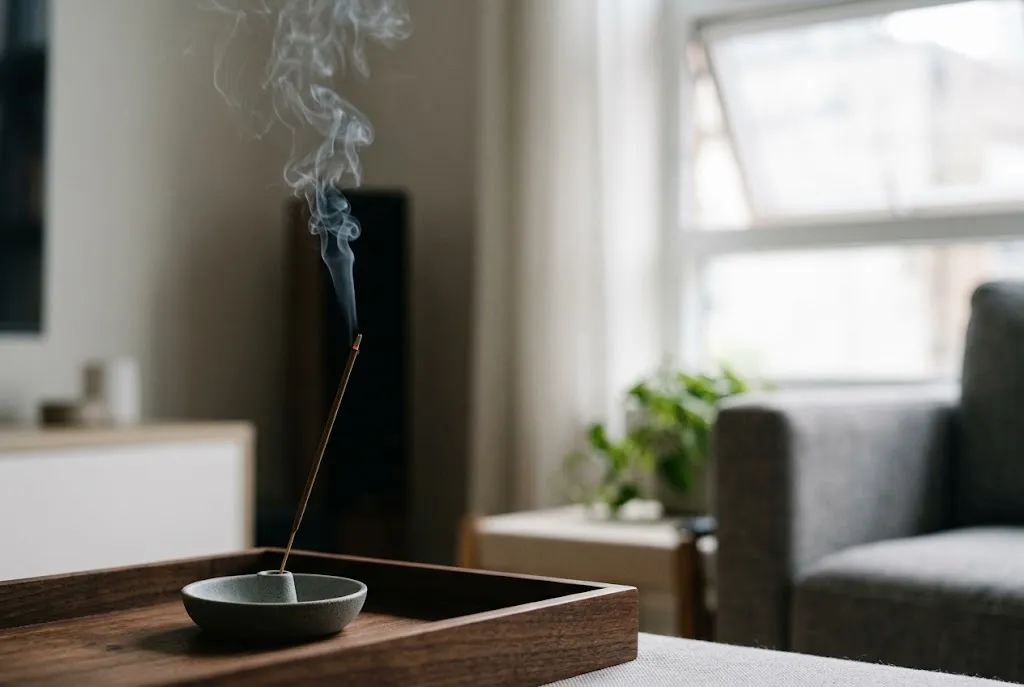
The signal to troubleshoot is not “I can smell wood.” It is “the burn smells harsh, the fragrance disappears, or the smoke is uncomfortable in this room.” A well-managed stick should usually have a small glowing ember and a thin, gentle trail of smoke after the initial flame is blown out. Excessive smoke or a sharp burnt smell may relate to airflow, combustion, storage, or formulation quality.
Before changing products, use the seven checks below.
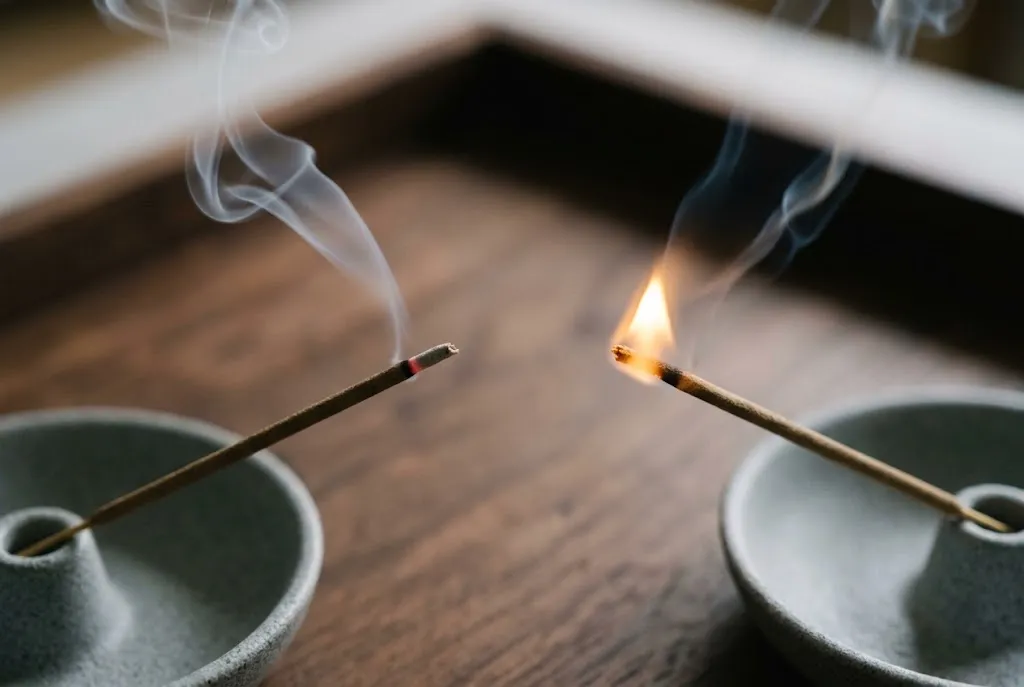
A stick is designed to smoulder, not burn like a candle. If the tip keeps an open flame for too long, it burns hotter and faster, producing more smoke and allowing the combustion note to dominate the intended aroma.
If the flame returns repeatedly, check whether the stick is placed in a draft. Do not fan it aggressively; a direct stream of air can cause uneven burning.
Airflow is a balance. In a sealed room, smoke accumulates and can make even a subtle incense smell heavy. In a strong cross-breeze—near an air conditioner vent, fan, open doorway, or open window directly facing the stick—the ember may burn unevenly and turn harsher.
Choose a stable location with gentle ambient circulation. Open a window or door slightly where practical, but position the holder away from direct airflow. A useful visual check is the smoke itself: it should rise softly for a short distance before dispersing, rather than whipping sideways or hanging densely in one place. 164
For a deeper introduction to what agarwood is and why its natural scent can be layered, visit The Ultimate Oriental Agarwood Guide. That guide explains the material; this article focuses on improving the way a stick performs in your room.
A holder cannot change the formula of the incense, but it can affect safety, ash control, and burn consistency. A stick that leans into a narrow dish, sits close to fabric, or is balanced in an improvised holder is more likely to burn unpredictably and create an unpleasant experience.
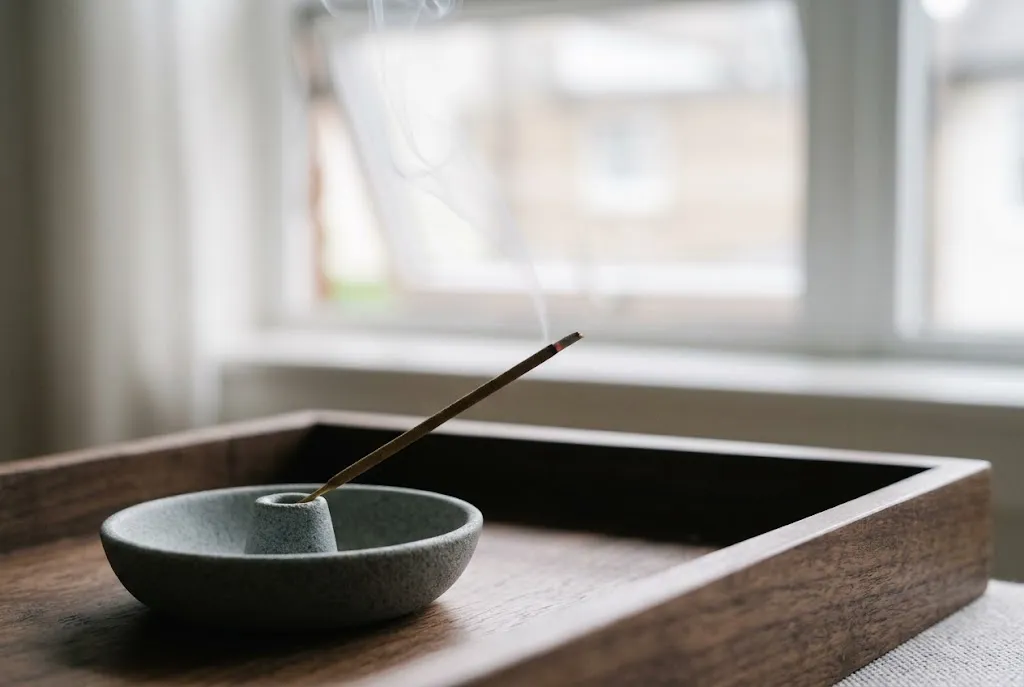
Use a dedicated, stable, non-flammable holder made from ceramic, metal, or stone. It should support the stick securely and catch all falling ash. Place the holder on a flat, heat-resistant surface with clear space around it—away from paper, curtains, dried flowers, pets, and children.
One stick is enough for most personal sessions. Burning several sticks in a small room does not create a more refined fragrance; it often creates smoke buildup that masks the aroma you wanted to enjoy. Never leave burning incense unattended.
The fragrance of an unlit stick and the fragrance of a burning stick are not identical. Before lighting, you may notice surface aroma from oils, woods, or resins. Once the stick smoulders, heat changes how those materials release. The first few minutes can be more combustion-forward before the aromatic profile settles.
Give the incense a short settling period before judging it. Start with a clean, neutral-smelling room and avoid burning it immediately after cooking, spraying cleaning products, using a scented candle, or applying a strong diffuser oil. Competing odours make it difficult to identify the incense itself.
If the harsh note remains after the initial period, extinguish the stick safely rather than forcing yourself to continue. Then move to the next checks: storage, room size, and ingredient information.
Storage changes the experience. Heat and humidity can affect how incense burns, while a nearby strong odour—from spices, perfume, cleaning products, or smoke—can cling to packaging and distort your first impression. Older incense may also lose its more delicate aromatic notes, leaving the underlying combustible materials more noticeable.
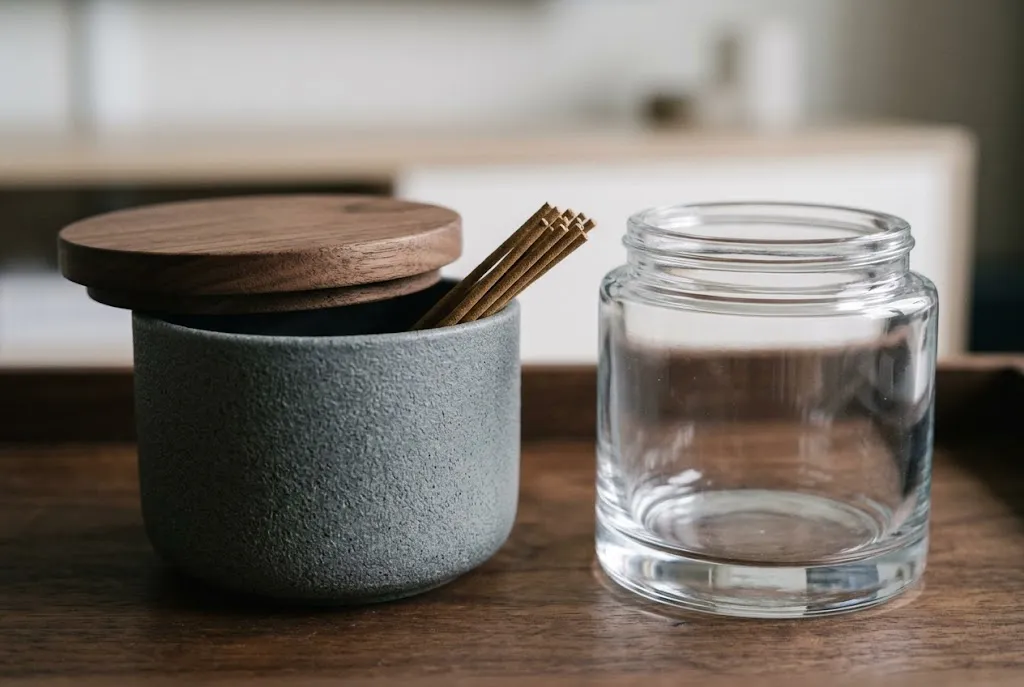
Store incense in its original closed packaging or an odor-free, dry container. Keep it away from direct sunlight, humid bathrooms, radiators, kitchen steam, and heavily perfumed drawers. Do not store it beside coffee, tea, spices, essential oils, or cleaning products.
If a stick looks visibly damp, smells stale before lighting, or burns erratically, do not assume more flame will solve the problem. Try a fresh stick stored under better conditions first.
Room size matters as much as product strength. One incense stick in a small, closed bedroom can feel far stronger than the same stick in a living room with gentle ventilation. When the scent concentration is too high, your nose may stop recognizing the finer notes and register only smoke or burning material.
Start with one stick and one session. In a compact room, consider burning for a shorter period and extinguishing the ember fully afterward. Keep a window slightly open if appropriate, and wait before lighting another stick. If the fragrance still feels heavy, select a lower-smoke or lighter-profile option rather than simply adding more ventilation or stronger products.
Use the DFXY Collection to compare available incense options by their product descriptions and intended atmosphere. Choose based on your room and routine, not only on a fragrance name.
Labels such as “oud,” “agarwood,” or “natural” do not, by themselves, explain what is in an incense stick or how it will burn. A product may be made from real aromatic woods, a fragrance blend inspired by oud, or a mixture. There is no universal visual test that can prove a stick is high quality, and dark colour, white ash, or strong dry scent alone are not reliable proof.
Look for product information that helps you make a real comparison:
For broader articles on incense care and selection, explore the DFXY Knowledge Center. If you need help choosing a product based on your room or intended use, use the DFXY contact page to ask a specific question before ordering.
If your incense smells harsh today, do not change everything at once. Reset the session with this order:
A natural incense experience can include a quiet wood note. It should not require you to ignore unpleasant smoke. Treat the burn setup as part of the ritual: a stable holder, clean air, appropriate room size, and informed product choice make it easier to notice the subtle character of agarwood instead of only the combustion.
A mild woody or smoky background note can be normal because incense contains combustible plant materials and burns by smouldering. A sharp, bitter, or overwhelmingly smoky smell is a reason to check the flame, airflow, room size, storage, and product information.
Too much smoke may result from an open flame, poor room ventilation, a direct draft causing uneven burning, or using several sticks in a small space. Extinguish the flame so the tip only glows, use one stick, and choose gentle ambient airflow.
Use gentle ventilation, but do not place the incense in a direct strong draft. A slightly open window or door can help disperse smoke; a fan or air-conditioning vent blowing directly on the ember can make the burn uneven.
Store sticks in closed packaging or a dry, odor-free container, away from heat, humidity, direct sunlight, kitchen steam, and strong-smelling products. This helps protect their more delicate aromatic notes.
No. Burning incense should remain attended. Use a stable non-flammable holder on a heat-safe surface and extinguish the ember completely before leaving the room or going to sleep.
Start with one stick and consider the room size, ventilation, and how strong the fragrance feels after a few minutes. Read the product description for aroma and burn guidance, then choose a lower-smoke or lighter profile if the space feels overloaded.