
Tell us what you are looking for—daily incense, gifting, guest hospitality, or retail sourcing—and we will help you choose a suitable format.
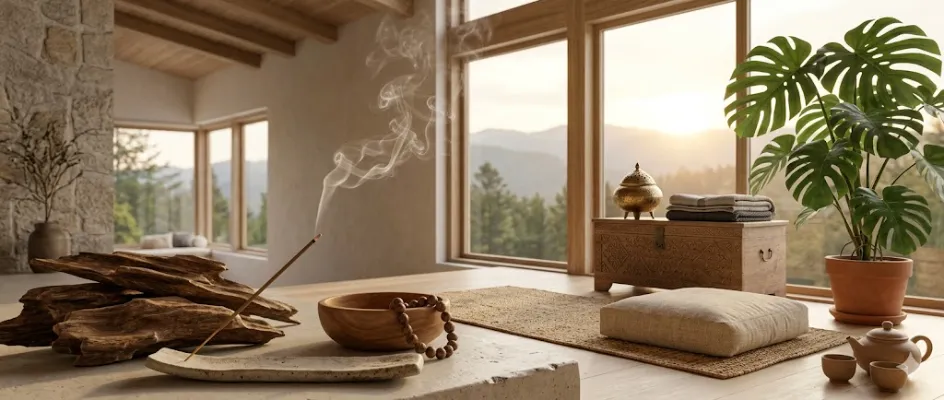
Meditation does not require a perfect room, an elaborate routine, or a particular fragrance. It begins with attention. Yet the details around a practice can matter: a clear surface, softened light, a cup of tea, and a small ritual that marks the transition away from the day.
For many incense lovers, agarwood incense for meditation offers exactly this kind of transition. Its value is not in making dramatic promises. It lies in the material itself: resinous wood warmed by fire, an aroma that develops slowly, and a moment of stillness made tangible.
Agarwood is also known as oud, aloeswood, eaglewood, or gaharu, depending on the cultural and regional context. Unlike an immediate room fragrance, its character often becomes more expressive through gentle heat. This gradual unfolding makes it especially suited to unhurried personal rituals.
Many home fragrances are created to make an instant impression. They may be sweet, floral, bright, or powerful enough to define a room within minutes. Agarwood incense tends to work differently.
A well-made incense may begin with dry wood, gentle resin, and a quiet warmth. As it burns, the scent can become softer, deeper, sweeter, or more spacious. It is not designed to perform like a perfume diffuser. Instead, it invites the user to notice small shifts over time.
This is one reason natural agarwood incense for mindfulness appeals to experienced fragrance users. The aroma does not need to dominate the room to be present. It can remain subtle—an atmospheric detail rather than the centre of attention.
For meditation, this restraint is valuable. A scent that feels too loud may become another distraction. A balanced agarwood incense can help establish a calm setting while leaving room for breath, posture, silence, and thought.
Lighting incense does not create meditation. It does not guarantee concentration, relaxation, or a particular emotional state. What it can offer is a simple ritual cue.
A small repeated action can help create a boundary between ordinary activity and intentional time. Lighting one incense stick may signal that work is finished, notifications are paused, and a quieter kind of attention is beginning.
The purpose is not to analyse every note. Simply notice the fragrance when it enters awareness, then return to your chosen practice. For beginners, this can provide a gentle sensory reference point without turning meditation into a performance.
Natural aromatic materials are not perfectly uniform. Their fragrance can change with the source material, resin content, wood structure, storage conditions, humidity, and method of heating. This variation is often part of their appeal.
One batch may feel more woody and dry. Another may reveal a warmer, resin-led character. A stick may seem softer during a quiet evening or more defined beside a tea tray. Rather than treating these differences as inconsistency, many incense users see them as part of the material’s living character.
This is closely aligned with mindful attention. The aim is not to make every experience identical. It is to observe what is present.
When choosing natural agarwood incense, clarity matters more than exaggerated language. A responsible product page should explain, where relevant:
For natural incense, transparency is a form of luxury. It gives the customer confidence to enjoy the ritual without relying on vague claims.
Bamboo-free incense sticks for meditation are often chosen by those who prefer a more direct experience of the aromatic blend. Also called coreless incense, these sticks are made without a bamboo centre.
Without bamboo burning beneath the incense material, the fragrance may feel more focused on the wood, resin, and botanical composition of the stick itself. The format is visually minimal and can suit a quiet, considered meditation setting.
However, bamboo-free does not automatically mean better. The quality of incense depends on the material, the proportion of aromatic ingredients, the binder, the drying process, and how evenly the stick burns.
For DFXY Aroma, a bamboo-free format can be communicated with restraint:
A coreless incense format created to keep the experience close to the character of agarwood.
Avoid claiming that coreless incense is “smokeless,” “healthier,” “non-toxic,” or inherently superior unless those statements can be independently substantiated.
Agarwood has a place in many fragrance and incense traditions across Asia and the Middle East. It may appear in personal incense appreciation, tea settings, hospitality, contemplative rituals, and perfumery.
For a modern home, this heritage does not need to be presented as spectacle. It can be approached through small acts of care: offering a guest tea, preparing a room before a conversation, or taking ten quiet minutes at the end of the day.
The fragrance does not have to define the occasion. It simply gives the moment a more intentional atmosphere.
The best way to use incense is with simplicity. Use one stick at a time, especially in a small room. Keep fresh air circulating, and select an incense holder that catches ash securely.
If you are new to incense, begin with a shorter session rather than burning multiple sticks. Notice whether the aroma feels comfortable in the space. A premium incense experience should feel measured, never overwhelming.
Use incense only in a well-ventilated area. Keep it away from curtains, paper, pets, children, and flammable objects. Never leave a burning incense stick unattended.
People with respiratory sensitivities, fragrance sensitivities, or concerns about smoke exposure should use caution and may choose not to burn incense indoors.
For a premium incense brand, trust is more valuable than overstatement. Avoid medical, therapeutic, or environmental claims unless they are supported by appropriate testing and legal review.
Do not state that agarwood incense:
Instead, DFXY Aroma can use language such as:
A quiet aromatic companion for meditation, tea, reading, and unhurried evenings.
Created for moments of attention, stillness, and personal ritual.
A naturally expressive agarwood aroma, designed to unfold slowly with warmth.
Agarwood incense can be a thoughtful addition to meditation because its gradual woody and resinous aroma can help create a more intentional setting. It is a sensory ritual, not a medical or therapeutic treatment.
Look for a product with transparent material information, a balanced fragrance profile, clear safety guidance, and reliable burning performance. If you prefer a more direct aromatic experience, bamboo-free or coreless incense sticks may be suitable.
Bamboo-free incense can keep the experience closer to the aromatic blend because there is no bamboo core burning beneath it. However, quality also depends on the agarwood material, binder, craftsmanship, and burn behaviour.
One stick is usually enough for a personal meditation session. Select a length and burn duration appropriate for your room size, ventilation, and practice time.
You may include it in an evening ritual if it is used safely in a ventilated space and fully extinguished before sleeping. Do not rely on incense as a treatment for sleep difficulties.

As a refined voice in the world of agarwood and incense, DFXY shares thoughtful articles on handmade incense, scent appreciation, craftsmanship, and the quiet rituals of modern living. These writings are designed to help readers discover the depth of natural agarwood, understand the value of artisanal incense making, and find a more grounded, elegant way to experience fragrance in daily life.
Feel free to contact us, We’ll get backyou soon as we can.