
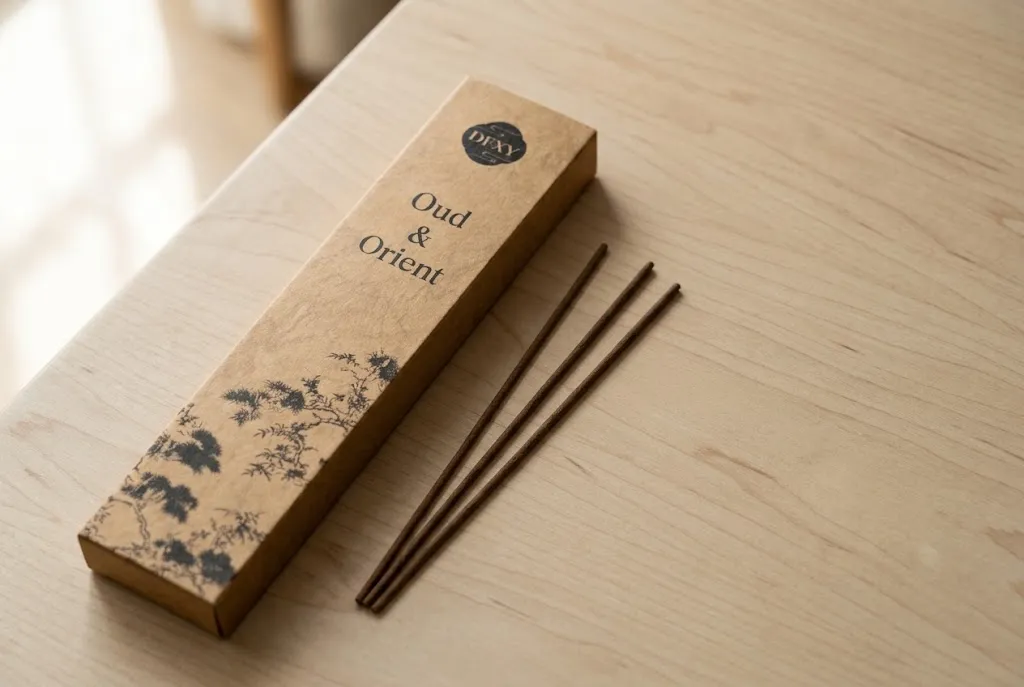
If your incense smells like burning wood, separate a mild woody note from an uncomfortable burn. End the session if the smoke or scent bothers you, then check lighting instructions, the room, storage and product information. Smell alone does not prove that incense is fake, and buying a stronger fragrance is not an automatic fix.
First Separate a Woody Note from an Uncomfortable Burn
A mild wood-and-smoke impression can be part of burning a wood-based incense. That is different from smoke that feels sharp, overwhelming or uncomfortable. The useful question is not whether you can detect wood at all. It is whether the product and the conditions match what you expected, and whether continuing the session is appropriate.
If you feel discomfort, extinguish the incense according to its instructions and stop the session. Do not wait for a promised sweeter stage, move closer to the ember or take deeper breaths to find the fragrance. A pleasant smell is not an air-quality test, and an unpleasant smell alone cannot establish that a product is fake. For fragrance vocabulary rather than troubleshooting, use our agarwood incense scent guide.
Use a Short Check, Not Seven Automatic Fixes
Before changing products, check what you can establish without another burn. Read the lighting instructions, look at the holder, recall where the stick was positioned and check its packaging. If a problem involved a flame, unstable support, unsuitable space or discomfort, end the session first. Troubleshooting does not require keeping the incense lit.
Write down what happened in plain language: “an open flame remained,” “the scent felt too heavy in this room,” or “the unused pack smelled musty.” These observations are more useful than calling everything “bad incense smell.” They also help a supplier respond to your actual problem. For the full setup and shutdown procedure, follow our guide to burning agarwood incense safely.
Check Whether the Stick Was Smouldering
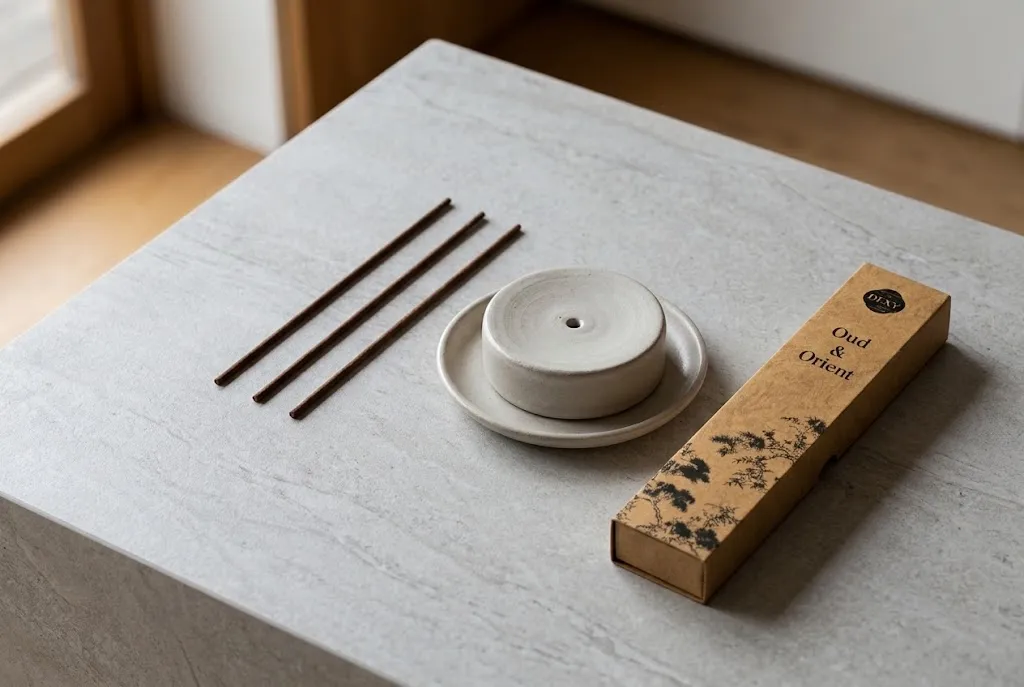
Incense sticks are generally intended to smoulder after the lighting flame is extinguished, subject to the product instructions. If a flame remained during your session, you were not evaluating the intended burning state. Do not compensate by lighting another stick, holding the product closer or trying to create a larger flame.
Follow the manufacturer’s lighting and extinguishing directions rather than applying a universal number of seconds. If the stick repeatedly behaves differently from those directions, stop and ask the seller about that specific product. Include a photograph taken safely after the setup has cooled, along with its reference and your description. Do not stage an unsafe burning demonstration to obtain a useful picture.
Check the Room before Blaming the Fragrance
A smoky impression can be difficult to interpret in a room already carrying cooking smells, room spray or another burning product. For a later session, if you choose to have one, avoid layering multiple fragrance sources. Keep equipment away from flammable materials and direct drafts. Do not sit over the holder or put your face into the smoke to evaluate it.
The US EPA explains that combustion produces particulate matter and advises proper ventilation when burning incense indoors. Ventilation does not make every room or every person suitable for incense. Opening a window is not automatically appropriate when outdoor pollution is high. If you cannot provide a suitable setting, choose not to burn rather than trying to overpower the problem with a different scent.
Check the Unused Pack and Its Storage
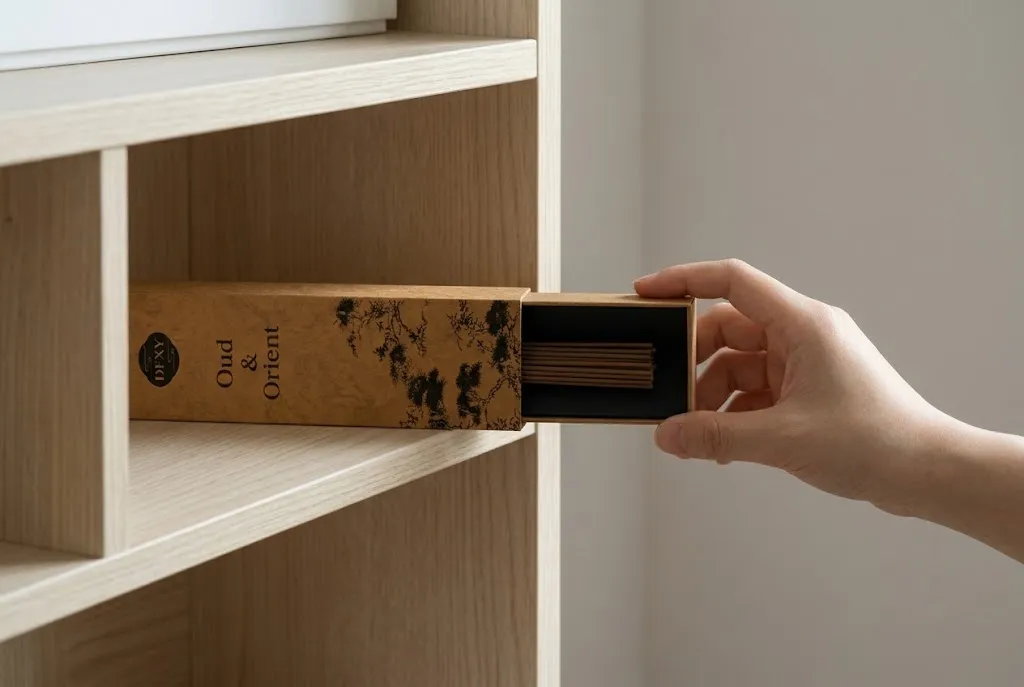
Before arranging another session, inspect the remaining pack in good light. Note damage, visible moisture, unusual changes or an unexpected smell associated with storage. Keep the product reference and any batch information so the seller can identify what you received. A photograph cannot verify the formula, but it can communicate a packaging or handling concern.
Follow the supplied storage instructions. Keep unused sticks protected from moisture, heat and strongly scented surroundings, rather than placing them beside perfume or kitchen steam. Do not try to repair a suspect pack by spraying oils, heating it in an oven or repeatedly relighting it. If the condition is uncertain, ask the supplier before further use; a new burn is not a necessary diagnostic test.
Check What “Coreless” Actually Describes
A coreless stick has no separate bamboo support running through it. That is useful format information, but the incense body still burns. Changing to coreless incense does not establish that a product will be smokeless, healthier, less irritating or enjoyable for everyone. Ask about the actual product rather than treating its construction as a performance guarantee.
Likewise, a dark stick, pale ash or strong unlit fragrance does not disclose its complete composition. Avoid turning those observations into a verdict about authenticity. This page addresses a disappointing burning experience, not a grading system. A material question should go back to the listing and supplier, with the product reference attached, rather than being settled by a photograph or one uncomfortable session.
Make the Next Purchase a Better Match
If you decide to try another product, describe what you want to change. “I prefer a less sweet, more restrained woody fragrance” gives a seller a direction. “I need something without smoke” requires a different conversation: burning incense is not a smoke-free solution. A more expensive product is not automatically the answer to either request.
Read the specifi