
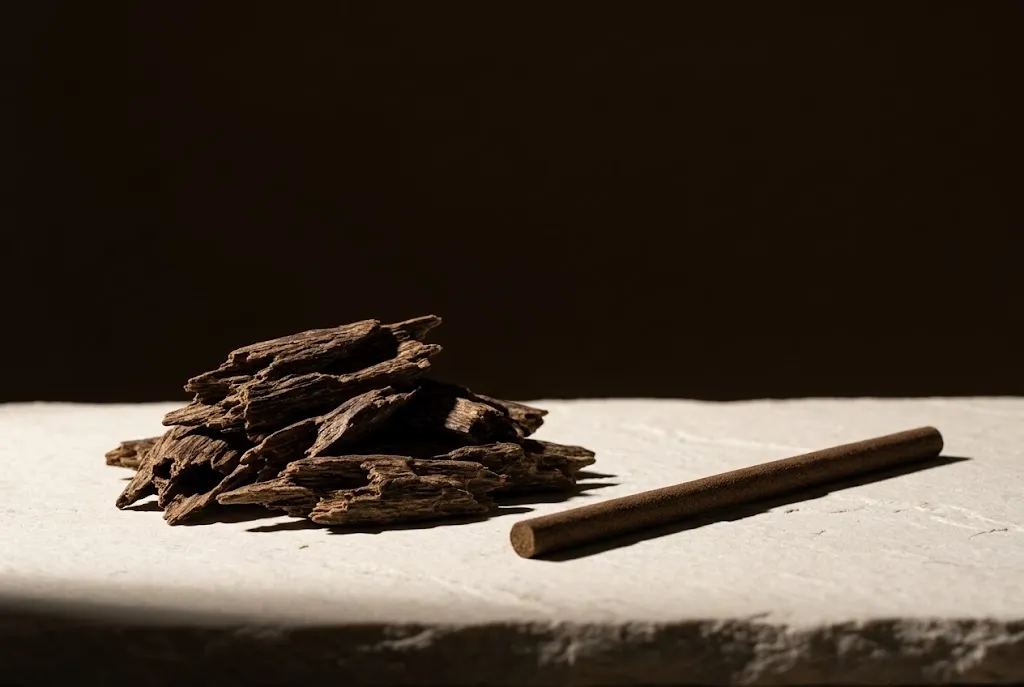
“Pure oud incense” is a claim about material, and material is where a buyer should start. Before comparing aroma notes, packaging, or price, it helps to understand what makes an agarwood stick worth selecting: the resin-rich wood behind it, the way that material is described, and the evidence a seller offers.
This guide focuses on selecting pure oud incense by evaluating raw-material cues. It does not claim that any single sign proves authenticity, and it does not make health or safety claims. A good purchase decision combines clear product information, careful observation, and a seller willing to answer questions.
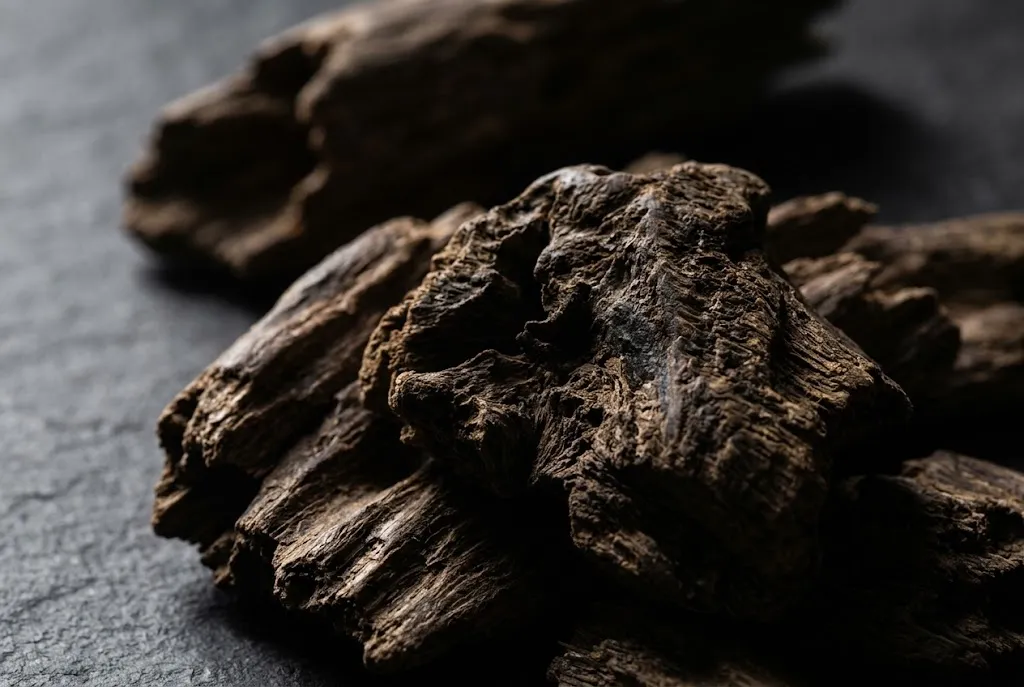
Agarwood forms when the tree produces resin in response to stress or injury. That resin-rich wood is the raw material behind oud incense, and its character shapes the final aroma. Resin-rich material tends to be darker, denser, and more aromatic than pale, unaffected wood.
For a buyer, this means the first question is not “Is it expensive?” but “What material is this product actually made from?” A listing that names its aromatic material clearly gives you something to evaluate. A listing that relies only on words like premium or pure does not.
Pure oud incense should be described in a way that connects the finished stick to its material. If the seller says the product uses agarwood, ask what that means in practice: which part of the plant, what form of material, and whether any other aromatic ingredients are included.
Resin is the heart of agarwood. In raw chips, resin often appears as darker veins or patches within lighter wood, and the pattern is usually uneven rather than uniform. A surface that looks uniformly dark or glossy can be a sign of treatment rather than natural variation.
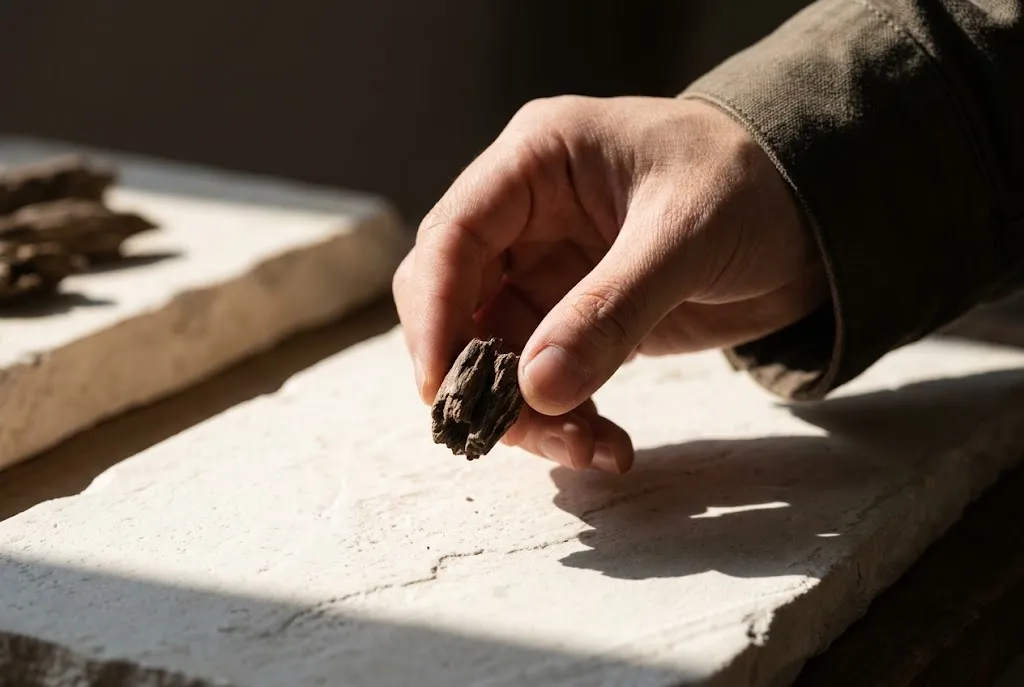
When evaluating a product page, look for photos that show real detail: both faces of a chip, a cut edge, or the texture of the finished stick. Neutral lighting matters. A heavily filtered image can hide more than it reveals.
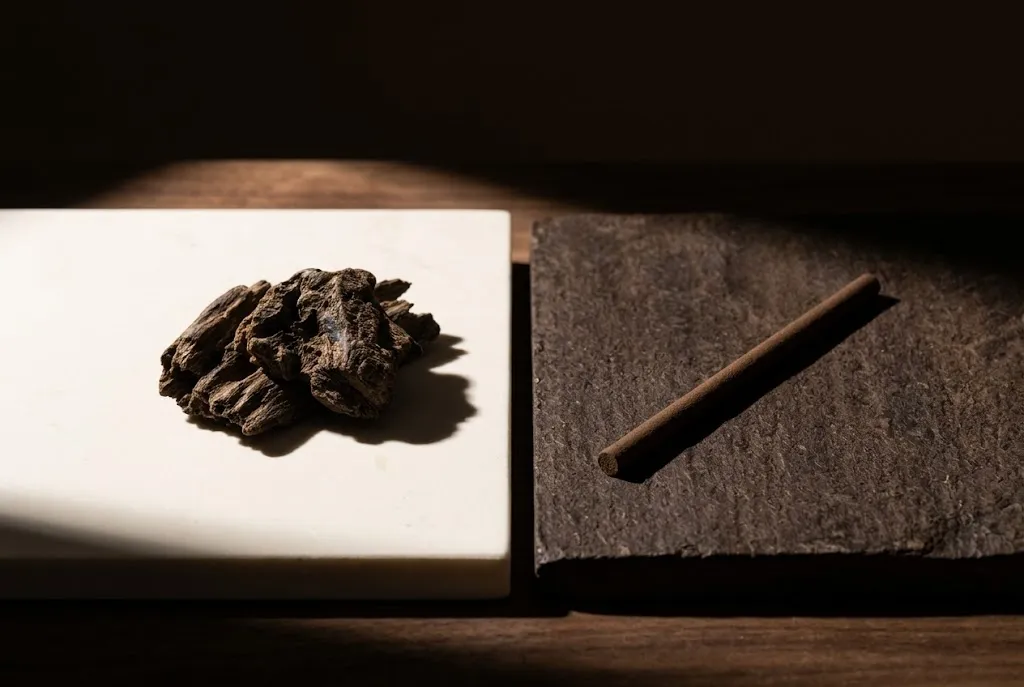
For incense sticks, you cannot inspect the raw wood as directly as you can a chip. That makes the seller’s description more important. Ask whether the aromatic material is powdered agarwood, how it is combined, and whether any binder or added fragrance is used. A clear answer helps you understand what you are buying.
Aroma is the most direct way to experience agarwood, but it is also subjective. A useful approach is to smell the unlit stick first, then observe how the scent develops when it is burned in a suitable holder.
Resin-rich material often produces a deeper, more layered aroma than lighter material. The scent may open with one character and settle into another as the stick burns. A balanced product does not need to be the strongest; it needs to remain clear, smooth, and recognizable.
Do not judge a product from a single brief sniff. Room temperature, airflow, humidity, and even your own sense of smell can affect the impression. If possible, compare products under similar conditions and keep notes on what you notice.
Density is another cue buyers often hear about. Denser agarwood generally indicates higher resin content, which is why sinking tests are sometimes used for chips. But density alone does not prove authenticity or quality, and it is not a practical test for a finished incense stick.
For sticks, focus on condition instead. A well-prepared product should feel dry and firm, not damp or crumbly. Sticks should be straight enough to place in a holder without wobbling, and they should not arrive broken or coated in loose powder.
If a product arrives damaged, do not burn it. Contact the seller with photos and order details, and follow their guidance. Condition issues can come from handling or storage as well as from the raw material, so it is worth documenting what you see.
Origin can shape aroma, but it is not a quality guarantee by itself. Two products from the same region can differ widely depending on the tree, the resin formation, and the way the material is processed. A responsible seller describes origin and processing in a way that helps you understand the product, rather than using a place name as a shortcut to quality.
Ask whether the material is wild-harvested or cultivated, and what that means for the product’s aroma and price. Natural agarwood is often described as offering deeper, more complex fragrance layers, while cultivated material can deliver more consistent scent at a lower cost.
Also ask about processing steps that can change weight, appearance, or scent. Has the material been oiled, dyed, perfumed, compressed, or blended? These questions do not accuse a seller of anything; they simply establish the facts needed to compare products fairly.
The best raw material depends on what you want from the incense. A buyer seeking a quiet, everyday aroma may prefer a softer, more consistent profile. A buyer interested in deeper, more complex fragrance may be willing to explore natural material with more variation.
There is no single “best” choice for everyone. A strong, resinous stick may feel overwhelming in a small room, while a lighter material may feel too subtle in a large space. Match the product to the room, the occasion, and your own preferences.
For a first purchase, start with a smaller quantity. This lets you learn how the material behaves in your space before committing to a larger order. If the aroma suits you, you can reorder with more confidence.
Before ordering pure oud incense, check whether the listing answers these questions:
A product that answers these questions clearly is easier to evaluate than one that relies on a dramatic claim. The goal is not to find a perfect stick; it is to find one whose material, aroma, and description match your expectations.
No. Darker color can indicate resin, but it can also result from treatment or lighting. Judge color alongside aroma, texture, and the seller’s description.
A sinking test is mainly used for raw chips, not finished sticks. For incense, focus on the product description, aroma, and physical condition instead.
No. Origin can influence aroma, but quality also depends on the tree, resin formation, and processing. Ask for details rather than relying on a place name alone.
Photos help, but they do not prove quality. Look for neutral lighting, real detail, and a seller willing to answer questions about the material.
Not necessarily. Price reflects materials, labor, packaging, and brand positioning. Judge the product description and your own experience rather than price alone.