
Tell us what you are looking for—daily incense, gifting, guest hospitality, or retail sourcing—and we will help you choose a suitable format.
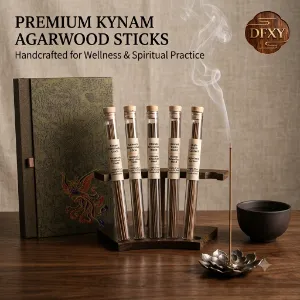
Natural agarwood offers deeper, more complex fragrance layers, while cultivated agarwood delivers consistent scent at a fraction of the price — making it the better choice for most beginners burning incense daily.
Choosing your first agarwood incense sticks often comes down to two questions: is natural really better than cultivated, and which type actually offers the best value? The answer depends less on which is “superior” and more on matching the wood type to your actual usage.
Natural agarwood forms when Aquilaria trees are wounded by insects, fungal infection, or weather damage in the wild, triggering a resin that takes decades — sometimes over a century — to mature.
The tradeoff: natural agarwood costs significantly more, and counterfeit products are common in the market — beginners often struggle to verify authenticity without guidance.
Cultivated agarwood is produced through controlled induction methods — such as drilling or fungal inoculation — that accelerate resin formation to 3-5 years instead of decades.
| Factor | Natural Agarwood | Cultivated Agarwood |
|---|---|---|
| Formation time | 50-100+ years | 3-10 years |
| Fragrance complexity | High, multi-layered | Simple, consistent |
| Price range | Premium to luxury | Budget-friendly |
| Best for | Collectors, ceremonies | Daily use, beginners |
| Authenticity risk | Higher (counterfeits common) | Lower (standardized process) |
If you’re new to incense and burning it for relaxation, ambiance, or daily focus, cultivated agarwood incense sticks are the smarter starting point. Most beginners can’t yet distinguish the nuanced layers that justify natural agarwood’s premium price — that appreciation develops with experience.
Save natural agarwood for later, once you’ve developed a preference for specific scent profiles or want it for special occasions and gifting.
1. Avoid synthetic fragrance additives.
Some low-cost incense sticks use chemical fragrance oils or accelerants to boost scent strength or burn time. These often produce a sharp, chemical smell and can cause headaches with prolonged use. Always check for “100% natural ingredients, no synthetic fragrance” on the label.
2. Match the incense to your purpose.
3. Skip the premium tier when starting out.
New users often assume “better” means “more expensive,” but an underdeveloped palate can’t yet appreciate high-grade agarwood’s subtlety. Starting with premium sticks often means paying more without noticing the difference.
For beginners, a price range of $1-3 per stick offers reliable quality without overspending. As your scent preferences develop, you can gradually explore higher grades.
Is natural agarwood always better than cultivated agarwood?
No. Natural agarwood offers more complex fragrance, but cultivated agarwood provides more consistent quality at a lower price — making it better value for everyday use.
How can I tell if agarwood incense is genuine?
Genuine agarwood incense has a naturally layered scent without a chemical or overly sweet smell. Reputable brands disclose sourcing and production methods; heavily discounted products with vague labeling are a red flag.
What’s a reasonable price for beginner incense sticks?
Around $1-3 per stick is typical for quality entry-level agarwood incense without synthetic additives.
Do cultivated agarwood incense sticks smell fake?
No — properly cultivated agarwood still comes from real Aquilaria trees. It simply lacks the decades-long complexity of wild resin, not authenticity.

As a refined voice in the world of agarwood and incense, DFXY shares thoughtful articles on handmade incense, scent appreciation, craftsmanship, and the quiet rituals of modern living. These writings are designed to help readers discover the depth of natural agarwood, understand the value of artisanal incense making, and find a more grounded, elegant way to experience fragrance in daily life.
Feel free to contact us, We’ll get backyou soon as we can.