
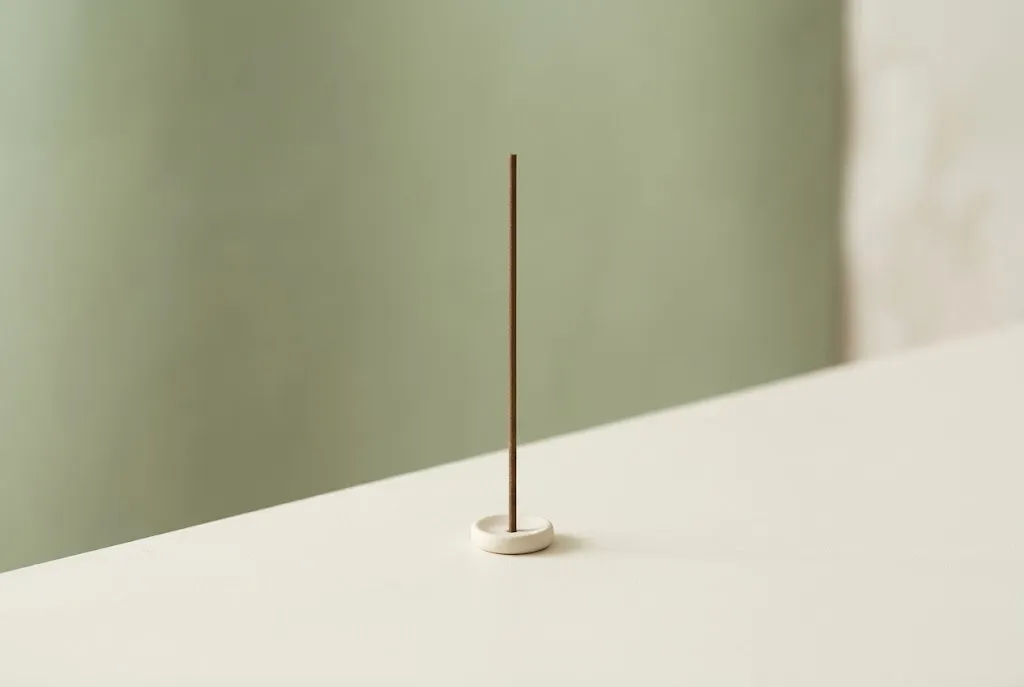
An even burn is what turns a stick of incense from a simple fragrance into a calm, predictable experience. When a stick burns steadily from tip to base, the aroma develops in a consistent way and the ash falls cleanly. When it burns unevenly, one side may glow faster than the other, the stick may tunnel, or it may go out before you expect.
This guide focuses on burning performance: how to set up a stick for an even burn, what disrupts it, and how to respond without blaming the product too quickly. It does not promise a specific burn time, and it does not replace the safety instructions that come with your incense.
The holder is the first factor in an even burn. A stick needs support that keeps it upright or at a slight angle, holds it securely, and catches ash as it falls. A holder that lets the stick wobble, tilt, or sit at a steep angle can cause uneven burning.
For coreless incense, check that the holder actually fits the stick. A holder designed for a thin bamboo core may not grip a thicker, all-aromatic stick. If the fit is loose, the stick can shift as it burns, changing the angle and disrupting the burn.
Place the holder on a stable, heat-resistant surface away from curtains, bedding, paper, and other flammable items. A level surface matters as much as a level stick: an uneven table can tilt the whole setup and affect how ash collects around the burn point.
Lighting seems simple, but it sets the tone for the whole burn. Hold a flame to the tip until it catches and a visible glow spreads across the end, then gently extinguish the flame according to the product instructions. A stick that is only briefly touched with a flame may not develop a strong enough ember to continue burning.
Do not wave the stick around to keep it lit. Once the tip is glowing, place it in the holder and let it burn. If the ember fades shortly after lighting, check the basics first: Was the tip fully lit? Is there a draft? Is the stick damp? These are more common causes than a defective product.
Avoid relighting a half-burned stick without checking it first. Gently tap off any loose ash so the unburned portion is exposed, then relight according to the product instructions.
Airflow affects how a stick burns. A gentle, steady exchange of air helps the aroma disperse, but a strong draft directly across the stick can make it burn unevenly, burn too quickly, or go out.
Avoid placing the holder directly in front of an open window, fan, air conditioner, or heating vent. A ceiling fan pointed at the holder is a common cause of uneven burning.
Instead, aim for a calm corner with light air circulation. If the room feels stuffy, ventilate before or after the session rather than pointing a fan at the stick. The goal is steady conditions, not a breeze.
Even the best setup cannot compensate for a damp or damaged stick. Incense absorbs moisture from the air, and excess humidity can cool the burn point and make the ember weak.
Before lighting, inspect the stick. It should feel dry and firm, not soft or bendy. Look for cracks, warping, or areas where the surface feels loose. If a stick has been stored in a humid bathroom or kitchen, give it time to acclimate in a dry space before use.
Storage matters here. Keeping incense in a cool, dry place away from humidity helps preserve its condition between sessions. For more detail, see DFXY’s guide to storing coreless agarwood incense.
Burn time is not fixed. It varies with the stick’s length, thickness, density, and ingredient composition, as well as the airflow and humidity in the room.
A longer or thicker stick generally contains more material and burns for longer. A denser stick may burn more slowly because oxygen reaches the burning front more gradually. Environmental conditions also play a role: higher humidity can slow combustion, while very dry air can make a stick burn faster.
Because so many factors interact, do not judge a product by burn time alone. Two sticks that look similar can behave differently in different rooms. If burn duration matters to you, time your own sessions under similar conditions and compare notes over several uses.

If a stick burns unevenly, work through the basics before assuming the product is faulty:
A tilted holder or a strong draft can burn one side faster than the other. Keeping the stick level and away from direct airflow is the simplest first fix.
Do not try to correct an uneven burn by touching the burning end or moving the stick while it is lit. Let it burn, observe, and adjust the setup for the next session instead.
If you want to understand how a product performs in your home, keep a short log. Note the date, the room, the holder used, the airflow conditions, and how the stick burned from start to finish.
Over a few sessions, patterns become clear. You may find that a particular corner of the room gives a steadier burn, or that a certain holder fits your sticks better. These observations are more useful than comparing products from memory.
A burn log also helps you separate product performance from room conditions. If every stick burns unevenly in the same spot, the setup may be the issue. If only one stick from a package behaves differently, note that too and mention it if you contact the seller.
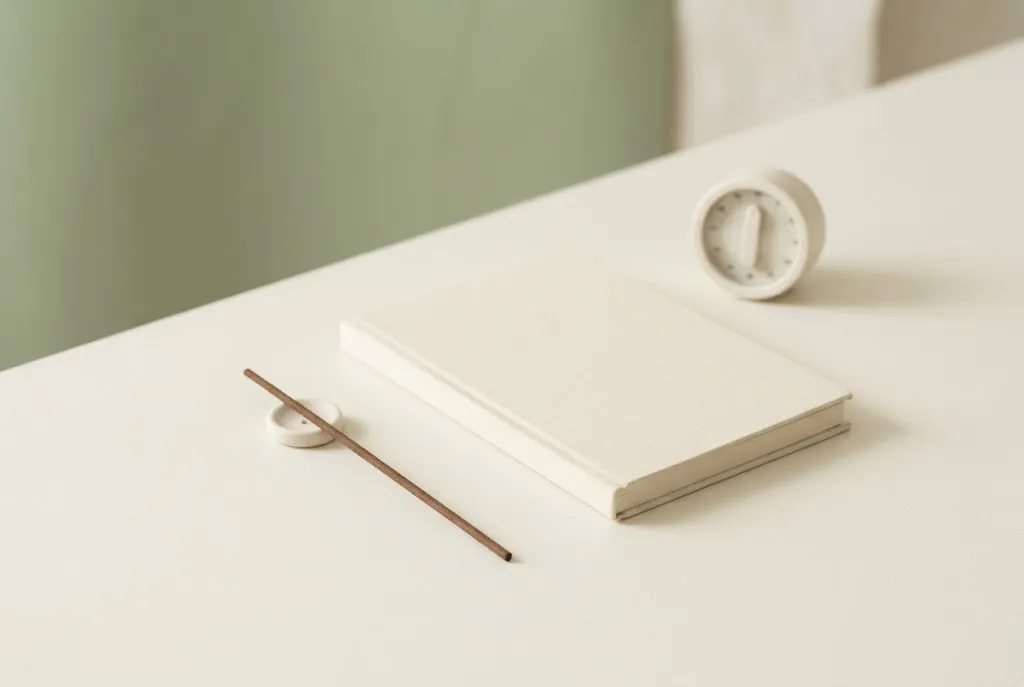
Before lighting, run through this short list:
An even burn is mostly the result of good conditions repeated consistently. A suitable holder, a properly lit tip, gentle airflow, and dry storage will do more for your experience than any single trick.
Common causes include a tilted or loose holder, a strong draft, damp or damaged incense, or uneven ash buildup. Start by checking the holder, airflow, and stick condition.
Yes. A strong draft from a window, fan, or vent can make a stick burn unevenly or more quickly. Place the holder in a calm spot with gentle air circulation.
Yes. Incense absorbs moisture, and damp sticks may burn poorly or go out. Store incense in a cool, dry place and let it acclimate if it has been exposed to humidity.
Burn time varies with length, thickness, density, ingredients, and room conditions. There is no single correct duration; follow the product instructions and observe your own sessions.
You can, but gently tap off loose ash first so the unburned portion is exposed, then relight according to the product instructions.