

To compare agarwood incense samples, test one product at a time, keep the setting reasonably consistent and record what matters to your next purchase. The useful result is not a claim that one sample is universally better. It is a clear answer about which fragrance you prefer, which format fits your setup and which details still need confirmation.
This guide is for samples you already have. It focuses on the practical comparison, not origin rankings, authenticity experiments or a long history of oud. Personal users, tea-space operators, hotels and wholesale buyers can use the same basic record, then add the questions specific to their needs.
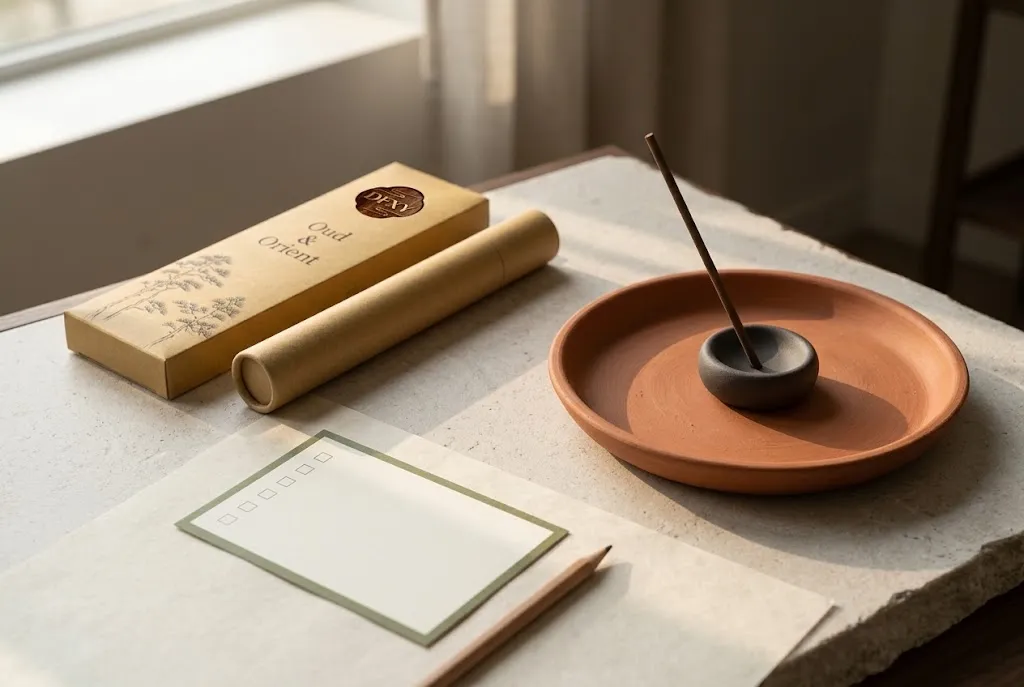
Before opening several packs, write down your purpose. A first-time buyer may want a gentle woody impression. A tea-space operator may want an aroma that does not distract from tea. A retailer may need a clearly identified product that can be discussed with a supplier. These are different decisions, so they should not share an unexplained overall score.
Give each sample a code and keep its original packaging. Record the product name, format and any batch reference provided. If a colleague assigns the codes, you can make your first observations before reading the promotional language or price. This is an informal comparison, not a certified blind test.
Compare finished sticks with finished sticks where possible. A coreless stick has no bamboo support running through its centre; that construction does not establish the full recipe, agarwood percentage or smoke level. Chips, oils and sticks require different evaluation methods, so do not treat them as equivalent samples.
Keep the supplied dimensions in your notes. Length affects whether the product fits your holder and ash-catching area. Thickness and formulation also matter when comparing individual products. A photograph alone cannot confirm dimensions or predict burning time.
Net weight and stick count answer different questions. A pack described by weight does not necessarily contain a fixed number of sticks. Ask which measure applies to the specific item and whether any quoted weight excludes packaging. Do not calculate a per-stick comparison from information that has not been supplied.
Burning time should be a product-specific estimate, not a promise based only on length. Record the supplier’s stated conditions if available. You do not need to burn a full stick simply to complete a comparison, and one observation cannot establish the duration of every future batch.
Choose a suitable ventilated setting, follow the product instructions and use a stable, heat-resistant setup with an appropriate holder and ash collection. Supervise the session. Do not seal the room to concentrate fragrance or lean into the smoke to identify notes. If you experience discomfort, stop rather than extending the test.
Use one sample per session and avoid other strong fragrances where practical. Note changes such as cooking smells, scented cleaning products or different airflow. Keep your normal viewing and seating position reasonably consistent, but never reduce ventilation just to imitate a previous session.
If the earlier fragrance remains noticeable, postpone the next sample. Separate days are acceptable. Prolonged exposure can change perceived intensity through olfactory adaptation, so a quieter impression later does not necessarily mean that the aroma has stopped. This informal method has no universal reset interval.
Use simple descriptions that you understand: woody, resinous, sweet, dry or smoky, when those words match your impression. Separate character from strength and preference. “Woody and moderately noticeable; I prefer something softer” is more useful than a single score labelled premium.
If a listing uses unfamiliar language, consult the agarwood incense scent guide, then write your own observations. A supplier’s description is a starting point, not a requirement that you must experience the same notes. Different people may reasonably respond differently to the same sample.
For personal use, focus on whether the product suits your usual setting and equipment. Check holder fit before use and note how noticeable the fragrance feels from your normal position. Coreless does not mean smokeless. Smoke visibility is not a reliable measure of all emissions, and a pleasant aroma does not establish that burning is risk-free.
If you are new to incense, keep the decision manageable: a compatible format, a fragrance direction you enjoy and a clearly identified product. Do not chase the strongest impression or longest session. A sample that prompts questions can still be useful if you ask for the missing information before purchasing.
For a tea space, compare the room impression separately from the tea itself. Record whether a lingering fragrance seems to compete with the tea’s aroma. Do not burn several samples during a tasting and then attribute every difference to the tea or incense. If the fragrance distracts from the experience, choose an incense-free tasting.
For hotels and other shared spaces, check venue rules, fire precautions and occupant preferences before considering burning incense. A product enjoyed privately is not automatically appropriate for a lobby, guest room or enclosed tea room. Do not describe a sample as suitable for every guest or as a substitute for ventilation.
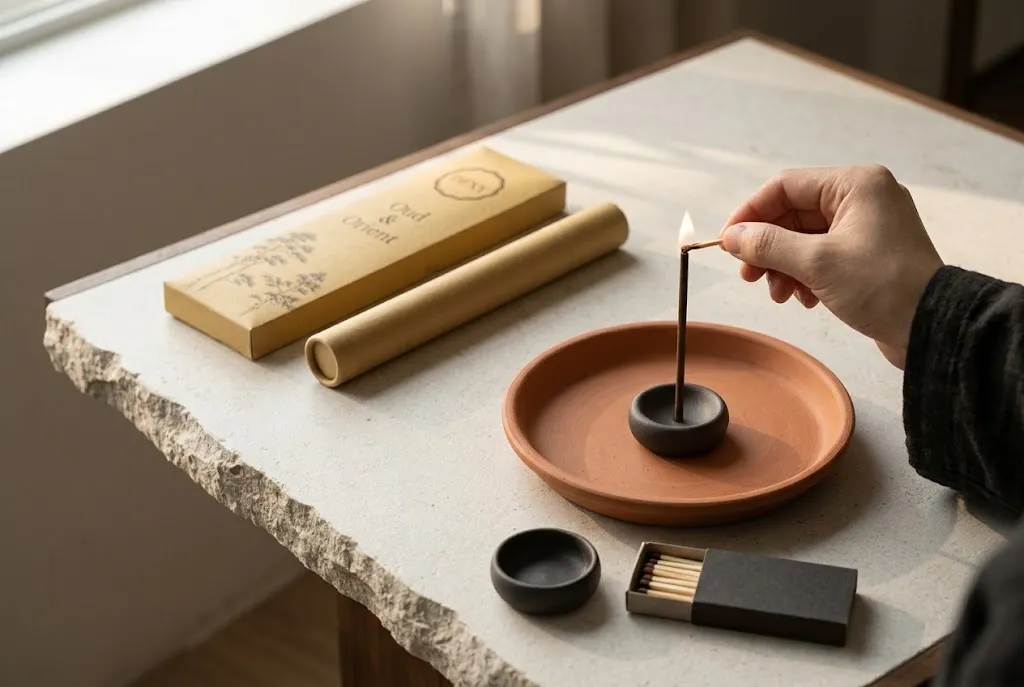
Wholesale evaluation requires more than selecting a favourite scent. Record the exact item and sample reference, then request the product information relevant to your order. Separate sensory preference from packaging, supply and documentation questions. An appealing first sample does not prove consistency across later deliveries.
For a DFXY enquiry, identify the item you evaluated and explain your intended use. Ask which pack options and cooperation terms apply to that product. Do not assume a standard sample programme, private-label service, minimum order, lead time or export document package unless DFXY confirms it for your enquiry.
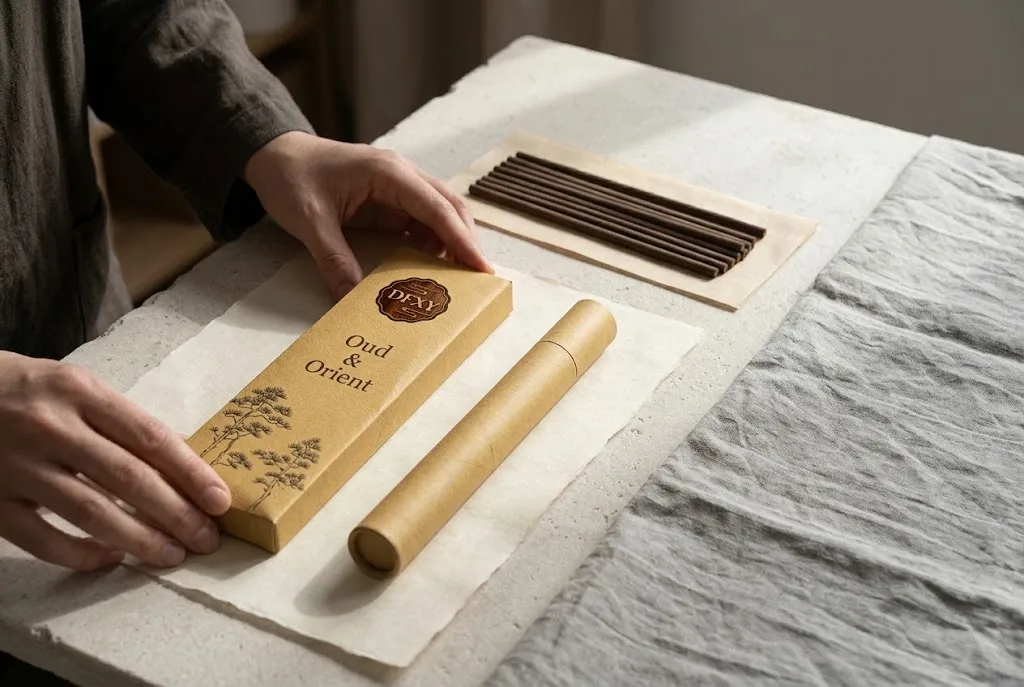
Your observations cannot independently establish grade, ingredient percentages, legal sourcing or the absence of additives. Keep supplier disclosures beside, rather than inside, your fragrance score. The guide to identifying genuine agarwood incense can help frame questions about transparency without turning this sample comparison into an authenticity claim.
Shortlist the products that answer your original question. Revisit an uncertain impression in another suitable session and retain both records. Then request confirmation of the product reference, pack measure and stated specifications before ordering. This approach turns a subjective impression into a more precise conversation, not a laboratory verdict.
Sample B fits my preference. Please confirm the product reference, pack contents and the specifications available for this item.
Evaluate one at a time. Simultaneous burning mixes the room fragrance and makes individual observations less clear. Use separate sessions or different days when needed.
No. Length alone does not establish burning time. Use the estimate supplied for the specific product, including any stated conditions. Do not transfer another product’s duration to your sample.
No. Net weight and stick count are different measures. Record whichever applies to the item, and ask for clarification if the listing does not explain the pack contents.
Coreless describes the absence of a bamboo support, not the absence of smoke or emissions. Follow product guidance and do not treat low visible smoke as proof that burning is risk-free.
Assess whether the lingering room fragrance distracts from the tea’s aroma. Keep the observations separate. If it interferes with the tasting, an incense-free setting may be more appropriate.
No. Enjoyment is a personal response. Grade, material information and sourcing claims require separate supporting information from the supplier.
Confirm the exact product reference, specifications, pack contents and relevant order terms. Ask DFXY which services and options apply rather than assuming fixed sample, customisation or delivery arrangements.