
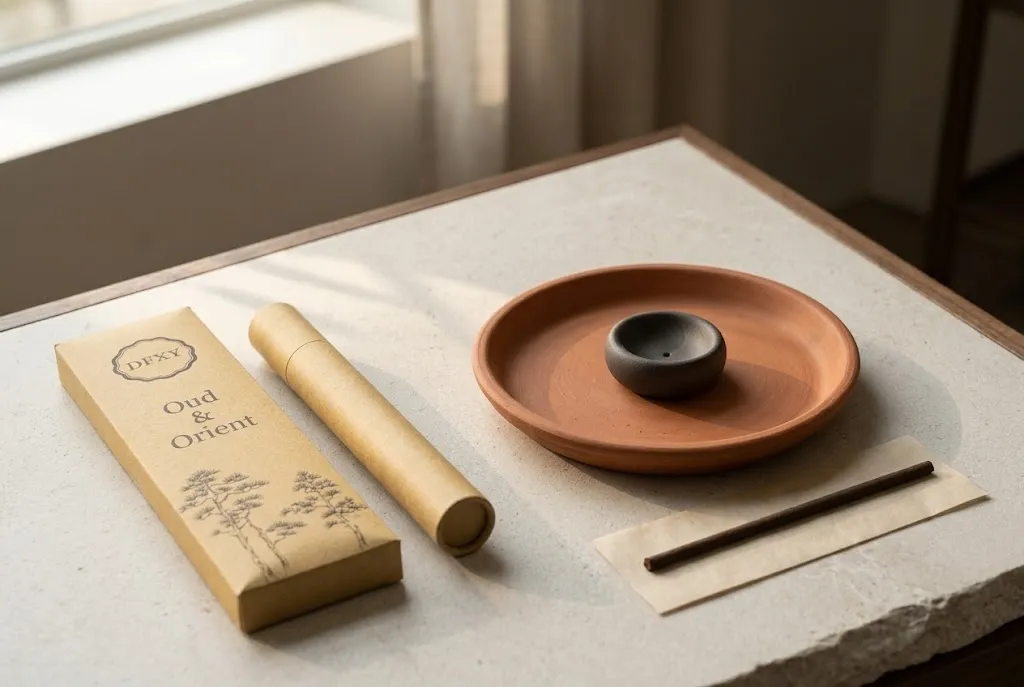
Most problems with agarwood incense are not caused by the incense alone. A burnt smell, uneven burning, an aroma that feels too heavy, or a session that ends too quickly can come from the lighting method, the holder, airflow, how many sticks are burning, or how the sticks were stored.
Before deciding that an incense product is not right for you, check the setup. Burn one stick at a time, use a stable holder on a heat-safe surface, and give the aroma time to develop. This guide explains the most common mistakes and the practical checks to make before your next session.
Use this table to identify the most likely issue before changing products.
| What you notice | A common cause | What to check first |
|---|---|---|
| The tip keeps flaming | The flame was left on too long | Light the tip briefly, then gently blow out the flame |
| The incense smells like burnt wood | The burn is too hot, airflow is poor, or the product has a naturally smoky direction | Burn one stick, improve airflow, and check the scent description |
| The stick burns unevenly | The holder is unstable, the stick is leaning, or it has been exposed to moisture | Use a stable holder and check storage conditions |
| The room feels too fragrant | More than one stick is burning, or the room is small | Use one stick at a time and allow fresh air into the space |
| The aroma seems unclear | Other fragrances are present, or the incense has only been smelled at the opening stage | Remove competing scents and observe the full session |
This table does not diagnose the material itself. It gives you a clear starting point for checking the conditions you can control.
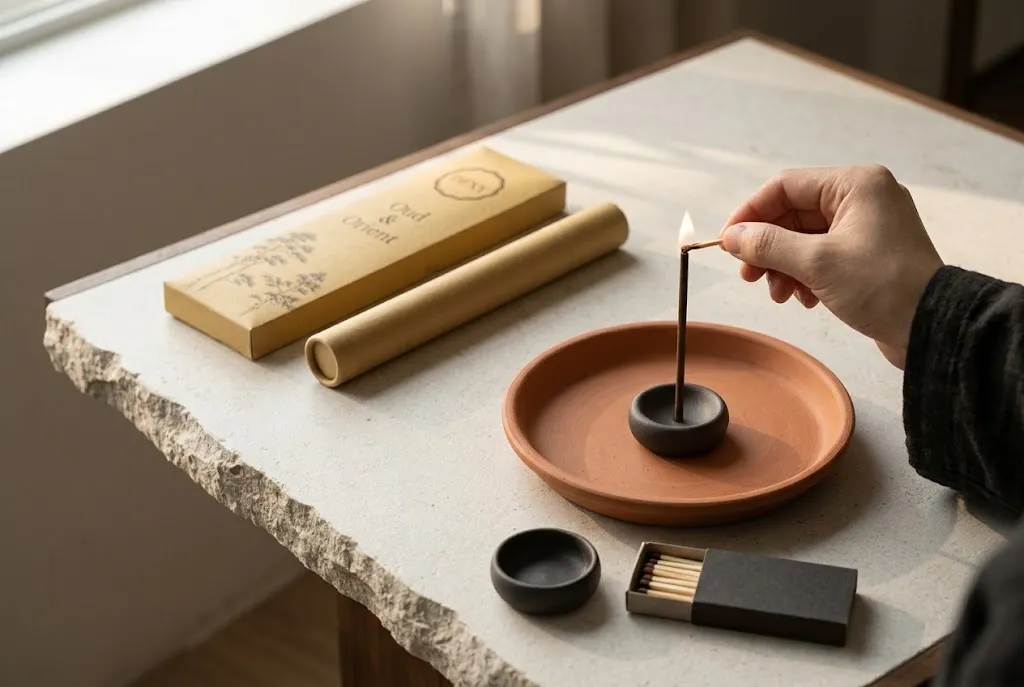
When lighting an incense stick, the goal is to create a glowing tip, not to keep an open flame burning. If the flame remains on for too long, the stick may burn hotter than intended and create a sharper, more burnt impression.
Use a simple routine:
Do not leave burning incense unattended. Keep the holder away from curtains, paper, dry flowers, and other flammable materials.
For a complete safety setup, see How to Burn Agarwood Incense Safely.
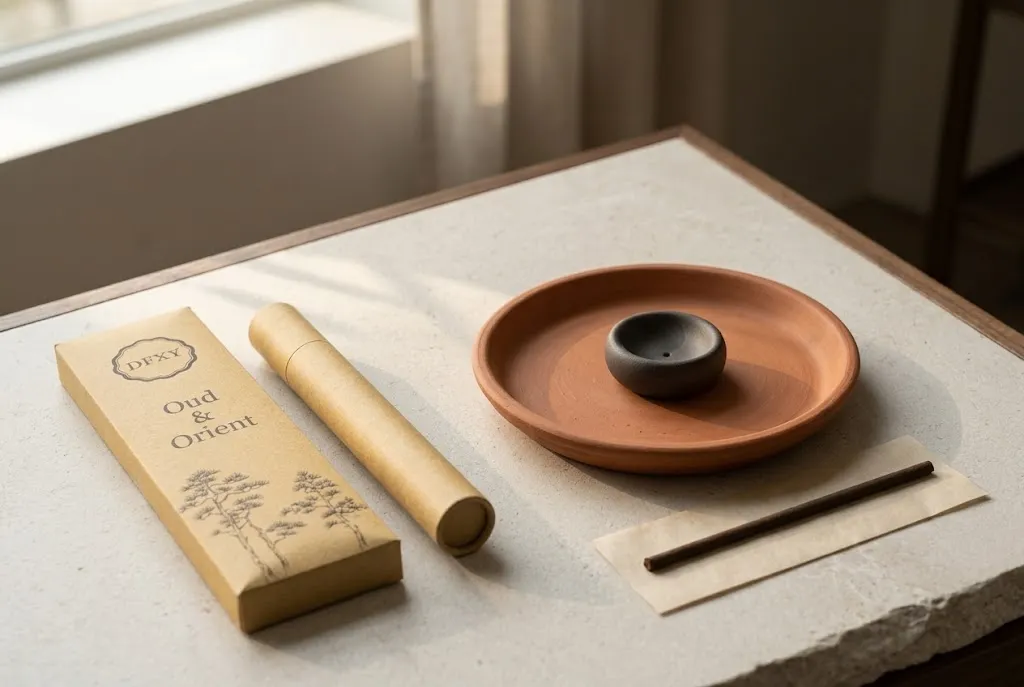
A holder is not only decorative. It affects how safely and evenly the stick can burn.
A suitable holder should keep the incense stable, allow ash to fall onto a heat-safe surface, and keep the burning tip away from nearby objects. If a stick leans, touches the side of the holder, or is positioned where a strong draft reaches it, the burn may become uneven.
Before each session, check that:
If you are testing a product for the first time, use the same holder each time. That makes it easier to understand whether a difference comes from the incense or from the setup.
More incense does not create a clearer experience. Burning several sticks at once can make the room feel crowded with fragrance, make it difficult to identify an individual aroma direction, and leave you unsure whether a product is truly too strong or simply being used in too large a quantity.
For comparison, begin with one stick.
This is especially important when you are trying a new product or comparing two aroma profiles. Use one stick in the same room, at a similar time of day, with the same holder. Let the room clear before trying another stick.
One-stick testing makes it easier to notice whether an aroma is light, medium, or pronounced in your own space. It also helps you decide whether the product description matches your experience.
Agarwood incense is easier to evaluate when the room does not already contain competing fragrances. Cooking aromas, scented candles, room sprays, perfume, cleaning products, and another incense stick can all change the way you perceive a new product.
Before testing a stick:
Airflow should be gentle. A strong direct draft can cause the incense to burn unevenly, while a completely closed room may make any aroma feel heavier than expected.
Agarwood incense can change as it burns. The opening minutes may feel brighter, drier, sweeter, or more smoky than the middle of the session. As heat moves through the incense body, deeper woody or resinous notes may become more noticeable.
Do not judge a stick only from the first minute. Notice three points:
This does not mean every stick should smell dramatically different at every stage. It means a full session gives you more useful information than a quick first impression.
For help understanding scent terms such as woody, resinous, sweet, and smoky, see What Does Agarwood Incense Smell Like?.
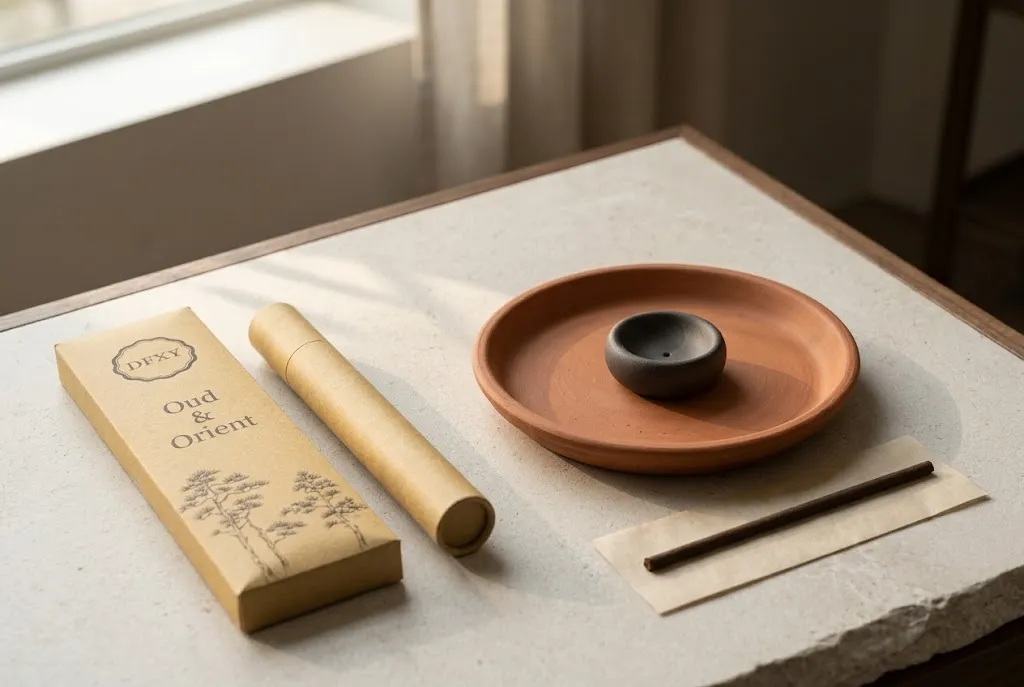
Incense can be affected by moisture, direct sunlight, and strong surrounding odours. A stick stored near perfume, scented candles, food, cleaning products, or a damp area may not smell as expected when you use it.
Keep incense in its original packaging or another clean, closed container. Store it in a cool, dry place away from direct sunlight and away from strongly scented items.
If the sticks feel damp, have become noticeably fragile, or smell mainly of another household fragrance before lighting, do not use that experience as your only judgment of the product’s intended aroma. First review where and how the incense has been stored.
Stop the session and check the setup if:
Extinguish the incense completely before leaving it unattended. Do not assume a glowing tip will stop on its own.
If the main issue is a burnt or smoke-heavy impression, read Why Does Incense Smell Like Burning Wood? for a more focused troubleshooting guide.
A good incense session does not require complicated equipment. It requires a consistent setup:
Following the same routine gives you a clearer understanding of what you enjoy and helps you separate a product issue from a setup issue.
A burnt impression can happen when the flame stays on too long, the stick burns too hot, airflow is poor, or the product itself has a smoky aroma direction. Start by using one stick, improving gentle airflow, and extinguishing the flame after a few seconds.
Uneven burning may be caused by a leaning stick, an unstable holder, a strong direct draft, or storage conditions that exposed the incense to moisture. Use a stable holder and test again in a calmer environment.
You can, but it makes it harder to understand the aroma of each stick and can make a room feel overly fragranced. When testing or comparing incense, burn one stick at a time.
Only a few seconds. The goal is to create a glowing tip, then gently extinguish the flame. Do not leave an open flame burning.
Use the same holder, room, and one-stick routine for several sessions. If the issue changes when you adjust the flame, airflow, or holder, the setup was likely contributing to the experience.
If you are troubleshooting a specific burnt-wood or smoke-heavy aroma, use the focused guide below: